Christian de Duve – författare
Visar alla böcker från författaren Christian de Duve. Handla med fri frakt och snabb leverans.
16 produkter
16 produkter
Inbunden, Engelska, 2003
457 kr
Skickas inom 5-8 vardagar
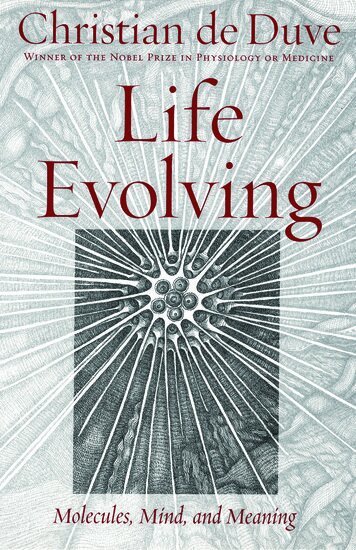
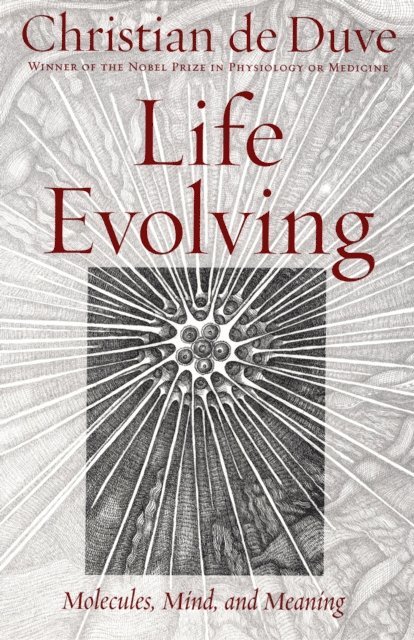
In just a half century, humanity has made an astounding leap in its understanding of life. Now, one of the giants of biological science, Christian de Duve, discusses what we've learned in this half century, ranging from the tiniest cells to the future of our species and of life itself. With wide-ranging erudition, de Duve takes us on a dazzling tour of the biological world, beginning with the invisible workings of the cell, the area in which he won his Nobel Prize. He describes how the first cells may have arisen and suggests that they may have been like the organisms that exist today near deep-sea hydrothermal vents. Contrary to many other scientists, he argues that life was bound to arise and that it probably only took millennia--maybe tens of thousands of years--to move from rough building blocks to the first organisms possessing the basic properties of life. With equal authority, De Duve examines topics such as the evolution of humans, the origins of consciousness, the development of language, the birth of science, and the origin of emotion, morality, altruism, and love. He concludes with his conjectures on the future of humanity--for instance, we may evolve, perhaps via genetic engineering, into a new species--and he shares his personal thoughts about God and immortality. In Life Evolving, one of our most eminent scientists sums up what he has learned about the nature of life and our place in the universe. An extraordinarily wise and humane volume, it will fascinate readers curious about the world around them and about the impact of science on philosophy and religion.
E-bok
PDF, Engelska, 2002319 kr
Läs direkt efter köp
In just a half century, humanity has made an astounding leap in its understanding of life. Now, one of the giants of biological science, Christian de Duve, discusses what we''ve learned in this half century, ranging from the tiniest cells to the future of our species and of life itself. With wide-ranging erudition, De Duve takes us on a dazzling tour of the biological world, beginning with the invisible workings of the cell, the area in which he won his Nobel Prize. He describes how the first cells may have arisen and suggests that they may have been like the organisms that exist today near deep-sea hydrothermal vents. Contrary to many scientists, he argues that life was bound to arise and that it probably only took millennia--maybe tens of thousands of years--to move from rough building blocks to the first organisms possessing the basic properties of life. With equal authority, De Duve examines topics such as the evolution of humans, the origins of consciousness, the development of language, the birth of science, and the origin of emotion, morality, altruism, and love. He concludes with his conjectures on the future of humanity--for instance, we may evolve, perhaps via genetic engineering, into a new species--and he shares his personal thoughts about God and immortality. In Life Evolving, one of our most eminent scientists sums up what he has learned about the nature of life and our place in the universe. An extraordinarily wise and humane volume, it will fascinate readers curious about the world around them and about the impact of science on philosophy and religion.
E-bok
Engelska, 2002478 kr
Läs direkt efter köp
In just a half century, humanity has made an astounding leap in its understanding of life. Now, one of the giants of biological science, Christian de Duve, discusses what we''ve learned in this half century, ranging from the tiniest cells to the future of our species and of life itself. With wide-ranging erudition, De Duve takes us on a dazzling tour of the biological world, beginning with the invisible workings of the cell, the area in which he won his Nobel Prize. He describes how the first cells may have arisen and suggests that they may have been like the organisms that exist today near deep-sea hydrothermal vents. Contrary to many scientists, he argues that life was bound to arise and that it probably only took millennia--maybe tens of thousands of years--to move from rough building blocks to the first organisms possessing the basic properties of life. With equal authority, De Duve examines topics such as the evolution of humans, the origins of consciousness, the development of language, the birth of science, and the origin of emotion, morality, altruism, and love. He concludes with his conjectures on the future of humanity--for instance, we may evolve, perhaps via genetic engineering, into a new species--and he shares his personal thoughts about God and immortality. In Life Evolving, one of our most eminent scientists sums up what he has learned about the nature of life and our place in the universe. An extraordinarily wise and humane volume, it will fascinate readers curious about the world around them and about the impact of science on philosophy and religion.
Häftad, Engelska, 1995
341 kr
Skickas inom 5-8 vardagar
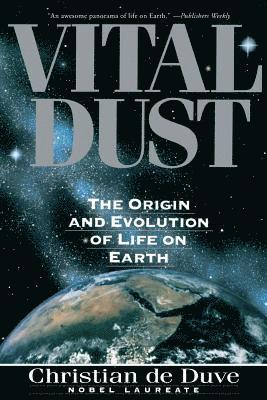
Is the emergence of life on Earth the result of a single chance event or combination of lucky accidents, or is it the outcome of biochemical forces woven into the fabric of the universe? And if inevitable, what are these forces, and how do they account not only for the origin of life but also for its evolution toward increasing complexity? Vital Dust is a ground-breaking history of life on Earth, a history that only someone of Chrisitian de Duve's stature and erudition could have written.
Inbunden, Engelska, 2005
916 kr
Skickas inom 7-10 vardagar
Erwin Schrödinger's What is Life? published 60 years ago, influenced much of the development of molecular biology. In this new book Christian De Duve, Nobel Laureate and pioneer of modern cell biology, presents a contemporary response to this classic, providing a sophisticated consideration of the key steps or bottlenecks that constrain the origins and evolution of life. De Duve surveys the entire history of life, including insights into the conditions that may have led to its emergence. He uses as landmarks the many remarkable singularities along the way, such as the single ancestry of all living beings, the universal genetic code, and the monophyletic origin of eukaryotes. The book offers a brief guided tour of biochemistry and phylogeny, from the basic molecular building blocks to the origin of humans. Each successive singularity is introduced in a sequence paralleling the hypothetical development of features and conditions on the primitive earth, explaining how and why each transition to greater complexity occurred.
Häftad, Franska, 2013
533 kr
Skickas inom 3-6 vardagar
Häftad, Franska, 2019
553 kr
Skickas inom 3-6 vardagar
E-bok
Engelska, 2009195 kr
Läs direkt efter köp
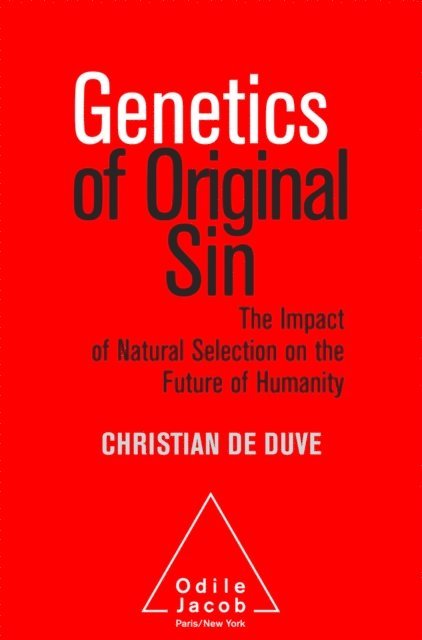
“In this book I examine the extraordinary saga of life on Earth in the light of the most recent scientific discoveries. This saga has resulted in the extraordinary success of our species, and in the mortal threats that it has posed for the future. By favoring immediate benefits, to the detriment, sometimes, of long-term advantages, natural selection, in my opinion, is the source of this remarkable success, but also of the perils that come out of it. Modern science has established the implausibility of the Biblical tale for the origins of human beings; it has not, however, invalidated the intuition that inspired it. Humanity is, infact, tainted by an intrinsic defect, by a genetic “original sin,” that threatens to lead to its demise. We do indeed need redemption to save us, but it can only come from humanity itself. We must find in the resources of our minds a wisdom that is not inscribed in our genes.” C. de D. The book of a great biologist, but also of a moralist. Christian de Duve, Nobel Laureate in Medicine, is professor emeritus at the Université catholique de Louvain and at Rockefeller University in New York. He is the author of À l''écoute du vivant (2002) and of Singularités (2005) [Singularities: Landmarks on the Pathways of Life], both best-sellers.
E-bok
Franska, 2013189 kr
Läs direkt efter köp
Ce livre est le dernier ouvrage de Christian de Duve. Dans ce livre, Christian de Duve retrace son itinéraire intellectuel si original. Il y évoque sa contribution à la naissance de la biologie moderne. Il développe son questionnement sur le sens de l’évolution et sa préoccupation quant au devenir de l’humanité. Un livre testament achevé par Christian de Duve quelques jours avant sa mort volontaire et où il se confie à Jean Vandenhaute, mort lui aussi dans les mêmes circonstances. Le dernier message d’un très grand savant et d’un profond humaniste. Christian de Duve (1917-2013) a reçu le prix Nobel de médecine en 1974. Il a été professeur à l’Université catholique de Louvain et à l’Université Rockefeller de New York. Il a notamment publié À l’écoute du vivant, Singularités, Génétique du péché originel, De Jésus à Jésus… en passant par Darwin et Sept Vies en une, qui ont tous été de grands succès. Jean Vandenhaute (1941-2013) a été professeur de génétique moléculaire à l’Université de Namur et a collaboré avec de nombreux laboratoires dans le monde (CEA Saclay, Halle, Harvard Medical School), tout en étant engagé dans des actions de coopération au développement. Durant ses années d’éméritat, il a poursuivi sa réflexion sur la génétique et l’évolution au sein de la faculté de philosophie et lettres.
E-bok
Franska, 2002149 kr
Läs direkt efter köp
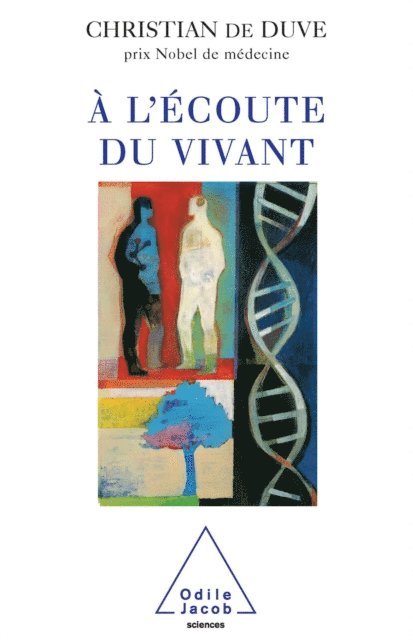
Qui sommes-nous ? D’où venons-nous ? Où allons-nous ? Ces questions, fondamentales pour chacun d’entre nous, Christian de Duve les traite avec l’autorité que lui confère une vie entière passée dans l’intimité des cellules vivantes. Des semences bio-organiques nées de la chimie cosmique dans les espaces interstellaires aux fruits clonés des bio-ingénieries à venir, des premiers balbutiements de la vie il y a quatre milliards d’années aux cinq milliards d’années qui lui restent sur Terre, des créations et fantasmes du mystérieux cerveau humain aux extraterrestres intelligents qui tenteraient de communiquer avec nous depuis les confins de la Galaxie, l’auteur nous entraîne dans un passionnant voyage d’exploration à travers notre passé, notre présent et notre futur, pour aboutir finalement à l’ultime question : et Dieu dans tout cela ? Christian de Duve est prix Nobel de médecine, Professeur émérite à l’Université Catholique de Louvain et Professeur à l’Université Rockefeller de New York.
E-bok
Franska, 2013183 kr
Läs direkt efter köp
Christian de Duve, prix Nobel de médecine, retrace ici les grandes étapes d’une existence exceptionnelle, qui lui a permis d’assister en témoin privilégié aux progrès révolutionnaires de notre compréhension de la vie accomplis depuis la fin de la Seconde Guerre mondiale, d’en connaître les principaux protagonistes et même d’ajouter sa propre pierre à l’édifice. À ces mémoires scientifiques s’ajoutent aussi des souvenirs personnels, des portraits, des anecdotes. Le récit d’une vie hors du commun. Christian de Duve est prix Nobel de médecine (1974). Il est professeur émérite à l’Université catholique de Louvain et à l’Université Rockefeller de New York. Il est notamment l’auteur de À l’écoute du vivant, de Génétique du péché originel, de Singularités, et de De Jésus à Jésus... en passant par Darwin, qui ont tous été de grands succès
E-bok
Franska, 201198 kr
Läs direkt efter köp
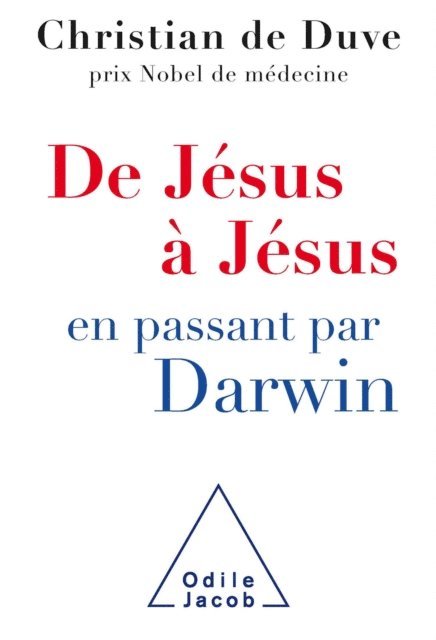
« Le sage dont notre monde a besoin a bel et bien existé. C’était il y a deux mille ans. Il se nomme Jésus. Son message reste d’une actualité brûlante. Ce message annonce une nouvelle forme de rédemption qui correspond exactement à ce que notre vision darwinienne de la condition humaine recommande si nous voulons échapper aux conséquences fatales de la tache originelle imprimée dans nos gènes par la sélection naturelle. Clercs et laïcs, croyants et libres-penseurs de toute obédience doivent chercher ensemble, au-delà de ce qui les divise et avec le concours du plus grand nombre possible de philosophes, de moralistes, de scientifiques et d’autres penseurs unis par l’honnêteté intellectuelle, un énoncé du message de Jésus adapté aux conditions actuelles. C’est notre seul espoir si nous voulons tirer parti, d’une manière humaine et rationnelle, des moyens, préservés par la sélection naturelle, qui, paradoxalement, pourraient nous permettre de contrecarrer les conséquences délétères de celle-ci. » C. de D. L’itinéraire personnel et scientifique d’un prix Nobel. Christian de Duve est prix Nobel de médecine. Il est professeur émérite de l’Université catholique de Louvain et de l’Université Rockefeller de New York. Il est l’auteur d’À l’écoute du vivant, de Singularités et de Génétique du péché originel, qui ont été de grands succès.
E-bok
Franska, 2005149 kr
Läs direkt efter köp
Qu’est-ce que la vie ? Quelles en sont les caractéristiques et comment est-elle apparue ? Tous les organismes vivants, qu’ils soient microbes, végétaux, animaux ou humains, descendent d’une cellule ancestrale unique. Tous utilisent le même langage et le même code génétique. Christian de Duve décrit dans ce livre les étapes de l’histoire de l’évolution qui fut une succession de hasards et de nécessités, de « singularités », dont il définit les différents types comme autant de balises, de jalons, qui ont tracé les chemins de la vie. Christian de Duve est prix Nobel de médecine, professeur émérite à l’Université catholique de Louvain et à l’Université Rockefeller de New York. Il a publié, chez Odile Jacob, À l’écoute du vivant qui a été un très grand succès.
E-bok
Franska, 2009149 kr
Läs direkt efter köp
« J’aborde dans ce livre la saga extraordinaire de la vie sur Terre à la lumière des dernières découvertes de la science. Cette histoire a abouti au succès démesuré de notre espèce et aux menaces mortelles qu’il fait peser sur l’avenir. En privilégiant le bénéfice immédiat, au détriment, parfois, de l’avantage à long terme, la sélection naturelle se trouve, selon moi, à la source de cette extraordinaire réussite, mais aussi des périls qui en découlent. La science moderne a établi l’invraisemblance du récit biblique des origines du genre humain ; elle n’a pas pour autant invalidé l’intuition qui l’a inspirée. L’humanité est, de fait, entachée d’un défaut intrinsèque, d’un “péché originel” génétique, qui risque d’entraîner sa perte. Il nous faudra effectivement un rédempteur pour nous sauver, mais il ne peut venir que de l’humanité elle-même. Nous devrons trouver dans les ressources de notre esprit une sagesse qui n’est pas inscrite dans nos gènes. » C. de D. Le livre d’un grand biologiste, mais aussi d’un moraliste. Christian de Duve, prix Nobel de médecine, est professeur émérite à l’Université catholique de Louvain et à l’Université Rockefeller de New York. Il est l’auteur de À l’écoute du vivant (2002) et de Singularités (2005), qui ont été de grands succès.
Häftad, Tyska, 1955
841 kr
Skickas inom 10-15 vardagar
E-bok
PDF, Tyska, 2013446 kr
Läs direkt efter köp