Christina E. Wierenga – författare
Visar alla böcker från författaren Christina E. Wierenga. Handla med fri frakt och snabb leverans.
6 produkter
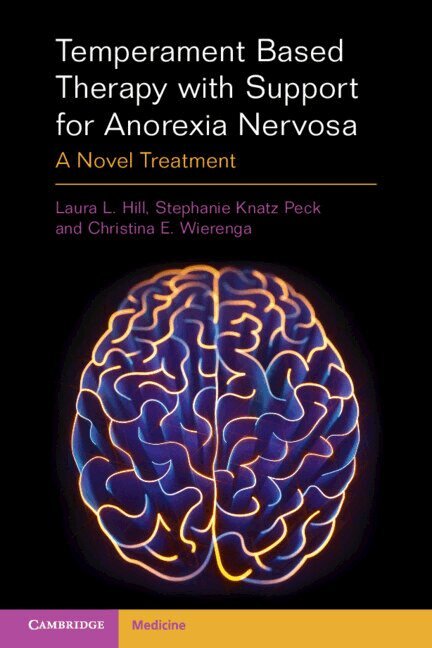
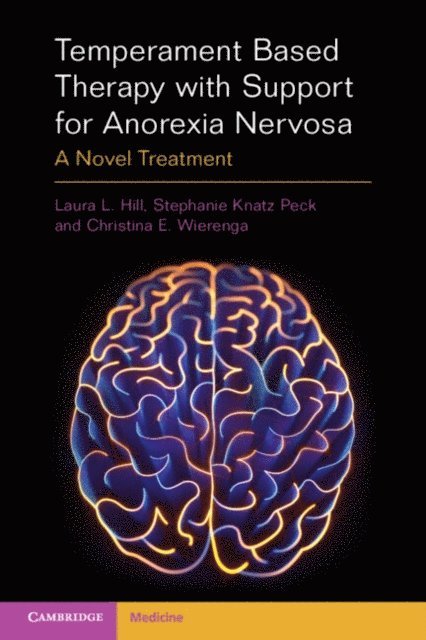
Temperament Based Therapy with Support for Anorexia Nervosa
A Novel Treatment
Av Laura L. Hill, Stephanie Knatz Peck m. fl.
Häftad, 2022
519 kr
Lägg i varukorg
Anorexia nervosa has one of the highest death rates of all mental illnesses and one of the poorest treatment outcomes. However, one novel treatment, the neurobiologically-based treatment Temperament Based Therapy with Support (TBT-S), works with clients' temperament and traits to motivate change, …
The Handbook of the Neurobiology of Eating Disorders
Av Christina E. Wierenga, Joanna E. Steinglass
Inbunden, 2026
1811 kr
Lägg i varukorg
Eating disorders are associated with dangerous and costly medical morbidity, high rates of comorbid psychopathology, significant psychosocial impairment, substantial economic burden, and the highest mortality rate of any psychiatric disorder. These serious disorders have a long history in …
Handbook of the Neurobiology of Eating Disorders
Av Joanna E. Steinglass, Christina E. Wierenga
E-bok, 2025
1692 kr
Lägg i varukorg
Eating disorders are associated with dangerous and costly medical morbidity, high rates of comorbid psychopathology, significant psychosocial impairment, substantial economic burden, and the highest mortality rate of any psychiatric disorder. These serious disorders have a long history in …
Handbook of the Neurobiology of Eating Disorders
Av Joanna E. Steinglass, Christina E. Wierenga
E-bok, 2025
1692 kr
Lägg i varukorg
Eating disorders are associated with dangerous and costly medical morbidity, high rates of comorbid psychopathology, significant psychosocial impairment, substantial economic burden, and the highest mortality rate of any psychiatric disorder. These serious disorders have a long history in …
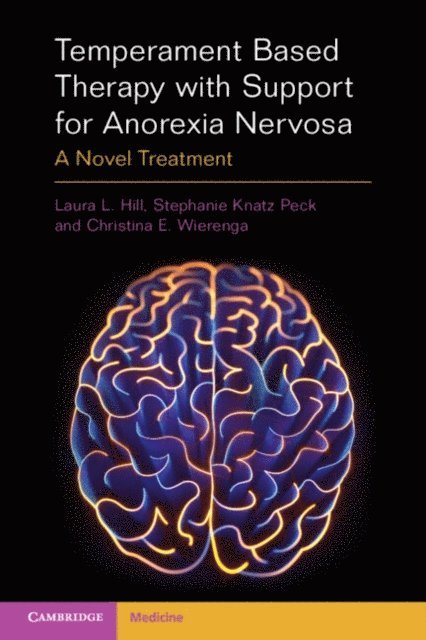
Temperament Based Therapy with Support for Anorexia Nervosa
A Novel Treatment
Av Christina E. Wierenga, Stephanie Knatz Peck m. fl.
E-bok, 2022
504 kr
Lägg i varukorg
Anorexia nervosa has one of the highest death rates of all mental illnesses and one of the poorest treatment outcomes. However, one novel treatment, the neurobiologically-based treatment Temperament Based Therapy with Support (TBT-S), works with clients'' temperament and traits to motivate change, …
Temperament Based Therapy with Support for Anorexia Nervosa
A Novel Treatment
Av Christina E. Wierenga, Stephanie Knatz Peck m. fl.
E-bok, 2022
504 kr
Lägg i varukorg
Anorexia nervosa has one of the highest death rates of all mental illnesses and one of the poorest treatment outcomes. However, one novel treatment, the neurobiologically-based treatment Temperament Based Therapy with Support (TBT-S), works with clients'' temperament and traits to motivate change, …