Christopher Fifield – författare
Visar alla böcker från författaren Christopher Fifield. Handla med fri frakt och snabb leverans.
8 produkter
8 produkter
653 kr
Skickas inom 10-15 vardagar
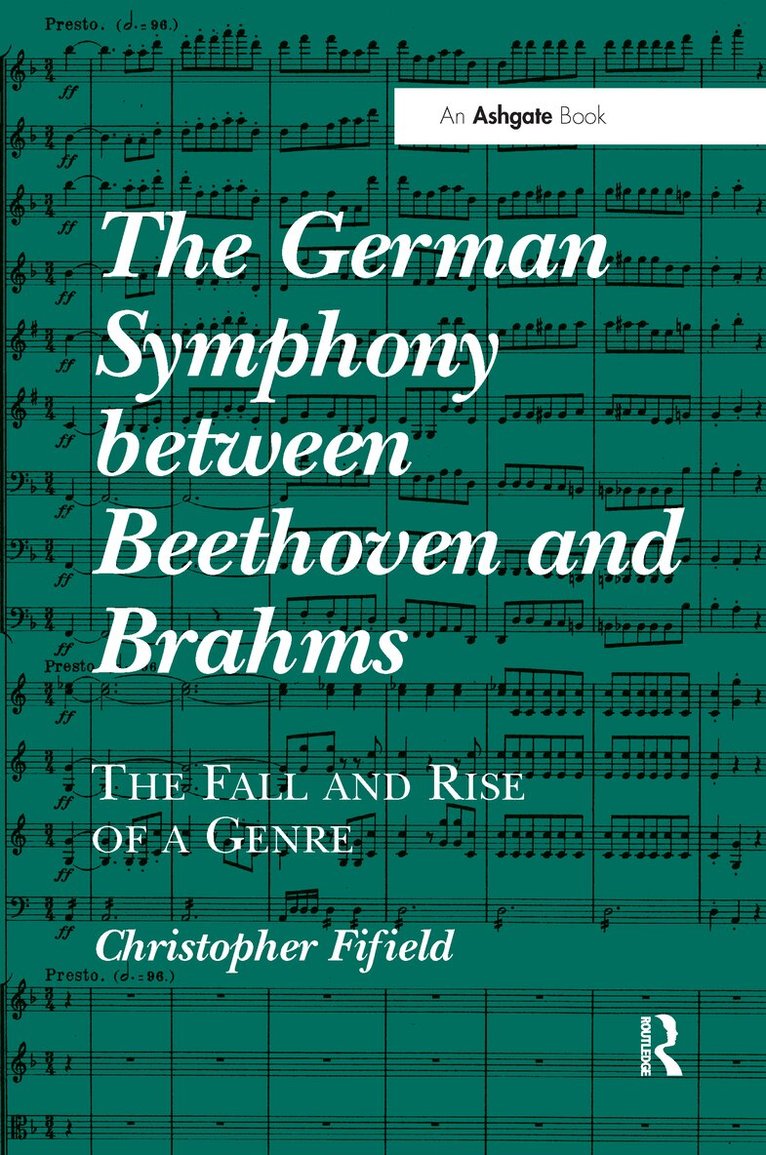
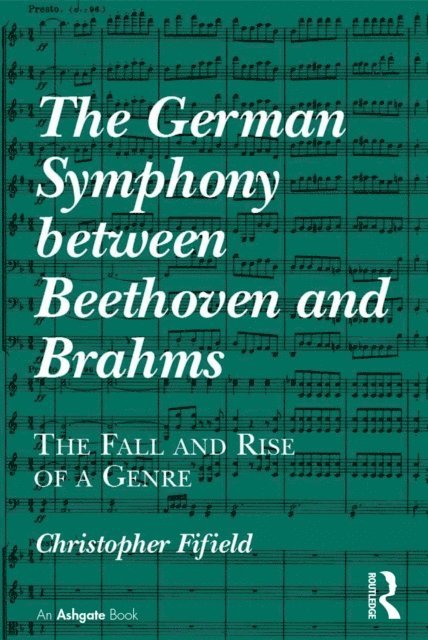
It was Carl Dahlhaus who coined the phrase ’dead time’ to describe the state of the symphony between Schumann and Brahms. Christopher Fifield argues that many of the symphonies dismissed by Dahlhaus made worthy contributions to the genre. He traces the root of the problem further back to Beethoven’s ninth symphony, a work which then proceeded to intimidate symphonists who followed in its composer's footsteps, including Schubert, Mendelssohn and Schumann. In 1824 Beethoven set a standard that then had to rise in response to more demanding expectations from both audiences and the musical press. Christopher Fifield, who has a conductor’s intimacy with the repertory, looks in turn at the five decades between the mid-1820s and mid-1870s. He deals only with non-programmatic works, leaving the programme symphony to travel its own route to the symphonic poem. Composers who lead to Brahms (himself a reluctant symphonist until the age of 43 in 1876) are frequently dismissed as epigones of Beethoven, Mendelssohn and Schumann but by investigating their symphonies, Fifield reveals their respective brands of originality, even their own possible influence upon Brahms himself and in so doing, shines a light into a half-century of neglected nineteenth century German symphonic music.
2 182 kr
Skickas inom 10-15 vardagar
For the greater part of the twentieth century, Ibbs and Tillett's concert agency was to the British music industry what Marks and Spencer is to the world of the department store. The roll-call of famous musicians on its books was unmatched, and included such international stars as Clara Butt, Fritz Kreisler, Pablo Casals, Sergei Rachmaninov, Andr Segovia, Kathleen Ferrier, Myra Hess, Jacqueline du Pr Clifford Curzon and Vladimir Ashkenazy, to name but a handful. From 1906, the success of the company was due to the dedication of its founders, Robert Leigh Ibbs and John Tillett. After their deaths, the agency was run by the latter's wife, Emmie, who, dubbed the 'Duchess of Wigmore Street', became one of the most formidable yet respected women in British music. The history of this unique institution and its owners is told here for the first time, often through the fascinating letters that were exchanged between the artists themselves and the agency. It begins in the latter years of the 19th century with the concert and theatrical manager Narciso Vert, for whom both Ibbs and Tillett worked until his death in 1905. The story then becomes a history of musical life in twentieth-century Britain, illuminating aspects of the day-to-day management of concerts and festivals, the lives and livelihoods of professional musicians, as well as those who strove to join their ranks through audition or recommendation. The changing profile, and particularly the onset and development of personal management of artists represented by Ibbs and Tillett and their reception in the press, can be viewed as a barometer of musical taste. The demise of the agency in 1990 was indicative of just how much the world of British music had changed by the end of the century, but despite its loss to the profession, the legacy and influence of Ibbs and Tillett has remained a benchmark in today's highly competitive world of artist management and concert promotion, many of whose principal operators began
639 kr
Skickas inom 10-15 vardagar
For the greater part of the twentieth century, Ibbs and Tillett's concert agency was to the British music industry what Marks and Spencer is to the world of the department store. The roll-call of famous musicians on its books was unmatched, and included such international stars as Clara Butt, Fritz Kreisler, Pablo Casals, Sergei Rachmaninov, Andr Segovia, Kathleen Ferrier, Myra Hess, Jacqueline du Pr Clifford Curzon and Vladimir Ashkenazy, to name but a handful. From 1906, the success of the company was due to the dedication of its founders, Robert Leigh Ibbs and John Tillett. After their deaths, the agency was run by the latter's wife, Emmie, who, dubbed the 'Duchess of Wigmore Street', became one of the most formidable yet respected women in British music. The history of this unique institution and its owners is told here for the first time, often through the fascinating letters that were exchanged between the artists themselves and the agency. It begins in the latter years of the 19th century with the concert and theatrical manager Narciso Vert, for whom both Ibbs and Tillett worked until his death in 1905. The story then becomes a history of musical life in twentieth-century Britain, illuminating aspects of the day-to-day management of concerts and festivals, the lives and livelihoods of professional musicians, as well as those who strove to join their ranks through audition or recommendation. The changing profile, and particularly the onset and development of personal management of artists represented by Ibbs and Tillett and their reception in the press, can be viewed as a barometer of musical taste. The demise of the agency in 1990 was indicative of just how much the world of British music had changed by the end of the century, but despite its loss to the profession, the legacy and influence of Ibbs and Tillett has remained a benchmark in today's highly competitive world of artist management and concert promotion, many of whose principal operators began
2 182 kr
Skickas inom 10-15 vardagar
It was Carl Dahlhaus who coined the phrase ’dead time’ to describe the state of the symphony between Schumann and Brahms. Christopher Fifield argues that many of the symphonies dismissed by Dahlhaus made worthy contributions to the genre. He traces the root of the problem further back to Beethoven’s ninth symphony, a work which then proceeded to intimidate symphonists who followed in its composer's footsteps, including Schubert, Mendelssohn and Schumann. In 1824 Beethoven set a standard that then had to rise in response to more demanding expectations from both audiences and the musical press. Christopher Fifield, who has a conductor’s intimacy with the repertory, looks in turn at the five decades between the mid-1820s and mid-1870s. He deals only with non-programmatic works, leaving the programme symphony to travel its own route to the symphonic poem. Composers who lead to Brahms (himself a reluctant symphonist until the age of 43 in 1876) are frequently dismissed as epigones of Beethoven, Mendelssohn and Schumann but by investigating their symphonies, Fifield reveals their respective brands of originality, even their own possible influence upon Brahms himself and in so doing, shines a light into a half-century of neglected nineteenth century German symphonic music.
655 kr
Skickas inom 5-8 vardagar
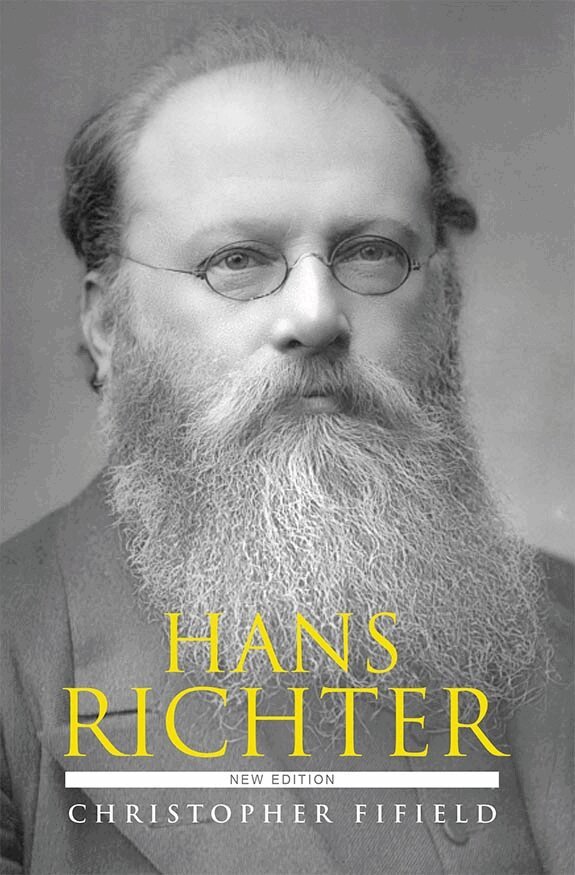
Christopher Fifield's remarkable study explores the personality, life and work of a conductor who influenced and inspired the leading composers, singers and instrumentalists of his day.The Austro-Hungarian Hans Richter (1843-1916) was the first career-conductor to gain international fame. His first appointment was to Budapest, and he went on to dominate music-making in Vienna, Bayreuth, London, Manchester (withthe Hallé Orchestra) and other towns and cities in Britain and Europe between 1865 and 1912. Richter gave first performances of works by Wagner, Brahms, Elgar, Bruckner, Tchaikovsky, Stanford and Parry and helped to further the careers of Dvorák, Sibelius, Bartók and Glazunov.Christopher Fifield's remarkable study explores the personality, life and work of a conductor who influenced and inspired the leading composers, singers and instrumentalists of his day. Originally published in 1993, this revised and expanded edition contains extensive new material in the form of Richter's conducting books. Translated and reproduced in full, they detail every one of the 4,351 public performances Richter gave in a professional life spanning 47 years. Drawing on Richter's own diaries, the book also presents his correspondence with many contemporary composers (Wagner in particular) and performers. Fifield's biography of this seminal figure provides a revealing insight into British and European music and concert life during the long nineteenth century.CHRISTOPHER FIFIELD is a conductor, music historian, lecturer and broadcaster.He is the editor and author of the Letters and Diaries of Kathleen Ferrier and Max Bruch: His Life and Works, both published in new editions by The Boydell Press. He has also written Ibbs & Tillett - The rise andfall of a Musical Empire and The German Symphony between Beethoven and Brahms.
445 kr
Skickas inom 5-8 vardagar
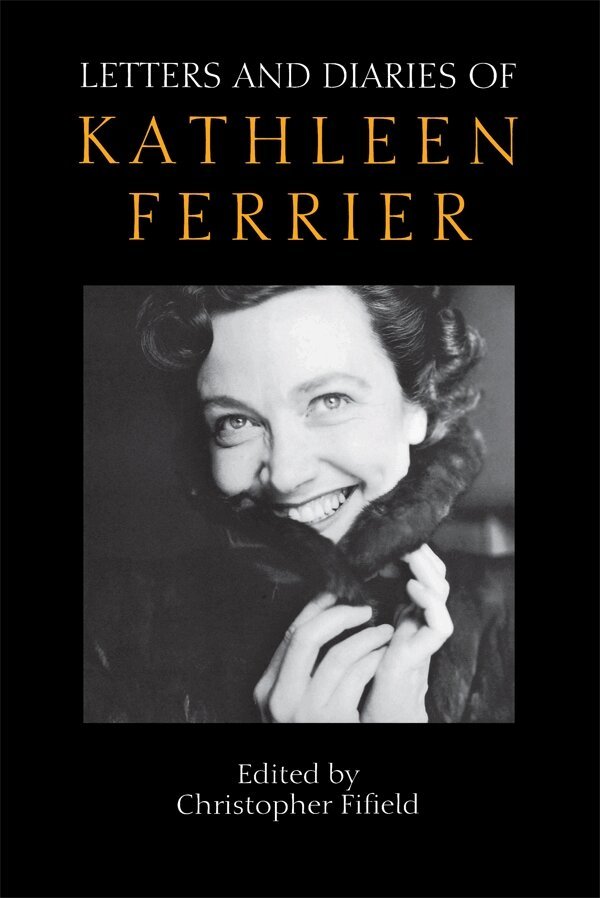
Until now, Kathleen Ferrier has been a glorious voice, but through the pages of these fascinating letters and diaries, never previously published, we get to the real person.Fifty years ago, Kathleen Ferrier, the greatest lyric contralto Britain has ever produced, lost her courageous battle with breast cancer. Her name endures to this day, for she struck a chord with a wide-ranging public - in concerts, on records and on the radio - despite a career which lasted barely ten years. Within a decade this former telephone exchange operator was singing on stage at Covent Garden or before royalty at private parties. She was surely fun to know: this collection of 300+ letters and twelve years of her personal diaries give a sunny picture of her life in the muted post-war years.Her indefinable personality was a mix of extreme modesty and self-determined ambition, and a mischievously blunt sense of earthy Lancastrian humour. Until now, Kathleen Ferrier has been a glorious voice, but through the pages of these fascinating letters and diaries, never previously published, we get to the real person.
266 kr
Skickas inom 5-8 vardagar
Until now, Kathleen Ferrier has been a glorious voice, but through the pages of these fascinating letters and diaries, never previously published, we get to the real person.Fifty years ago, Kathleen Ferrier, the greatest lyric contralto Britain has ever produced, lost her courageous battle with breast cancer. Her name endures to this day, for she struck a chord with a wide-ranging public - in concerts, on records and on the radio - despite a career which lasted barely ten years. Within a decade this former telephone exchange operator was singing on stage at Covent Garden or before royalty at private parties. She was surely fun to know: this collection of 300+ letters and twelve years of her personal diaries give a sunny picture of her life in the muted post-war years.Her indefinable personality was a mix of extreme modesty and self-determined ambition, and a mischievously blunt sense of earthy Lancastrian humour. Until now, Kathleen Ferrier has been a glorious voice, but through the pages of these fascinating letters and diaries, never previously published, we get to the real person.
428 kr
Skickas inom 10-15 vardagar
In this book - the only full-length study of the composer - the author provides a richly documented account of Bruch's career as music director and composer.Max Bruch (1838-1920), the German composer best known for his Violin Concerto in G minor, was in his day, a famous conductor and teacher as well as a prolific composer; yet he has been sadly neglected, perhaps in comparison to hiscontemporary Brahms. In this book - the only full-length study of Bruch - the author provides a richly documented account of Bruch's career as music director and composer, including a spell with the Liverpool Philharmonic Societyfrom 1880-1883, and as a teacher at the Royal Academy of Arts in Berlin from 1892 until his retirement in 1911, where Vaughan Williams was one his pupils; he paints a picture of a proud and sensitive man, whose talents were perhaps left behind at a time of rapid musical development. The book also offers a musical analysis of his one hundred published works, including three operas.CHRISTOPHER FIFIELD is foremost a conductor, but also a writeron music history (Grove, DNB, Viking Opera Guide, Oxford Companion to Music), the author of a biography of Hans Richter, the editor of the letters and diaries of Kathleen Ferrier, and a recent history of the music agents Ibbs and Tillett.