Craig Bourne – författare
Visar alla böcker från författaren Craig Bourne. Handla med fri frakt och snabb leverans.
5 produkter
5 produkter
1 180 kr
Skickas inom 7-10 vardagar
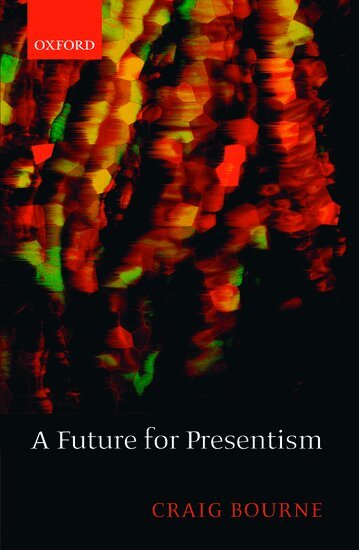
Presentism, the view that only the present exists, was a much neglected position in the philosophy of time for a number of years. Recently, however, it has been enjoying a renaissance among philosophers. A Future for Presentism is meant as a timely contribution to this fast growing and exciting debate. After discussing rival positions in the philosophy of time, in Part I Craig Bourne shows how presentism is the only viable alternative to the tenseless theory of time. He then develops a distinctive version of presentism that avoids the mistakes of the past, and which sets up the framework for solving problems traditionally associated with the position, such as what makes past-tensed statements true, how to give the proper semantics for statements about the future, how to deal with transtemporal relations, how we can meaningfully talk about past individuals, and how causation can be accommodated. Part I concludes with a discussion of the direction of time and causation, the decision-theoretic problem known as 'Newcomb's problem', and the possibility of time travel and causal loops. In Part II Bourne focuses on the problems for presentism raised by relativity theory. He begins with by giving a self-contained exposition of the concepts of special relativity that are important for understanding the later discussion of its philosophical implications. The last two chapters explore the philosophical implications of certain cosmological models that arise from general relativity, namely the expanding models, which seem to represent our universe, and Gödel's infamous model, which allows us to take a journey into our future and arrive in our past. The necessary physics is explained with the aid of diagrams, throughout.
556 kr
Skickas inom 5-8 vardagar
Presentism, the view that only the present exists, was a much neglected position in the philosophy of time for a number of years. Recently, however, it has been enjoying a renaissance among philosophers. A Future for Presentism is meant as a timely contribution to this fast growing and exciting debate. After discussing rival positions in the philosophy of time, in Part I Craig Bourne shows how presentism is the only viable alternative to the tenseless theory of time. He then develops a distinctive version of presentism that avoids the mistakes of the past, and which sets up the framework for solving problems traditionally associated with the position, such as what makes past-tensed statements true, how to give the proper semantics for statements about the future, how to deal with transtemporal relations between the past and the present, how we can meaningfully talk about the future, how to deal with transtemporal relations between the past and the present, how we can meaningfully talk about past individuals, and how causal relations can be formulated. Part I concludes with a discussion of the direction of time and causation, the decision-theoretic problem known as 'Newcomb's problem', and the possibility of time travel and causal loops. In Part II Bourne focuses on the problems for presentism raised by relativity theory. He begins with by giving a self-contained exposition of the concepts of special relativity that are important for understanding the later discussion of its philosophical implications. The last two chapters explore the philosophical implications of certain cosmological models that arise from general relativity, namely the expanding models, which seem to represent our universe, and Gödel's infamous model, which allows us to take a journey into our future and arrive in our past. The necessary physics is explained with the aid of diagrams, throughout.
1 232 kr
Skickas inom 5-8 vardagar
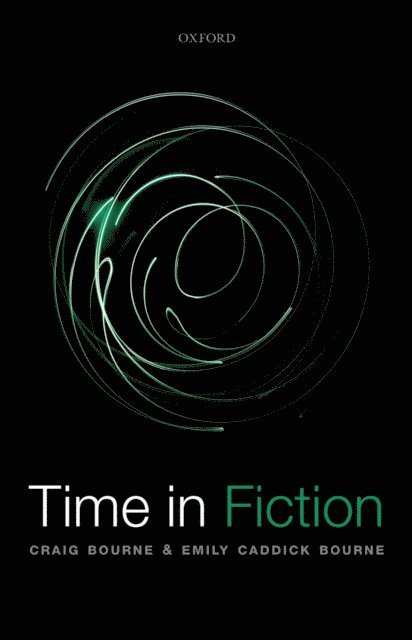
What can we learn about the world from engaging with fictional time-series? What should we make of stories involving time travellers who change the past, recurrence of a single day, foreknowledge of the future, the freezing or rewinding of time, or time-series which split into alternative courses of events? Do they show us radical alternative possibilities concerning the nature of time, or do they show that even the impossible can be represented in fiction? Neither, so this book argues. Defending the view that a fiction represents a single possible world, the authors show how apparent representations of radically different time-series can be explained in terms of how worlds are represented without there being any fictional world which has such a time-series. In this way, the book uses the complexities of fictional time to get to the core of the relation between truth in fiction and possibility. It provides a logic and metaphysics to deal with the fact that fictions can leave certain features of their fictional worlds indefinite, and draws comparisons and connections between fictional and scientific representations and hypotheses. Utilising the notion of a counterpart, the authors show how to understand claims concerning persistence of characters and their identity across fictions, and what it means for a fiction to be 'set' at an actual time. Consideration is given to motion in fiction, asking whether it is sometimes continuous and sometimes discrete, how to understand different rates of change, and whether fictional time itself can be said to flow.
783 kr
Skickas inom 10-15 vardagar
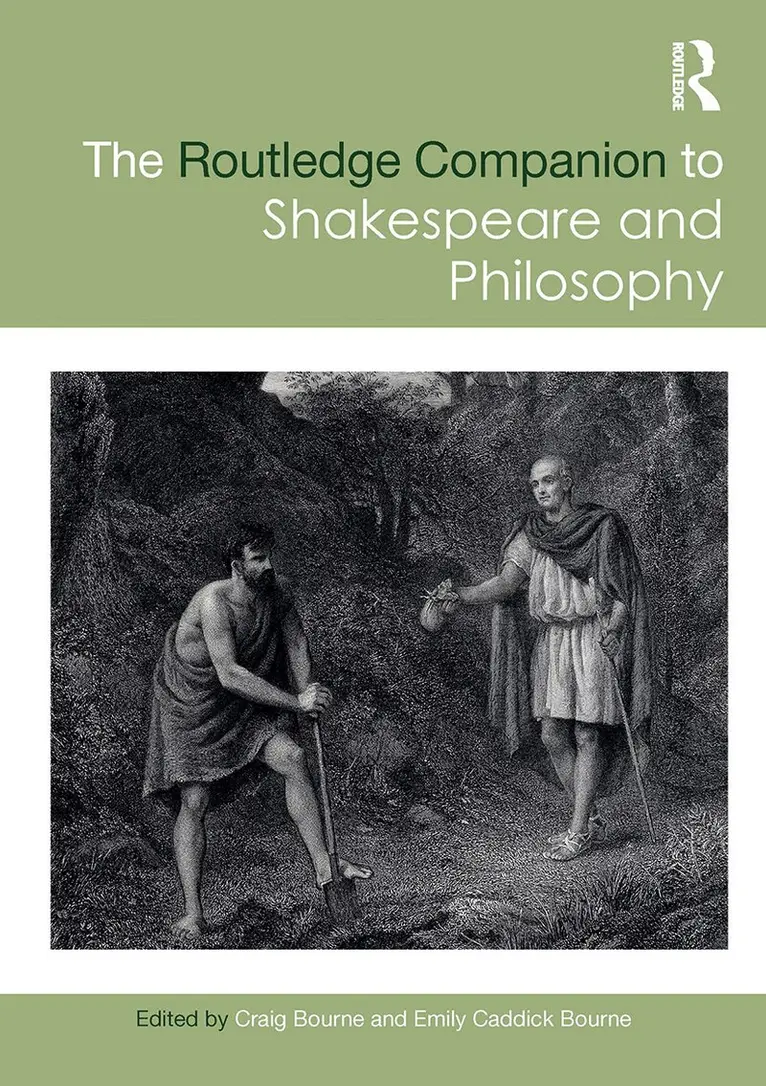
Iago’s ‘I am not what I am’ epitomises how Shakespeare’s work is rich in philosophy, from issues of deception and moral deviance to those concerning the complex nature of the self, the notions of being and identity, and the possibility or impossibility of self-knowledge and knowledge of others. Shakespeare’s plays and poems address subjects including ethics, epistemology, metaphysics, philosophy of mind, and social and political philosophy. They also raise major philosophical questions about the nature of theatre, literature, tragedy, representation and fiction.The Routledge Companion to Shakespeare and Philosophy is the first major guide and reference source to Shakespeare and philosophy. It examines the following important topics: What roles can be played in an approach to Shakespeare by drawing on philosophical frameworks and the work of philosophers? What can philosophical theories of meaning and communication show about the dynamics of Shakespearean interactions and vice versa? How are notions such as political and social obligation, justice, equality, love, agency and the ethics of interpersonal relationships demonstrated in Shakespeare’s works? What do the plays and poems invite us to say about the nature of knowledge, belief, doubt, deception and epistemic responsibility? How can the ways in which Shakespeare’s characters behave illuminate existential issues concerning meaning, absurdity, death and nothingness? What might Shakespeare’s characters and their actions show about the nature of the self, the mind and the identity of individuals? How can Shakespeare’s works inform philosophical approaches to notions such as beauty, humour, horror and tragedy? How do Shakespeare’s works illuminate philosophical questions about the nature of fiction, the attitudes and expectations involved in engagement with theatre, and the role of acting and actors in creating representations? The Routledge Companion to Shakespeare and Philosophy is essential reading for students and researchers in aesthetics, philosophy of literature and philosophy of theatre, as well as those exploring Shakespeare in disciplines such as literature and theatre and drama studies. It is also relevant reading for those in areas of philosophy such as ethics, epistemology and philosophy of language.
3 857 kr
Skickas inom 10-15 vardagar
Iago’s ‘I am not what I am’ epitomises how Shakespeare’s work is rich in philosophy, from issues of deception and moral deviance to those concerning the complex nature of the self, the notions of being and identity, and the possibility or impossibility of self-knowledge and knowledge of others. Shakespeare’s plays and poems address subjects including ethics, epistemology, metaphysics, philosophy of mind, and social and political philosophy. They also raise major philosophical questions about the nature of theatre, literature, tragedy, representation and fiction.The Routledge Companion to Shakespeare and Philosophy is the first major guide and reference source to Shakespeare and philosophy. It examines the following important topics: What roles can be played in an approach to Shakespeare by drawing on philosophical frameworks and the work of philosophers? What can philosophical theories of meaning and communication show about the dynamics of Shakespearean interactions and vice versa? How are notions such as political and social obligation, justice, equality, love, agency and the ethics of interpersonal relationships demonstrated in Shakespeare’s works? What do the plays and poems invite us to say about the nature of knowledge, belief, doubt, deception and epistemic responsibility? How can the ways in which Shakespeare’s characters behave illuminate existential issues concerning meaning, absurdity, death and nothingness? What might Shakespeare’s characters and their actions show about the nature of the self, the mind and the identity of individuals? How can Shakespeare’s works inform philosophical approaches to notions such as beauty, humour, horror and tragedy? How do Shakespeare’s works illuminate philosophical questions about the nature of fiction, the attitudes and expectations involved in engagement with theatre, and the role of acting and actors in creating representations?The Routledge Companion to Shakespeare and Philosophy is essential reading for students and researchers in aesthetics, philosophy of literature and philosophy of theatre, as well as those exploring Shakespeare in disciplines such as literature and theatre and drama studies. It is also relevant reading for those in areas of philosophy such as ethics, epistemology and philosophy of language.