Dag K.J.E. von Lubitz - Böcker
Visar alla böcker från författaren Dag K.J.E. von Lubitz. Handla med fri frakt och snabb leverans.
3 produkter
3 produkter
Bioterrorism
Field Guide to Disease Identification and Initial Patient Management
Häftad, Engelska, 2003
1 393 kr
Skickas inom 7-10 vardagar
The outbreak of anthrax infections that followed September 11, 2001, showed all too clearly that while we can defend ourselves against bioterrorism, our defenses need improvement. What's most important is the ability to recognize the associated disease, and recognize them quickly. Yet, many in the medical world are unfamiliar with the characteristic signs and symptoms of bioterrorism agents and are unable to differentiate between diseases whose symptoms appear almost identical. While a plethora of information on such diseases is available, finding it is time consuming.Bioterrorism: Field Guide to Disease Identification and Initial Patient Management is an accessible resource that helps first-responders to quickly recognize the signs and symptoms caused by exposure to bioterrorism agents. It provides enough information to initiate treatment while a definitive diagnosis is being determined and presents measures for preventing contamination of those involved in the victims' medical management.A special quick-reference foldout chart features a matrix linking 180 symptoms to 17 diseases and 90 differential diagnosis. In bulleted format, the book includes for each pathogenic agent:A brief description Signs and symptoms Diagnostic features Lab tests and expected results Treatment (specific drug regimens) Prophylaxis (specific drug regimens) Precautionary measuresThis book is a potentially life-saving resource that can be thrown into a medical bag and kept there, hopefully forever unused. But if needed, it is a resource that can quickly provide information that will prevent secondary infections, improve site safety, and buy life-saving time for victims.
954 kr
Skickas inom 10-15 vardagar
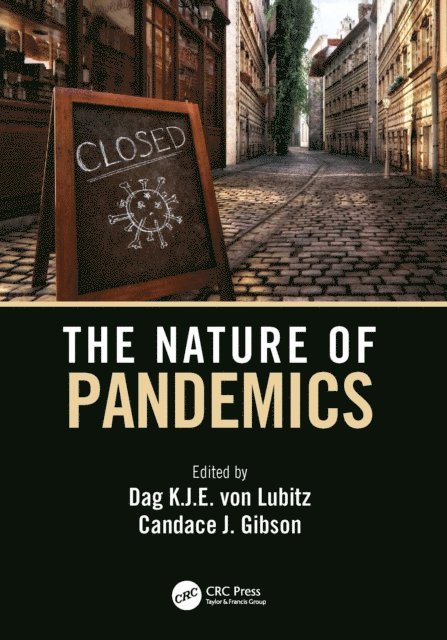
The ongoing COVID-19 disaster―and the universal realization of the inevitability of even worse pandemics in the future―has resulted in a wealth of books, scientific papers, and journalistic analyses of the politics, medicine, and human suffering. The Nature of Pandemics is not an outcrop of COVID-19 publication frenzy. Conceived in the period between the outbreaks of SARS and Ebola, the book addresses the critical, but commonly overlooked issues that limit readiness, recognition, and rapid response to emerging biodisasters.The book is unique in its approach to pandemics. It offers a holistic view of the nature of pandemics as a phenomenon, and of the challenges involved in mounting an organized, concerted response to a worldwide lethal bioevent. Most healthcare professionals at national and international levels recognize the danger; the political efforts to establish consistently effective countermeasures are sporadic and dissonant when they do occur. The slow and politically safe approach, the failure to react quickly, and unhesitatingly mobilize all resources, remain the paramount obstacles to the effective containment of a pandemic.The individual chapters of the book are written by internationally respected experts from Africa, Europe, and North and South America. The contributing authors represent a cross-section of professions involved in counter-pandemic activities: some operate at the highest levels of national and international institutions, others work as clinicians specializing in infectious diseases, scientists, experts in public health, law and its enforcement, or military aspects of pandemics. Their contributions, often highly personal and perhaps even controversial—supported by their involvement in the "front-line" challenges of pandemic containment and mitigation—provide a rare combination of first-hand knowledge of the current "state of the art" and recommendations for the implementation of best practices.The Nature of Pandemics offers multifaceted insight into problems that, if ignored initially, come to mar all subsequent response and mitigation efforts. The content spans solutions to developing readiness and mobilizing response as much to the current pandemic as to the future ones. Addressing government-generated roadblocks to response, military and security issues, global supply chain infrastructure, communications, information technology, ethical dilemmas posed by vacillating quality of care—and the inevitable mass fatalities—together with the confused interaction of global health organizations and response agencies, the book examines the panoply of complexities not only at the center of a pandemic outbreak but also at its equally critical and deadly periphery.
926 kr
Skickas inom 10-15 vardagar
The ongoing COVID-19 disaster―and the universal realization of the inevitability of even worse pandemics in the future―has resulted in a wealth of books, scientific papers, and journalistic analyses of the politics, medicine, and human suffering. The Nature of Pandemics is not an outcrop of COVID-19 publication frenzy. Conceived in the period between the outbreaks of SARS and Ebola, the book addresses the critical, but commonly overlooked issues that limit readiness, recognition, and rapid response to emerging biodisasters.The book is unique in its approach to pandemics. It offers a holistic view of the nature of pandemics as a phenomenon, and of the challenges involved in mounting an organized, concerted response to a worldwide lethal bioevent. Most healthcare professionals at national and international levels recognize the danger; the political efforts to establish consistently effective countermeasures are sporadic and dissonant when they do occur. The slow and politically safe approach, the failure to react quickly, and unhesitatingly mobilize all resources, remain the paramount obstacles to the effective containment of a pandemic.The individual chapters of the book are written by internationally respected experts from Africa, Europe, and North and South America. The contributing authors represent a cross-section of professions involved in counter-pandemic activities: some operate at the highest levels of national and international institutions, others work as clinicians specializing in infectious diseases, scientists, experts in public health, law and its enforcement, or military aspects of pandemics. Their contributions, often highly personal and perhaps even controversial—supported by their involvement in the "front-line" challenges of pandemic containment and mitigation—provide a rare combination of first-hand knowledge of the current "state of the art" and recommendations for the implementation of best practices.The Nature of Pandemics offers multifaceted insight into problems that, if ignored initially, come to mar all subsequent response and mitigation efforts. The content spans solutions to developing readiness and mobilizing response as much to the current pandemic as to the future ones. Addressing government-generated roadblocks to response, military and security issues, global supply chain infrastructure, communications, information technology, ethical dilemmas posed by vacillating quality of care—and the inevitable mass fatalities—together with the confused interaction of global health organizations and response agencies, the book examines the panoply of complexities not only at the center of a pandemic outbreak but also at its equally critical and deadly periphery.