David Eberly – författare
Visar alla böcker från författaren David Eberly. Handla med fri frakt och snabb leverans.
9 produkter
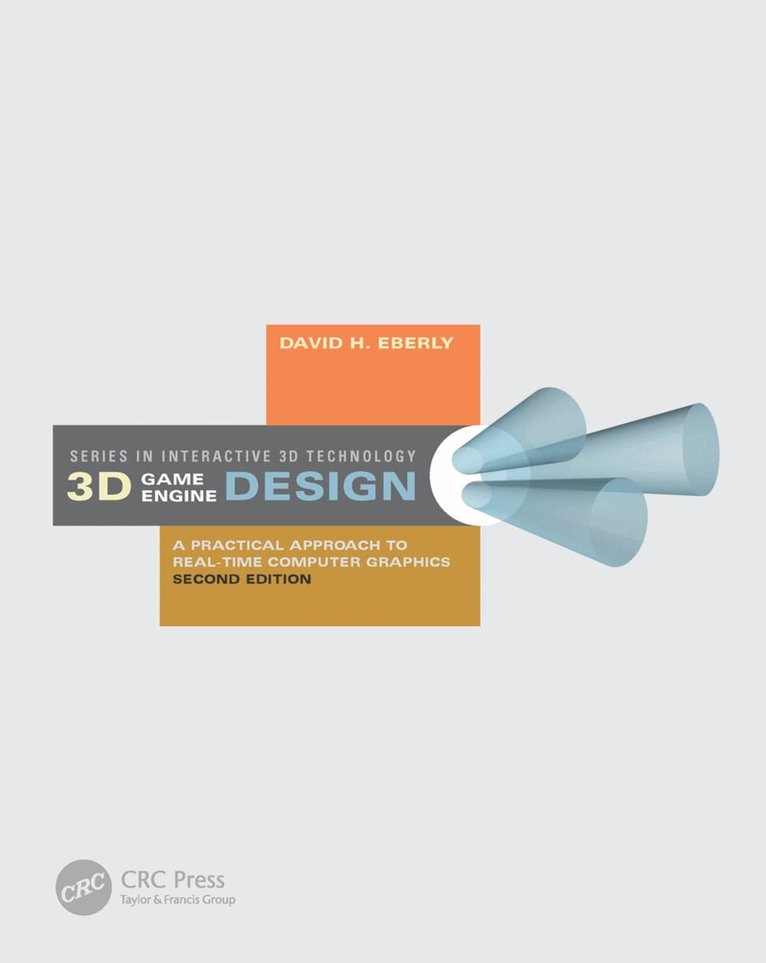
3D Game Engine Design
A Practical Approach to Real-Time Computer Graphics
Av David Eberly
Inbunden, 2006
1881 kr
Lägg i varukorg
The first edition of 3D Game Engine Design was an international bestseller that sold over 17,000 copies and became an industry standard. In the six years since that book was published, graphics hardware has evolved enormously. Hardware can now be directly controlled through techniques such as …
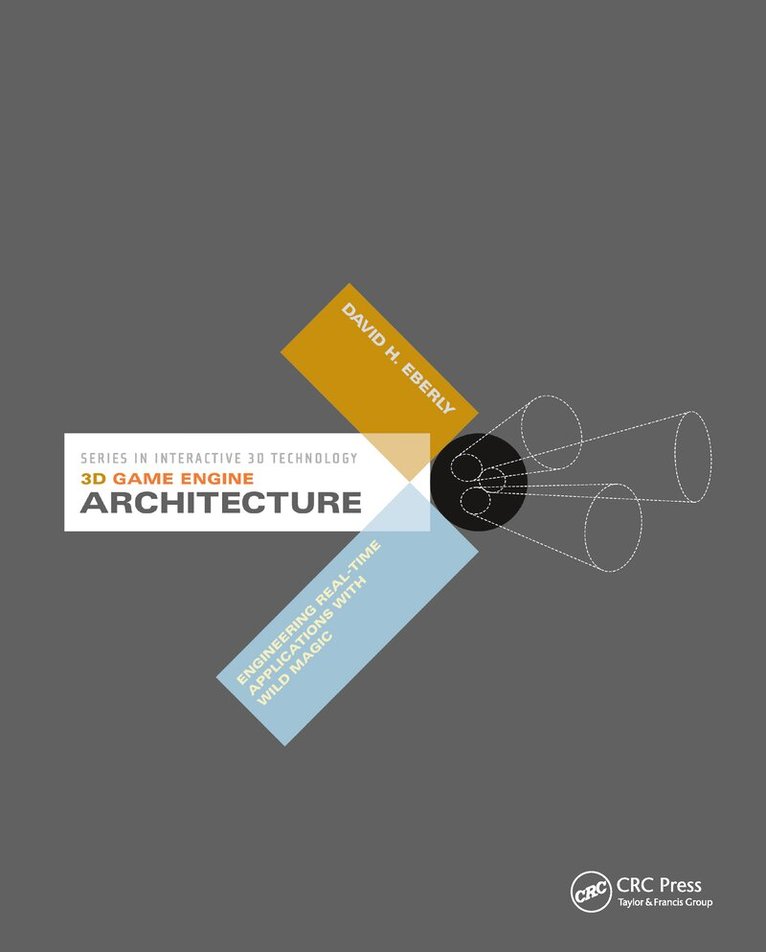
3D Game Engine Architecture
Engineering Real-Time Applications with Wild Magic
Av David Eberly
Inbunden, 2004
2585 kr
Lägg i varukorg
Dave Eberly's 3D Game Engine Design was the first professional guide to the essential concepts and algorithms of real-time 3D engines and quickly became a classic of game development. Dave's new book 3D Game Engine Architecture continues the tradition with a comprehensive look at the software …
Mathematical Problems from Combustion Theory
Av Jerrold Bebernes, David Eberly
Inbunden, 1989
552 kr
Lägg i varukorg
This monograph evolved over the past five years. It had its origin as a set of lecture notes prepared for the Ninth Summer School of Mathematical Physics held at Ravello, Italy, in 1984 and was further refined in seminars and lectures given primarily at the University of Colorado. The material …
Virginia Woolf and Trauma: Embodied Texts
Av Suzette Henke, David Eberly
Häftad, 2007
516 kr
Lägg i varukorg
3D Game Engine Design
A Practical Approach to Real-Time Computer Graphics
Av David Eberly
E-bok, 2006
1052 kr
Lägg i varukorg
The first edition of 3D Game Engine Design was an international bestseller that sold over 17,000 copies and became an industry standard. In the six years since that book was published, graphics hardware has evolved enormously. Hardware can now be directly controlled through techniques such as …
3D Game Engine Architecture
Engineering Real-Time Applications with Wild Magic
Av David Eberly
E-bok, 2004
2693 kr
Lägg i varukorg
Dave Eberly''s 3D Game Engine Design was the first professional guide to the essential concepts and algorithms of real-time 3D engines and quickly became a classic of game development. Dave''s new book 3D Game Engine Architecture continues the tradition with a comprehensive look at the software …
Mathematical Problems from Combustion Theory
Av David Eberly, Jerrold Bebernes
E-bok, 2013
734 kr
Lägg i varukorg
This monograph evolved over the past five years. It had its origin as a set of lecture notes prepared for the Ninth Summer School of Mathematical Physics held at Ravello, Italy, in 1984 and was further refined in seminars and lectures given primarily at the University of Colorado. The material …
Mathematical Problems from Combustion Theory
Av Jerrold Bebernes, David Eberly
Häftad, 2013
552 kr
Lägg i varukorg
This monograph evolved over the past five years. It had its origin as a set of lecture notes prepared for the Ninth Summer School of Mathematical Physics held at Ravello, Italy, in 1984 and was further refined in seminars and lectures given primarily at the University of Colorado. The material …
3D Game Engine Architecture
Engineering Real-Time Applications with Wild Magic
Av David Eberly
E-bok, 2004
2693 kr
Lägg i varukorg
Dave Eberly''s 3D Game Engine Design was the first professional guide to the essential concepts and algorithms of real-time 3D engines and quickly became a classic of game development. Dave''s new book 3D Game Engine Architecture continues the tradition with a comprehensive look at the software …