David M. Hopkins – författare
Visar alla böcker från författaren David M. Hopkins. Handla med fri frakt och snabb leverans.
3 produkter
3 produkter
Inbunden, Engelska, 2003
259 kr
Skickas inom 5-8 vardagar
A clear and compelling guide to the complex world of counterfeitingThis book provides readers with an overview of the complex subject of counterfeiting in the twenty-first century-not the traditional notion of counterfeiting fake currency, but the counterfeiting of luxury goods, pharmaceuticals, engine parts, etc. Filled with compelling stories such as how Glad trash bags have been faked as part of a scheme to launder drug money, this book offers real-world examples of how counterfeiting can occur and how readers can protect their products and brands from it. Leaving no stone unturned, this valuable resource also provides legal remedies, authentication guidance, and digital measures companies can use to fight the effects of counterfeiting on their bottom line.David M. Hopkins (Denver, CO) is Director of International Business Programs in the Daniels College of Business at the University of Denver. Lewis T. Kontnik (Greenwood Village, CO) is principal and founder of Reconnaissance International, the publisher of Authentication News, an international newsletter that covers counterfeiting prevention issues.Mark Turnage (Denver, CO) is the CEO of Applied Optical Technologies PLC, one of the largest providers of anti-counterfeiting technology to governments and companies worldwide.
Inbunden, Engelska, 1967
1 055 kr
Skickas inom 10-15 vardagar
A Stanford University Press classic.
E-bok
PDF, Engelska, 2013979 kr
Läs direkt efter köp
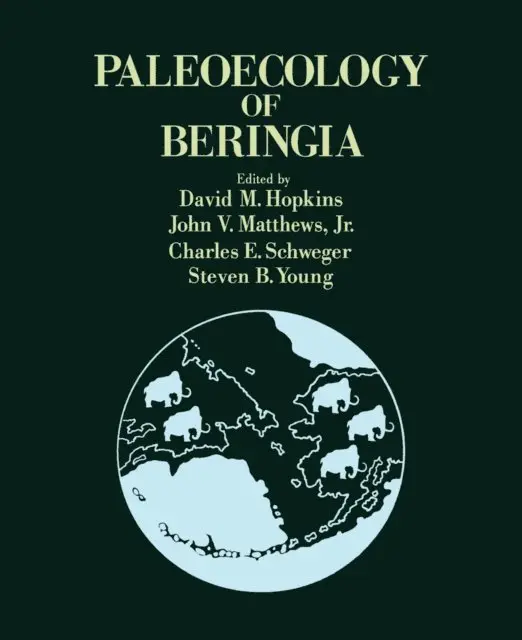
Paleoecology of Beringia is the product of a symposium organized by its editors, sponsored by the Wenner-Gren Foundation for Anthropological Research, and held at the foundation''s conference center in Burg Wartenstein, Austria, 8-17 June 1979. The focus of this volume is on the paradox central to all studies of the unglaciated Arctic during the last Ice Age: that vertebrate fossils indicate that from 45,000 to 11,000 years BP an environment considerably more diverse and productive than the present one existed, whereas the botanical record, where it is not silent, supports a far more conservative appraisal of the region''s ability to sustain any but the sparsest forms of plant and animal life. The volume is organized into seven parts. Part 1 focuses on the paleogeography of the Beringia. The studies in Part 2 explore the ancient vegatation. Part 3 deals with the steppe-tundra concept and its application in Beringia. Part 4 examines the paleoclimate while Part 5 is devoted to the biology of surviving relatives of the Pleistocene ungulates. Part 6 takes up the presence of man in ancient Beringia. Part 7 assesses the paleoecology of Beringia during the last 40,000 years