Dennis A. Vincenzi - Böcker
Visar alla böcker från författaren Dennis A. Vincenzi. Handla med fri frakt och snabb leverans.
10 produkter
10 produkter
766 kr
Skickas inom 10-15 vardagar
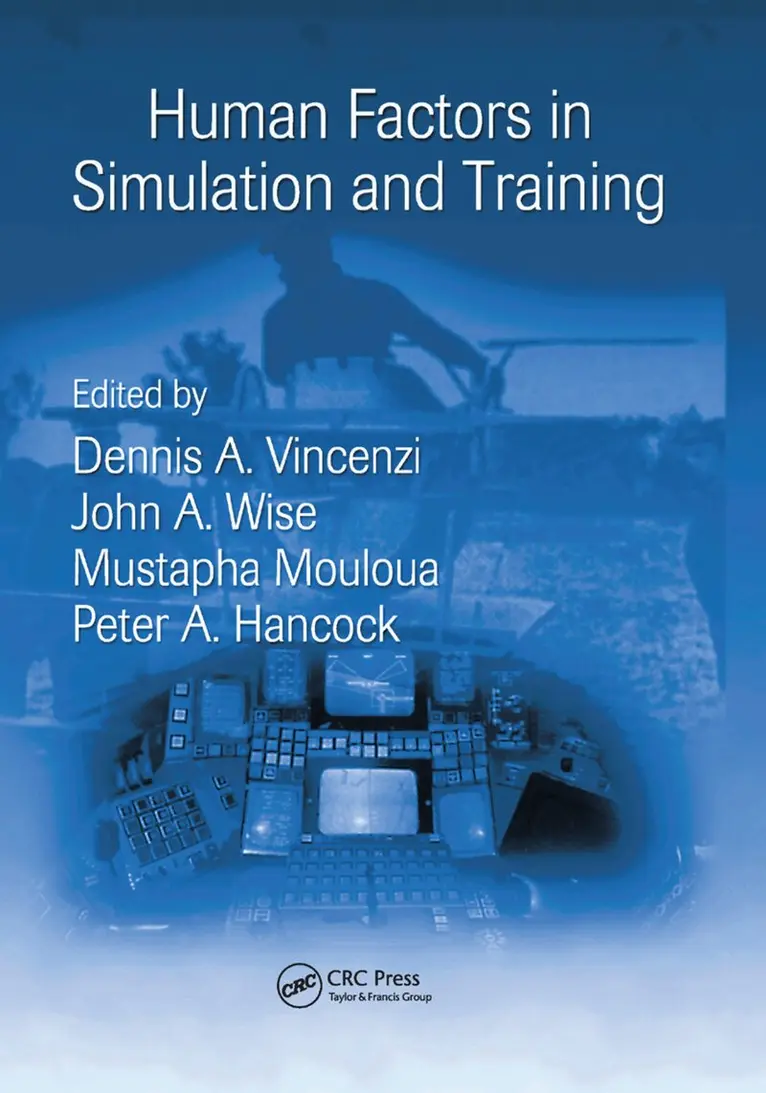
Measure twice, cut once. Although applicable to all areas of human factors research, the old adage is especially relevant to simulation and training. As a tool, simulation is an aid to the imagination, however, if incorrectly or inadequately used, it can lead to inaccurate outcomes that not only limit the possibilities but potentially cause harm. A comprehensive overview of the topic from a human factor perspective, Human Factors in Simulation and Training not only reflects the state-of-the art but also integrates the literature on simulation into a cohesive resource.The editors have collected chapters on a wide variety of topics, beginning with theory and application in areas ranging from traditional training to augmented reality to virtual reality. This coverage includes surface ships, submarines, naval aviation, commercial aviation, space, and medicine. The theory based section focuses on human factors aspects of simulation and training ranging from the history of simulators and training devices, to future trends in simulation from both a civilian and military perspective. The chapters expand on concepts regarding simulator usage particularly with respect to the validity and functionality of simulators as training devices. They contain in depth discussions of specific issues including fidelity, interfaces and control devices, transfer of training, simulator sickness, effects of motion in simulated systems, and virtual reality. As more, and more sophisticated, simulation tools and training technologies become available, a complete understanding of how to use them appropriately will be even more crucial. Elucidating theory and application, the book addresses numerous issues and concepts pertaining to human factors in simulation and training, making this volume an important addition to the bookshelf of any human factors professional.
Human Performance, Situation Awareness, and Automation
Current Research and Trends HPSAA II, Volumes I and II
Häftad, Engelska, 2004
1 179 kr
Skickas inom 10-15 vardagar
In 2000, the Conference on Automation joined forces with a partner group on situation awareness (SA). The rising complexity of systems demands that one can be aware of a large range of environmental and task-based stimulation in order to match what is done with what has to be done. Thus, SA and automation-based interaction fall naturally together and this conference is the second embodiment of this union. Moving into the 21st century, further diversification of the applications of automation will continue--for example, the revolution in genetic technology. Given the broad nature of this form of human-machine interaction, it is vital to apply past lessons to map a future for the symbiotic relationship between humans and the artifacts they create. It is as part of this ongoing endeavor that the present volume is offered.
1 819 kr
Skickas inom 10-15 vardagar
Human Factors in Simulation and Training: Application and Practice covers the latest applications and practical implementations of advanced technologies in the field of simulation and training.The text focuses on descriptions and discussions of current applications and the use of the latest technological advances in simulation and training. It covers topics including space adaptation syndrome and perceptual training, simulation for battle-ready command and control, healthcare simulation and training, human factors aspects of cybersecurity training and testing, design and development of algorithms for gesture-based control of semi-autonomous vehicles, and advances in the after-action review process for defence training.The text is an ideal read for professionals and graduate students in the fields of ergonomics, human factors, computer engineering, aerospace engineering, occupational health, and safety.
671 kr
Skickas inom 10-15 vardagar
Human Factors in Simulation and Training: Application and Practice covers the latest applications and practical implementations of advanced technologies in the field of simulation and training.The text focuses on descriptions and discussions of current applications and the use of the latest technological advances in simulation and training. It covers topics including space adaptation syndrome and perceptual training, simulation for battle-ready command and control, healthcare simulation and training, human factors aspects of cybersecurity training and testing, design and development of algorithms for gesture-based control of semi-autonomous vehicles, and advances in the after-action review process for defence training.The text is an ideal read for professionals and graduate students in the fields of ergonomics, human factors, computer engineering, aerospace engineering, occupational health, and safety.
1 819 kr
Skickas inom 10-15 vardagar
Human Factors in Simulation and Training: Theory and Methods covers theoretical concepts on human factors principles as they apply to the fields of simulation and training in the real world. This book discusses traditional and nontraditional aspects of simulation and training. Topics covered include simulation fidelity, transfer of training, limits of simulation and training, virtual reality in the training environment, simulation-based situation awareness training, automated performance measures, performance assessment in simulation, adaptive simulation-based training, and scoring simulations with artificial intelligenceThis book will be a valuable resource for professionals and graduate students in the fields of ergonomics, human factors, computer engineering, aerospace engineering and occupational health and safety.
671 kr
Skickas inom 10-15 vardagar
Human Factors in Simulation and Training: Theory and Methods covers theoretical concepts on human factors principles as they apply to the fields of simulation and training in the real world. This book discusses traditional and nontraditional aspects of simulation and training. Topics covered include simulation fidelity, transfer of training, limits of simulation and training, virtual reality in the training environment, simulation-based situation awareness training, automated performance measures, performance assessment in simulation, adaptive simulation-based training, and scoring simulations with artificial intelligenceThis book will be a valuable resource for professionals and graduate students in the fields of ergonomics, human factors, computer engineering, aerospace engineering and occupational health and safety.
4 241 kr
Skickas inom 10-15 vardagar
This two volumes text covers fundamental theoretical concepts on human factors principles and the latest applications and practical implementation of advanced technologies in the field of simulation and training. It discusses important topics including: simulation fidelity, transfer of training, limits of simulation and training, virtual reality in the training environment, simulation-based situation awareness training, space adaptation syndrome and perceptual training, simulation for battle-ready command and control, healthcare simulation and training, human factors aspects of cybersecurity training and testing, design and development of algorithms for gesture-based control of semi-autonomous vehicles, and advances in the after-action review process for defense training. Human Factors in Simulation and Training: Theory, Application, and Practice is a valuable resource for professionals and graduate students in the fields of ergonomics, human factors, computer engineering, aerospace engineering, occupational health, and safety.
1 574 kr
Skickas inom 10-15 vardagar
This two volumes text covers fundamental theoretical concepts on human factors principles and the latest applications and practical implementation of advanced technologies in the field of simulation and training. It discusses important topics including: simulation fidelity, transfer of training, limits of simulation and training, virtual reality in the training environment, simulation-based situation awareness training, space adaptation syndrome and perceptual training, simulation for battle-ready command and control, healthcare simulation and training, human factors aspects of cybersecurity training and testing, design and development of algorithms for gesture-based control of semi-autonomous vehicles, and advances in the after-action review process for defense training. Human Factors in Simulation and Training: Theory, Application, and Practice is a valuable resource for professionals and graduate students in the fields of ergonomics, human factors, computer engineering, aerospace engineering, occupational health, and safety.
1 752 kr
Skickas inom 10-15 vardagar
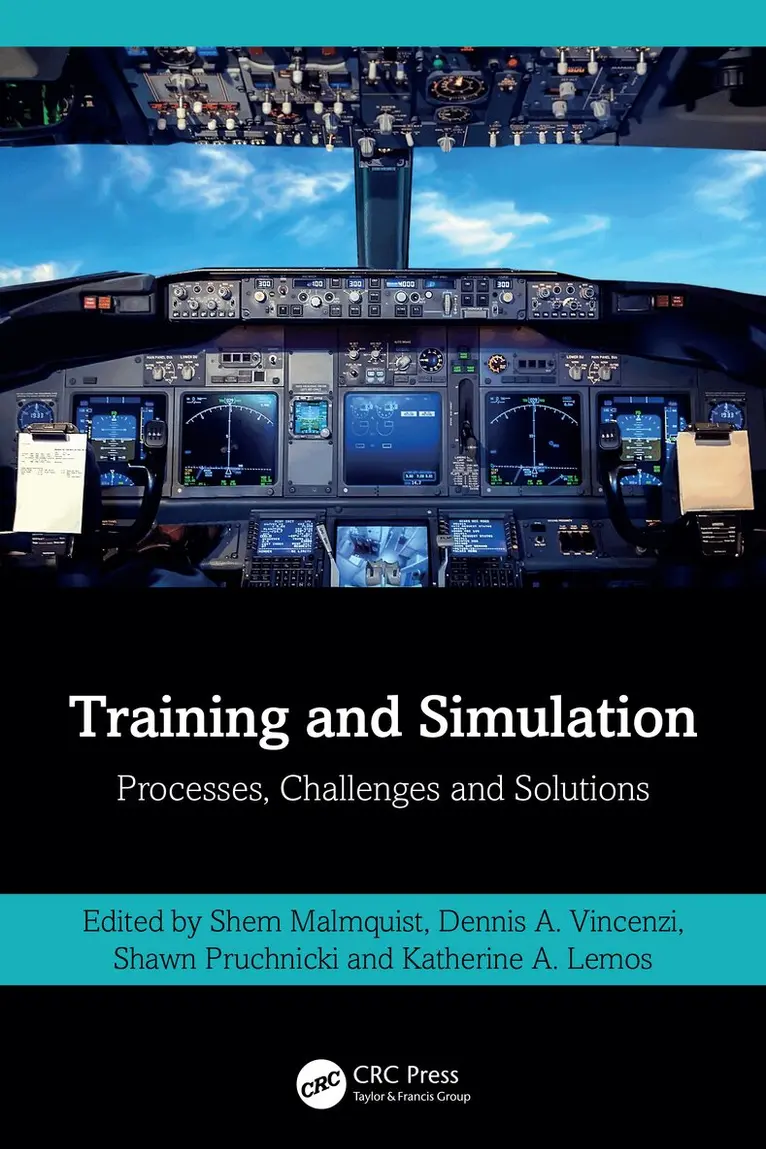
Developing training and simulation is a complex business. From understanding human performance design, usability and the limitations of training types to considerations with virtual reality (VR), producing realistic scenarios and even helping accident investigations leaves the practitioner with almost an overwhelming challenge. However, they know that their goal is to cut out developing methods that can train and test the sharp-end professional to be ready for any eventuality whether in the air, a chemical plant or the operating room. Through chapters written by leading experts, this book aims to address the key questions and concerns when developing training and simulation in high-risk industries.This book identifies unexplored challenges and weaknesses in the aviation domain, including ground-based training and flight simulation compared to the real world of in-flight complex aircraft operations, aviation accidents and incidents, airspace and air traffic control, aeronautical communications, air navigation, aircraft automation, and pilot certification and testing.These concerns are not just relevant to aviation, however. This book pushes beyond aviation to include other fields, including petrochemical and medicine, that, while on the surface are different, include some of the same human and organizational challenges.It integrates machine challenges with human factors science and includes a view of the corporate influences on training. Safety is a consideration in all the challenges and current limitations in training and simulation, and the book is written with the intention of improving both training and safety as industries deal with more and more complex advanced technology.Underpinned by case studies and real-life examples, this book will give the reader a thorough overview of the limitations of current training methods but with a view to improving and developing better methods for future training scenarios. Opportunities and solutions are presented for current or future research and the application and incorporation of these in day-day operations.Training and Simulation: Processes, Challenges and Solutions will appeal to practitioners of human factors, training, pilots and ground operators, engineers involved in systems design, safety specialists, test evaluators, and accident investigators across multiple domains.
2 155 kr
Skickas inom 10-15 vardagar
Measure twice, cut once. Although applicable to all areas of human factors research, the old adage is especially relevant to simulation and training. As a tool, simulation is an aid to the imagination, however, if incorrectly or inadequately used, it can lead to inaccurate outcomes that not only limit the possibilities but potentially cause harm. A comprehensive overview of the topic from a human factor perspective, Human Factors in Simulation and Training not only reflects the state-of-the art but also integrates the literature on simulation into a cohesive resource.The editors have collected chapters on a wide variety of topics, beginning with theory and application in areas ranging from traditional training to augmented reality to virtual reality. This coverage includes surface ships, submarines, naval aviation, commercial aviation, space, and medicine. The theory based section focuses on human factors aspects of simulation and training ranging from the history of simulators and training devices, to future trends in simulation from both a civilian and military perspective. The chapters expand on concepts regarding simulator usage particularly with respect to the validity and functionality of simulators as training devices. They contain in depth discussions of specific issues including fidelity, interfaces and control devices, transfer of training, simulator sickness, effects of motion in simulated systems, and virtual reality. As more, and more sophisticated, simulation tools and training technologies become available, a complete understanding of how to use them appropriately will be even more crucial. Elucidating theory and application, the book addresses numerous issues and concepts pertaining to human factors in simulation and training, making this volume an important addition to the bookshelf of any human factors professional.