Dionysius of Halicarnassus - Böcker
Visar alla böcker från författaren Dionysius of Halicarnassus. Handla med fri frakt och snabb leverans.
12 produkter
12 produkter
345 kr
Skickas inom 7-10 vardagar
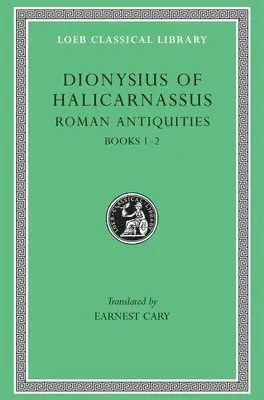
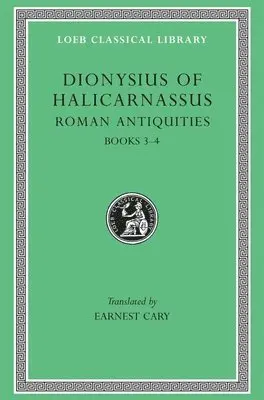
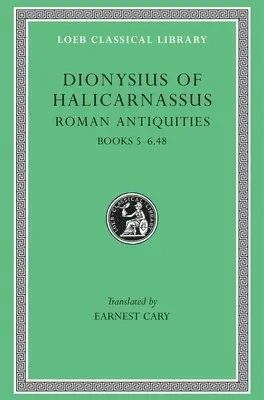
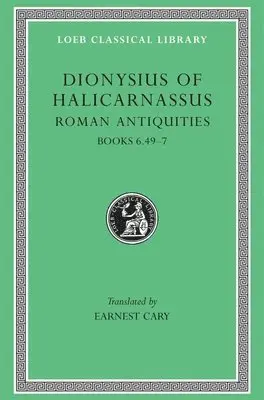
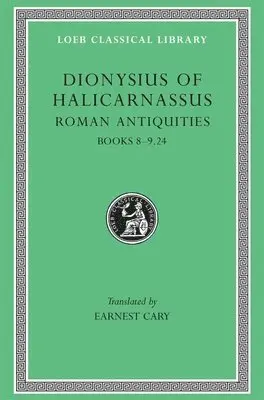
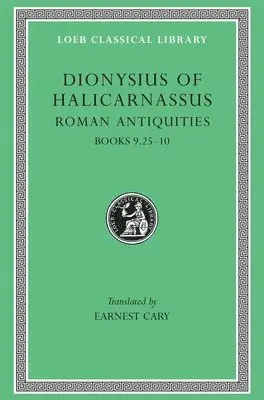
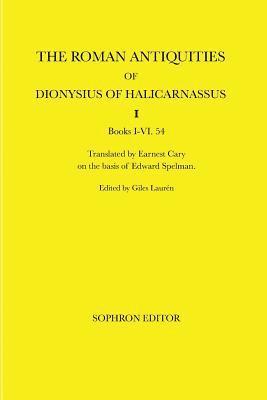
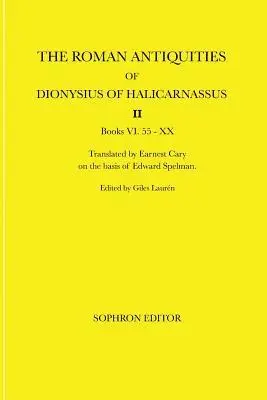
Roman history for a Greek audience.Dionysius of Halicarnassus was born before 53 BC and went to Italy before 29 BC. He taught rhetoric in Rome while studying the Latin language, collecting material for a history of Rome, and writing. His Roman Antiquities began to appear in 7 BC.Dionysius states that his objects in writing history were to please lovers of noble deeds and to repay the benefits he had enjoyed in Rome. But he wrote also to reconcile Greeks to Roman rule. Of the twenty books of Roman Antiquities (from the earliest times to 264 BC) we have the first nine complete; most of Books 10 and 11; and later extracts and an epitome of the whole. Dionysius studied the best available literary sources (mainly annalistic and other historians) and possibly some public documents. His work and that of Livy are our only continuous and detailed independent narratives of early Roman history.Dionysius was author also of essays on literature covering rhetoric, Greek oratory, Thucydides, and how to imitate the best models in literature.The Loeb Classical Library publishes a two-volume edition of the critical essays; the edition of Roman Antiquities is in seven volumes.
345 kr
Skickas inom 7-10 vardagar
Roman history for a Greek audience.Dionysius of Halicarnassus was born before 53 BC and went to Italy before 29 BC. He taught rhetoric in Rome while studying the Latin language, collecting material for a history of Rome, and writing. His Roman Antiquities began to appear in 7 BC.Dionysius states that his objects in writing history were to please lovers of noble deeds and to repay the benefits he had enjoyed in Rome. But he wrote also to reconcile Greeks to Roman rule. Of the twenty books of Roman Antiquities (from the earliest times to 264 BC) we have the first nine complete; most of Books 10 and 11; and later extracts and an epitome of the whole. Dionysius studied the best available literary sources (mainly annalistic and other historians) and possibly some public documents. His work and that of Livy are our only continuous and detailed independent narratives of early Roman history.Dionysius was author also of essays on literature covering rhetoric, Greek oratory, Thucydides, and how to imitate the best models in literature.The Loeb Classical Library publishes a two-volume edition of the critical essays; the edition of Roman Antiquities is in seven volumes.
397 kr
Skickas
Roman history for a Greek audience.Dionysius of Halicarnassus was born before 53 BC and went to Italy before 29 BC. He taught rhetoric in Rome while studying the Latin language, collecting material for a history of Rome, and writing. His Roman Antiquities began to appear in 7 BC.Dionysius states that his objects in writing history were to please lovers of noble deeds and to repay the benefits he had enjoyed in Rome. But he wrote also to reconcile Greeks to Roman rule. Of the twenty books of Roman Antiquities (from the earliest times to 264 BC) we have the first nine complete; most of Books 10 and 11; and later extracts and an epitome of the whole. Dionysius studied the best available literary sources (mainly annalistic and other historians) and possibly some public documents. His work and that of Livy are our only continuous and detailed independent narratives of early Roman history.Dionysius was author also of essays on literature covering rhetoric, Greek oratory, Thucydides, and how to imitate the best models in literature.The Loeb Classical Library publishes a two-volume edition of the critical essays; the edition of Roman Antiquities is in seven volumes.
345 kr
Skickas inom 7-10 vardagar
Roman history for a Greek audience.Dionysius of Halicarnassus was born before 53 BC and went to Italy before 29 BC. He taught rhetoric in Rome while studying the Latin language, collecting material for a history of Rome, and writing. His Roman Antiquities began to appear in 7 BC.Dionysius states that his objects in writing history were to please lovers of noble deeds and to repay the benefits he had enjoyed in Rome. But he wrote also to reconcile Greeks to Roman rule. Of the twenty books of Roman Antiquities (from the earliest times to 264 BC) we have the first nine complete; most of Books 10 and 11; and later extracts and an epitome of the whole. Dionysius studied the best available literary sources (mainly annalistic and other historians) and possibly some public documents. His work and that of Livy are our only continuous and detailed independent narratives of early Roman history.Dionysius was author also of essays on literature covering rhetoric, Greek oratory, Thucydides, and how to imitate the best models in literature.The Loeb Classical Library publishes a two-volume edition of the critical essays; the edition of Roman Antiquities is in seven volumes.
345 kr
Skickas inom 7-10 vardagar
Roman history for a Greek audience.Dionysius of Halicarnassus was born before 53 BC and went to Italy before 29 BC. He taught rhetoric in Rome while studying the Latin language, collecting material for a history of Rome, and writing. His Roman Antiquities began to appear in 7 BC.Dionysius states that his objects in writing history were to please lovers of noble deeds and to repay the benefits he had enjoyed in Rome. But he wrote also to reconcile Greeks to Roman rule. Of the twenty books of Roman Antiquities (from the earliest times to 264 BC) we have the first nine complete; most of Books 10 and 11; and later extracts and an epitome of the whole. Dionysius studied the best available literary sources (mainly annalistic and other historians) and possibly some public documents. His work and that of Livy are our only continuous and detailed independent narratives of early Roman history.Dionysius was author also of essays on literature covering rhetoric, Greek oratory, Thucydides, and how to imitate the best models in literature.The Loeb Classical Library publishes a two-volume edition of the critical essays; the edition of Roman Antiquities is in seven volumes.
345 kr
Skickas inom 7-10 vardagar
Roman history for a Greek audience.Dionysius of Halicarnassus was born before 53 BC and went to Italy before 29 BC. He taught rhetoric in Rome while studying the Latin language, collecting material for a history of Rome, and writing. His Roman Antiquities began to appear in 7 BC.Dionysius states that his objects in writing history were to please lovers of noble deeds and to repay the benefits he had enjoyed in Rome. But he wrote also to reconcile Greeks to Roman rule. Of the twenty books of Roman Antiquities (from the earliest times to 264 BC) we have the first nine complete; most of Books 10 and 11; and later extracts and an epitome of the whole. Dionysius studied the best available literary sources (mainly annalistic and other historians) and possibly some public documents. His work and that of Livy are our only continuous and detailed independent narratives of early Roman history.Dionysius was author also of essays on literature covering rhetoric, Greek oratory, Thucydides, and how to imitate the best models in literature.The Loeb Classical Library publishes a two-volume edition of the critical essays; the edition of Roman Antiquities is in seven volumes.
345 kr
Skickas inom 7-10 vardagar
Roman history for a Greek audience.Dionysius of Halicarnassus was born before 53 BC and went to Italy before 29 BC. He taught rhetoric in Rome while studying the Latin language, collecting material for a history of Rome, and writing. His Roman Antiquities began to appear in 7 BC.Dionysius states that his objects in writing history were to please lovers of noble deeds and to repay the benefits he had enjoyed in Rome. But he wrote also to reconcile Greeks to Roman rule. Of the twenty books of Roman Antiquities (from the earliest times to 264 BC) we have the first nine complete; most of Books 10 and 11; and later extracts and an epitome of the whole. Dionysius studied the best available literary sources (mainly annalistic and other historians) and possibly some public documents. His work and that of Livy are our only continuous and detailed independent narratives of early Roman history.Dionysius was author also of essays on literature covering rhetoric, Greek oratory, Thucydides, and how to imitate the best models in literature.The Loeb Classical Library publishes a two-volume edition of the critical essays; the edition of Roman Antiquities is in seven volumes.
345 kr
Skickas inom 7-10 vardagar
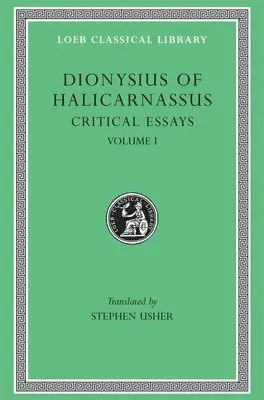
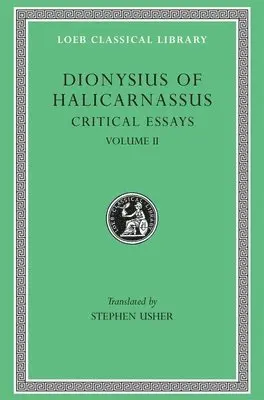
A master of ancient Greek prose styles.Dionysius of Halicarnassus had migrated to Rome by 30 BC, where he lived until his death some time after 8 BC, writing his Roman Antiquities and teaching the art of rhetoric and literary composition.Dionysius’ purpose, both in his own work and in his teaching, was to re-establish the classical Attic standards of purity, invention, and taste in order to reassert the primacy of Greek as the literary language of the Mediterranean world. He advocated the minute study of the styles of the finest prose authors of the fifth and fourth centuries BC, especially the Attic orators. His critical essays on these and on the historian Thucydides represent an important development from the somewhat mechanical techniques of rhetorical handbooks to a more sensitive criticism of individual authors. Illustrating his analysis with well-chosen examples, Dionysius preserves a number of important fragments of Lysias and Isaeus.The essays on those two orators and on Isocrates, Demosthenes, and Thucydides comprise Volume I of this edition. Volume II contains three letters to his students; a short essay on the orator Dinarchus; and his finest work, the essay On Literary Composition, which combines rhetoric, grammar, and criticism in a manner unique in ancient literature.The Loeb Classical Library also publishes a seven-volume edition of Roman Antiquities, by Dionysius of Halicarnassus, a history from earliest times to 264 BC.
345 kr
Skickas inom 7-10 vardagar
A master of ancient Greek prose styles.Dionysius of Halicarnassus had migrated to Rome by 30 BC, where he lived until his death some time after 8 BC, writing his Roman Antiquities and teaching the art of rhetoric and literary composition.Dionysius’ purpose, both in his own work and in his teaching, was to re-establish the classical Attic standards of purity, invention, and taste in order to reassert the primacy of Greek as the literary language of the Mediterranean world. He advocated the minute study of the styles of the finest prose authors of the fifth and fourth centuries BC, especially the Attic orators. His critical essays on these and on the historian Thucydides represent an important development from the somewhat mechanical techniques of rhetorical handbooks to a more sensitive criticism of individual authors. Illustrating his analysis with well-chosen examples, Dionysius preserves a number of important fragments of Lysias and Isaeus.The essays on those two orators and on Isocrates, Demosthenes, and Thucydides comprise Volume I of this edition. Volume II contains three letters to his students; a short essay on the orator Dinarchus; and his finest work, the essay On Literary Composition, which combines rhetoric, grammar, and criticism in a manner unique in ancient literature.The Loeb Classical Library also publishes a seven-volume edition of Roman Antiquities, by Dionysius of Halicarnassus, a history from earliest times to 264 BC.
Del 539 - Loeb Classical Library
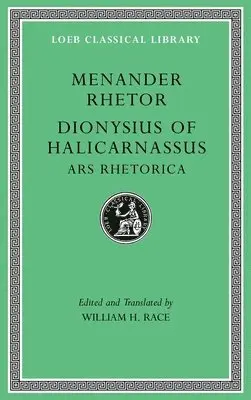
Menander Rhetor. Dionysius of Halicarnassus, Ars Rhetorica
Inbunden, Engelska, 2019
345 kr
Skickas inom 7-10 vardagar
How to write a speech in ancient Greek.This volume contains three rhetorical treatises dating probably from the reign of Diocletian (AD 285–312) that provide instruction on how to compose epideictic (display) speeches for a wide variety of occasions both public and private. Two are attributed to one Menander Rhetor of Laodicea (in southwestern Turkey); the third, known as the Ars Rhetorica, incorrectly to the earlier historian and literary critic Dionysius of Halicarnassus. These treatises derive from the schools of rhetoric that flourished in the Roman Empire from the second through fourth centuries AD in the Greek East. Although important examples of some genres of occasional prose were composed in the fifth and fourth centuries BC by Thucydides, Xenophon, Plato, and especially Isocrates, it was with the flowering of rhetorical prose during the so-called Second Sophistic in the second half of the second century AD that more forms were developed as standard repertoire and became exemplary.Distinctly Hellenic and richly informed by the prose and poetry of a venerable past, these treatises are addressed to the budding orator contemplating a civic career, one who would speak for his city’s interests to the Roman authorities and be an eloquent defender of its Greek culture and heritage. They provide a window into the literary culture, educational values and practices, and social concerns of these Greeks under Roman rule, in both public and private life, and considerably influenced later literature both pagan and Christian.This edition offers a fresh translation, ample annotation, and texts based on the best critical editions.
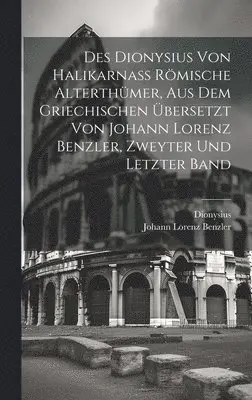
Des Dionysius von Halikarnaß römische Alterthümer, aus dem griechischen übersetzt von Johann Lorenz Benzler, zweyter und letzter Band
Inbunden, Tyska, 2023
573 kr
Skickas inom 5-8 vardagar
Des Dionysius von Halikarnaß römische Alterthümer, aus dem griechischen übersetzt von Johann Lorenz Benzler, zweyter und letzter Band
Häftad, Tyska, 2023
461 kr
Skickas inom 5-8 vardagar