Dominic A. Pacyga - Böcker
Visar alla böcker från författaren Dominic A. Pacyga. Handla med fri frakt och snabb leverans.
8 produkter
8 produkter
250 kr
Skickas inom 7-10 vardagar
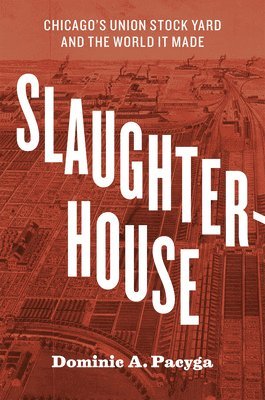
From the minute it opened-on Christmas Day in 1865-it was Chicago's must-see tourist attraction, drawing more than half a million visitors each year. Families, visiting dignitaries, even school groups all made trips to the South Side to tour the Union Stock Yard. There they got a firsthand look at the city's industrial prowess as they witnessed cattle, hogs, and sheep disassembled with breathtaking efficiency. At their height, the kill floors employed 50,000 workers and processed six hundred animals an hour, an astonishing spectacle of industrialized death. Slaughterhouse tells the story of the Union Stock Yard, chronicling the rise and fall of an industrial district that, for better or worse, served as the public face of Chicago for decades. Dominic A. Pacyga is a guide like no other-he grew up in the shadow of the stockyards, spent summers in their hog house and cattle yards, and maintains a long-standing connection with the working-class neighborhoods around them. Pacyga takes readers through the packinghouses as only an insider can, covering the rough and toxic life inside the plants and their lasting effects on the world outside.He shows how the yards shaped the surrounding neighborhoods and controlled the livelihoods of thousands of families. He looks at the Union Stock Yard's political and economic power and its sometimes volatile role in the city's race and labor relations. And he traces its decades of mechanized innovations, which introduced millions of consumers across the country to an industrialized food system. Although the Union Stock Yard closed in 1971, the story doesn't end there. Pacyga takes readers to present day, showing how the manufacturing spirit lives on. Ironically, today the site of the legendary "stockyard stench" is now home to some of Chicago's most successful green agriculture companies. Marking the hundred-and-fiftieth anniversary of the opening of the stockyards, Slaughterhouse is an engrossing story of one of the most important-and deadliest-square miles in American history.
226 kr
Skickas inom 7-10 vardagar
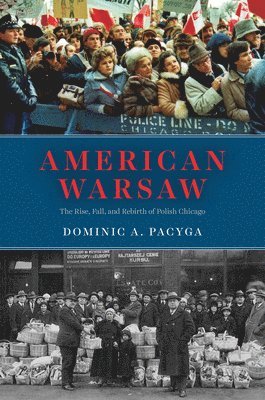
Every May, a sea of 250,000 people decked out in red and white head to Chicago's Loop to celebrate the Polish Constitution Day Parade. In the city, you can tune into not one but four different Polish-language radio stations or jam out to the Polkaholics. You can have lunch at pierogi food trucks or pick up paczkis at the grocery store. And if you're lucky, you get to take off Casimir Pulaski Day. For more than a century, Chicago has been home to one of the largest Polish populations outside of Poland, and the group has had enormous influence on the city's culture and politics. Yet, until now, there has not been a comprehensive history of the Chicago Polonia.With American Warsaw, award-winning historian and Polish American Dominic A. Pacyga chronicles more than a century of immigration, and later emigration back to Poland, showing how the community has continually redefined what it means to be Polish in Chicago. He takes us from the Civil War Era until today, focusing on how three major waves of immigrants, refugees, and fortune seekers shaped and then redefined the Polonia. Pacyga also traces the movement of Polish immigrants from the peasantry to the middle class and from urban working-class districts dominated by major industries to suburbia. He documents Polish Chicago's alignments and divisions: with other Chicago ethnic groups; with the Catholic Church; with unions, politicians, and City Hall; and even among its own members. And he explores the ever-shifting sense of Polskosc, or "Polishness."Today Chicago is slowly being eclipsed by other Polish immigrant centers, but it remains a vibrant--and sometimes contentious--heart of the Polish-American experience. American Warsaw is a sweeping story that expertly depicts a people who are deeply connected to their historical home and, at the same time, fiercely proud of their adopted city. As Pacyga writes, "While we were Americans, we also considered ourselves to be Poles. In that strange Chicago ethnic way, there was no real difference between the two."
185 kr
Skickas inom 7-10 vardagar
From the minute it opened--on Christmas Day in 1865--it was Chicago's must-see tourist attraction, drawing more than half a million visitors each year. Families, visiting dignitaries, even school groups all made trips to the South Side to tour the Union Stock Yard. There they got a firsthand look at the city's industrial prowess as they witnessed cattle, hogs, and sheep disassembled with breathtaking efficiency. At their height, the kill floors employed 50,000 workers and processed six hundred animals an hour, an astonishing spectacle of industrialized death. Slaughterhouse tells the story of the Union Stock Yard, chronicling the rise and fall of an industrial district that, for better or worse, served as the public face of Chicago for decades. Dominic A. Pacyga is a guide like no other--he grew up in the shadow of the stockyards, spent summers in their hog house and cattle yards, and maintains a longstanding connection with the working-class neighborhoods around them. Pacyga takes readers through the packinghouses as only an insider can, covering the rough and toxic life inside the plants and their lasting effects on the world outside. He shows how the yards shaped the surrounding neighborhoods and controlled the livelihoods of thousands of families. He looks at the Union Stock Yard's political and economic power and its sometimes volatile role in the city's race and labor relations. And he traces its decades of mechanized innovations, which introduced millions of consumers across the country to an industrialized food system. Once the pride and signature stench of a city, the neighborhood is now home to Chicago's most successful green agriculture companies. Slaughterhouse is the engrossing story of the creation and transformation of one of the most important--and deadliest--square miles in American history.
266 kr
Skickas inom 7-10 vardagar
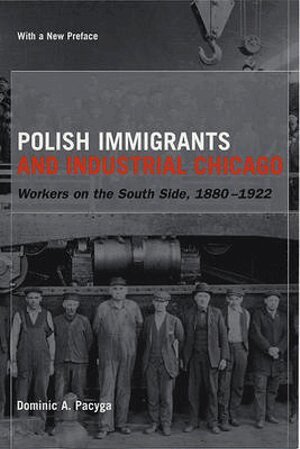
This work explores the lives of immigrants in two iconic Polish neighborhoods - the Back of the Yards and South Chicago. Through institutions such as churches and schools, the Poles were able to preserve their folk beliefs and family customs.
210 kr
Skickas inom 7-10 vardagar
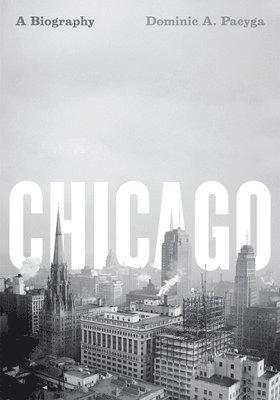
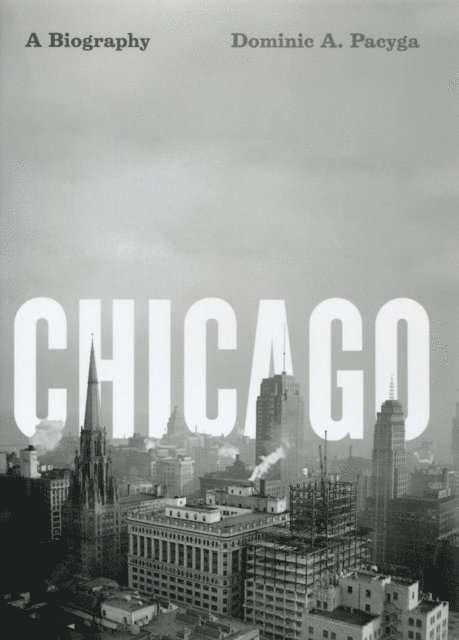
Chicago has been called by many names. Nelson Algren declared it a 'City on the Make.' Carl Sandburg dubbed it the 'City of Big Shoulders.' Upton Sinclair christened it the 'Jungle,' while New Yorkers, naturally, pronounced it the 'Second City.' At last there is a book for all of us, whatever we choose to call Chicago. In this magisterial work, historian Dominic A. Pacyga traces the storied past of his hometown, from the explorations of Joliet and Marquette in 1673 to the new wave of urban pioneers today. The city's great industrialists, reformers, and politicians - and, indeed, the many not-so-great and downright notorious - animate this book, from Al Capone and Jane Addams to Mayor Richard J. Daley and President Barack Obama. But what distinguishes this book from the many others on the subject is its author's uncommon ability to illuminate the lives of Chicago's ordinary people. Raised on the city's South Side and employed for a time in the stockyards, Pacyga gives voice to the city's steelyard workers and kill floor operators, and maps the neighborhoods distinguished not by Louis Sullivan masterworks but by bungalows and corner taverns.Filled with the city's one-of-a-kind characters and all of its defining moments, "Chicago: A Biography" is as big and boisterous as its namesake - and as ambitious as the men and women who built it.
270 kr
Skickas inom 7-10 vardagar
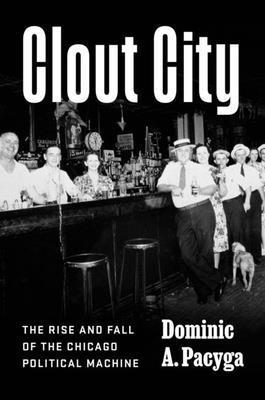
Unearths the religious and cultural roots of a powerful political machine that empowered some everyday Chicagoans but ruled all of the city for decades.In politics, clout is essential. Too often, it determines whether insider access is granted or denied, favors are given or withheld, and payoffs are made or received. But Chicago clout, as we know it today, is even more potent than that—it’s the absolute currency of a social, cultural, and political order that is self-reinforcing and self-dealing. Or, at least, it was. In Clout City, award-winning historian Dominic A. Pacyga reveals how cultural, ethnic, and religious forces created this distinctive system—and ultimately led to its collapse. Tracing clout’s origins in the Irish Catholic–dominated working-class neighborhood of Bridgeport, shaped by De La Salle Institute and home to the legendary Daley family, Pacyga shows how communal ties can be a force for good and also the deepest wellspring of corruption. He maps Chicago’s unique politics to its remarkable history, from the Great Fire of 1871 through its rise and decline as an industrial center to its emergence as a global city in the early twenty-first century. With deep research and firsthand experience from a lifetime in the city, Pacyga argues that Chicago’s politics is understood best as a mixture of cultural and religious influences and more worldly pursuits, exploring how both Jewish and Catholic communalism played central roles in the creation and sustenance of the Chicago machine. Chicago’s politics today aren’t as defined by its distinctive brand of clout. But they are shaped by clout’s decline and the ghost of the machine. Pacyga’s tour of the city’s multilayered past is an indispensable guide to its present and future.
185 kr
Skickas inom 7-10 vardagar
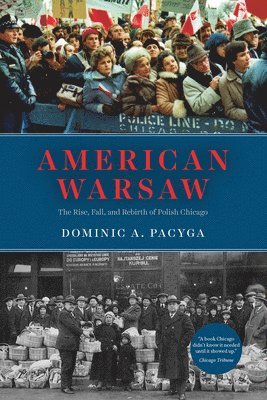
Every May, a sea of 250,000 people decked out in red and white head to Chicago’s Loop to celebrate the Polish Constitution Day Parade. In the city, you can tune in to not one but four different Polish-language radio stations or jam out to the Polkaholics. You can have lunch at pierogi food trucks or pick up pączkis at the grocery store. And if you’re lucky, you get to take off work for Casimir Pulaski Day. For more than a century, Chicago has been home to one of the largest Polish populations outside of Poland, and the group has had an enormous influence on the city’s culture and politics. Yet, until now, there has not been a comprehensive history of the Chicago Polonia.With American Warsaw, award-winning historian and Polish American Dominic A. Pacyga chronicles more than a century of immigration, and later emigration back to Poland, showing how the community has continually redefined what it means to be Polish in Chicago. He takes us from the Civil War era until today, focusing on how three major waves of immigrants, refugees, and fortune seekers shaped and then redefined the Polonia. Pacyga also traces the movement of Polish immigrants from the peasantry to the middle class and from urban working-class districts dominated by major industries to suburbia. He documents Polish Chicago’s alignments and divisions: with other Chicago ethnic groups; with the Catholic Church; with unions, politicians, and city hall; and even among its own members. And he explores the ever-shifting sense of Polskość, or “Polishness.”Today Chicago is slowly being eclipsed by other Polish immigrant centers, but it remains a vibrant—and sometimes contentious—heart of the Polish American experience. American Warsaw is a sweeping story that expertly depicts a people who are deeply connected to their historical home and, at the same time, fiercely proud of their adopted city. As Pacyga writes, “While we were Americans, we also considered ourselves to be Poles. In that strange Chicago ethnic way, there was no real difference between the two.”
277 kr
Skickas inom 5-8 vardagar