Donald W. Engels – författare
Visar alla böcker från författaren . Handla med fri frakt och snabb leverans.
5 produkter
5 produkter
Häftad, Engelska, 1980
237 kr
Skickas inom 5-8 vardagar
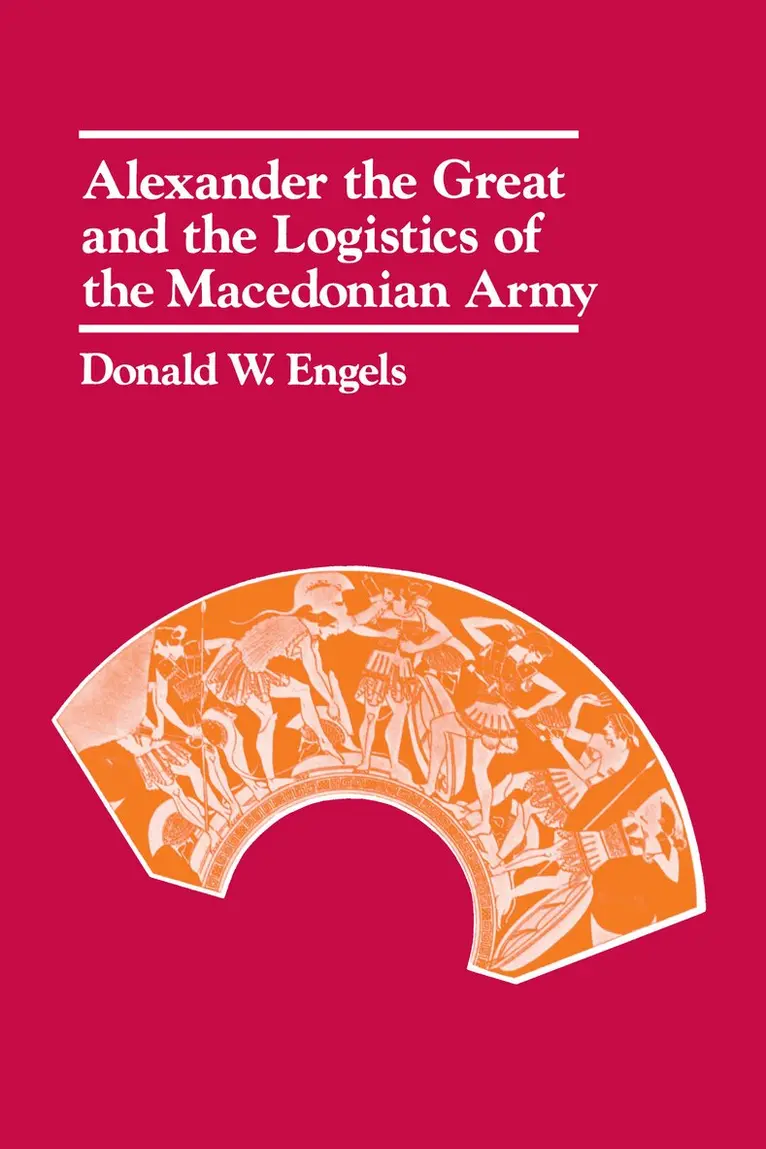
'The most important work on Alexander the Great to appear in a long time. Neither scholarship nor semi-fictional biography will ever be the same again...Engels at last uses all the archaeological work done in Asia in the past generation and makes it accessible...Careful analyses of terrain, climate, and supply requirements are throughout combined in a masterly fashion to help account for Alexander's strategic decision in the light of the options open to him...The chief merit of this splendid book is perhaps the way in which it brings an ancient army to life, as it really was and moved: the hours it took for simple operations of washing and cooking and feeding animals; the train of noncombatants moving with the army...this is a book that will set the reader thinking. There are not many books on Alexander the Great that do' - "New York Review of Books".
Häftad, Engelska, 2001
645 kr
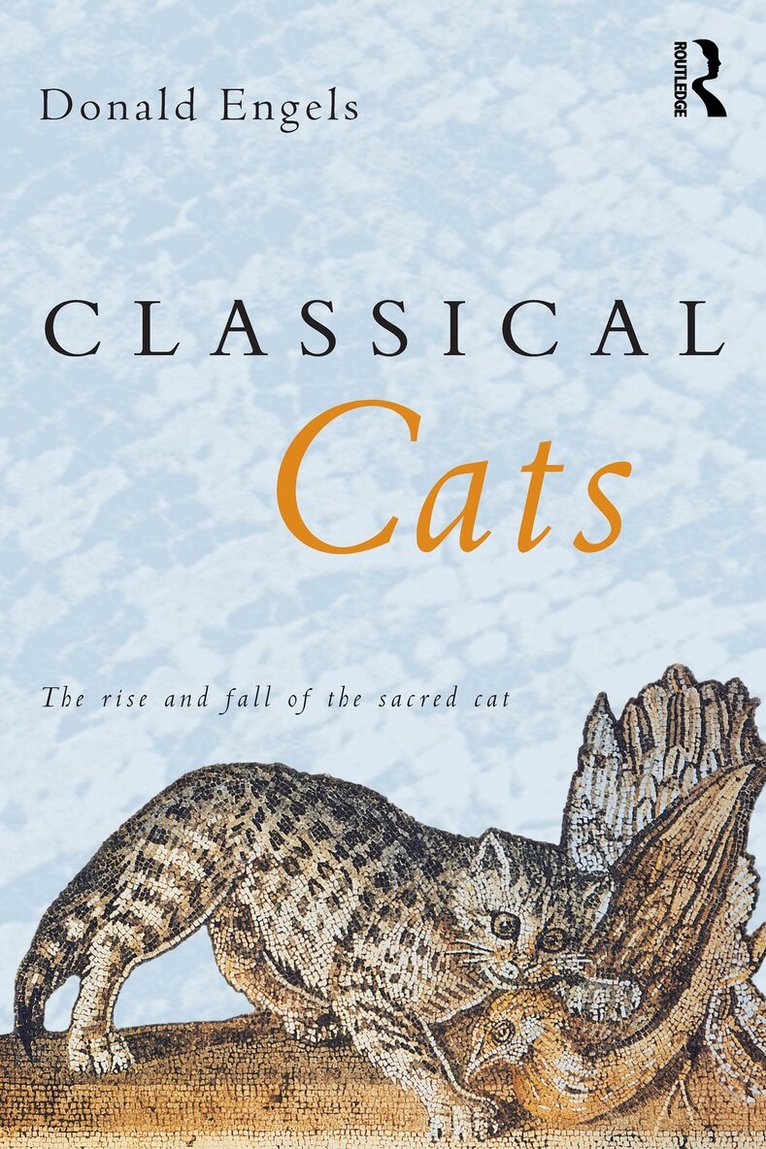
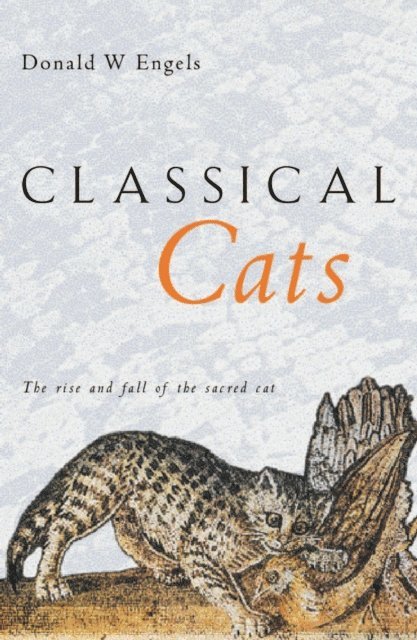
Today when we think of domestic cats, we recall the familiar hearthside companion and the mischievous playmate. It is difficult to comprehend that in the past the animal has played a fundamental role in the development of European and Western civilization. The human relationship to the cat has been important for most of the last four millennia.In this beautifully illustrated book, Donald Engels charts the history and significance of the cat from ancient Egypt to the middle ages, exploring such phenomena as the worship of the Egyptian cat goddess Bastet, the infamous cat massacres and witch hunts of the thirteenth century, and the role of the cat in combating disease and starvation. Classical Cats presents a unique and entertaining view of the vicissitudes of the cat in history.
E-bok
Engelska, 2023399 kr
Läs direkt efter köp
"The most important work on Alexander the Great to appear in a long time. Neither scholarship nor semi-fictional biography will ever be the same again. . . .Engels at last uses all the archaeological work done in Asia in the past generation and makes it accessible. . . . Careful analyses of terrain, climate, and supply requirements are throughout combined in a masterly fashion to help account for Alexander''s strategic decision in the light of the options open to him...The chief merit of this splendid book is perhaps the way in which it brings an ancient army to life, as it really was and moved: the hours it took for simple operations of washing and cooking and feeding animals; the train of noncombatants moving with the army. . . . this is a book that will set the reader thinking. There are not many books on Alexander the Great that do."—New York Review of Books"The most important work on Alexander the Great to appear in a long time. Neither scholarship nor semi-fictional biography will ever be the same again. . . .Engels at last uses all the archaeological work done in Asia in the past generation and makes it a
E-bok
PDF, Engelska, 2018762 kr
Läs direkt efter köp
This is the definitive book on classical cats. The cat has played a significant role in history from the earliest times. Well known is its role in the religion and art of ancient Egypt, no less than its association with witchcraft in the Middle Ages. But when did the cat become a domestic companion and worker as well?There has been much debate about the position of the cat in ancient Greece and Rome. Artistic representations are sometimes ambiguous, and its role as a mouse-catcher seems often to have been carried out by weasels. Yet other evidence clearly suggests that the cat was as important to Greeks and Romans as it is to many modern people.This book is the first comprehensive survey of the evidence for cats in Greece and Rome, and of their functions and representations in art. Donald Engels draws on authors from Aesop to Aristotle; on vase-painting, inscriptions and the plastic arts; and on a thorough knowledge of zoology of the cat. He also sets the ancient evidence in the wider context of the Egyptian period that preceded it, as well as the views of the Church fathers who ushered antiquity into the Middle Ages.
E-bok
Engelska, 2018762 kr
Läs direkt efter köp
This is the definitive book on classical cats. The cat has played a significant role in history from the earliest times. Well known is its role in the religion and art of ancient Egypt, no less than its association with witchcraft in the Middle Ages. But when did the cat become a domestic companion and worker as well?There has been much debate about the position of the cat in ancient Greece and Rome. Artistic representations are sometimes ambiguous, and its role as a mouse-catcher seems often to have been carried out by weasels. Yet other evidence clearly suggests that the cat was as important to Greeks and Romans as it is to many modern people.This book is the first comprehensive survey of the evidence for cats in Greece and Rome, and of their functions and representations in art. Donald Engels draws on authors from Aesop to Aristotle; on vase-painting, inscriptions and the plastic arts; and on a thorough knowledge of zoology of the cat. He also sets the ancient evidence in the wider context of the Egyptian period that preceded it, as well as the views of the Church fathers who ushered antiquity into the Middle Ages.