Donnell R. Christian, Jr. - Böcker
Visar alla böcker från författaren Donnell R. Christian, Jr.. Handla med fri frakt och snabb leverans.
7 produkter
7 produkter
2 113 kr
Skickas inom 10-15 vardagar
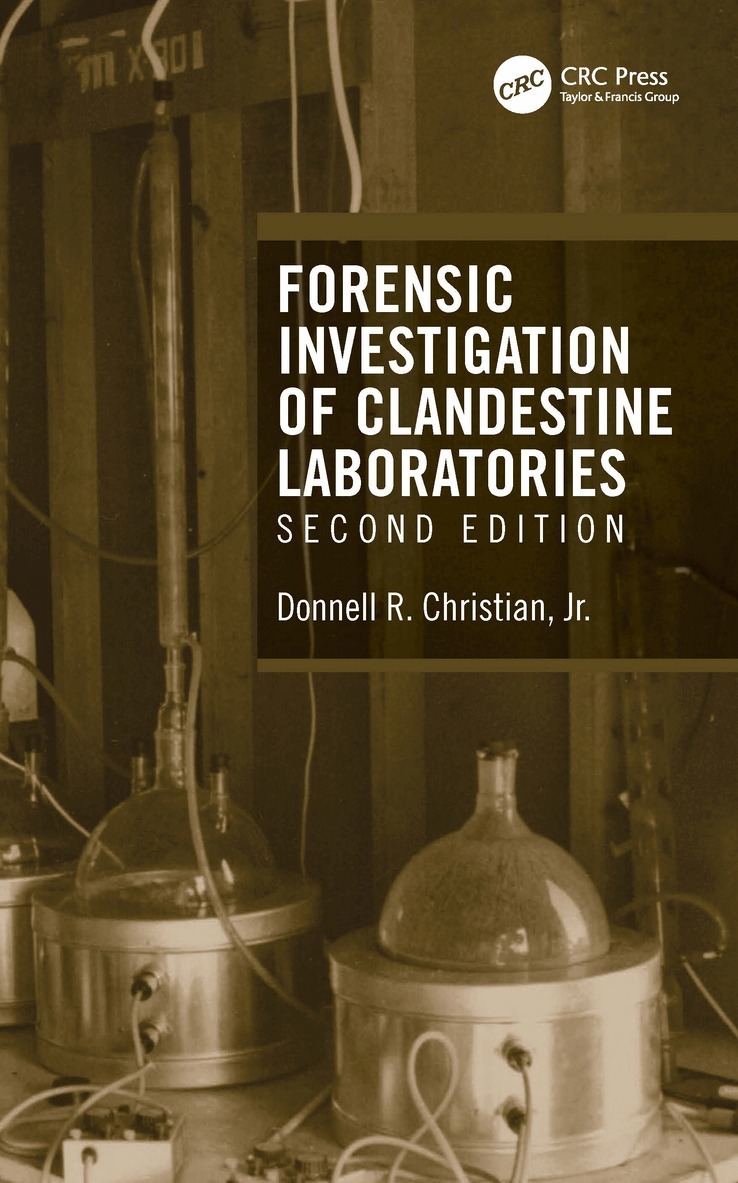
Forensic Investigation of Clandestine Laboratories, Second Edition is fully updated to address all aspects of the forensic investigation of clandestine laboratories. While, the first edition focused on the domestic clandestine manufacture of contraband substances, this edition expands the scope to more fully address the clandestine manufacture of explosives that have become a threat that is global in nature. In clandestine laboratory operations, equipment is often simple, household chemical products are utilized, and the education of the operators basic. In fact, most of the time these elements individually are perfectly legal to sell and possess. However, the combination of all these elements is what becomes the scene of illicit activity and a criminal operation. In response to the increase in use of homemade explosive mixtures by terrorists, both domestically and internationally, the section clandestine manufacture of explosives is greatly enhanced. Topics are presented in a manner which, while detailed, will not compromise the tactics, techniques, or procedures utilized by law enforcement and military personnel in their ability to combat the clandestine manufacture of contraband substances and the battle against domestic and international terrorism.Key features: • Examines tell-tale signs to look for in recognizing a clandestine lab• Outlines how to safely process the site of a clandestine lab• Details how to analyze collected evidence in the examination laboratory • Provides guidelines as to what to derive from the physical evidence• Offers specific tactics to effectively present the opinions associated with evidence that has been collected during the investigation in a written report, military style briefing or to a jury in a legal proceeding.Forensic Investigation of Clandestine Laboratories, Second Edition guides the reader through the process of recognizing these illegal manufacturing operations. Then it examines the methods as to how to compile the volume of associated evidence into a package that can be presented in a court of law, or to military commanders for decisive action. It is an invaluable resource, that will prove useful to chemistry lab technicians, forensic investigators, fire and first responder professionals, military personnel, police investigative agencies and narcotics units, and lawyer trying cases involving clandestine labs.
1 080 kr
Skickas inom 10-15 vardagar
Forensic Investigation of Clandestine Laboratories, Second Edition is fully updated to address all aspects of the forensic investigation of clandestine laboratories. While, the first edition focused on the domestic clandestine manufacture of contraband substances, this edition expands the scope to more fully address the clandestine manufacture of explosives that have become a threat that is global in nature. In clandestine laboratory operations, equipment is often simple, household chemical products are utilized, and the education of the operators basic. In fact, most of the time these elements individually are perfectly legal to sell and possess. However, the combination of all these elements is what becomes the scene of illicit activity and a criminal operation. In response to the increase in use of homemade explosive mixtures by terrorists, both domestically and internationally, the section clandestine manufacture of explosives is greatly enhanced. Topics are presented in a manner which, while detailed, will not compromise the tactics, techniques, or procedures utilized by law enforcement and military personnel in their ability to combat the clandestine manufacture of contraband substances and the battle against domestic and international terrorism.Key features: • Examines tell-tale signs to look for in recognizing a clandestine lab• Outlines how to safely process the site of a clandestine lab• Details how to analyze collected evidence in the examination laboratory • Provides guidelines as to what to derive from the physical evidence• Offers specific tactics to effectively present the opinions associated with evidence that has been collected during the investigation in a written report, military style briefing or to a jury in a legal proceeding.Forensic Investigation of Clandestine Laboratories, Second Edition guides the reader through the process of recognizing these illegal manufacturing operations. Then it examines the methods as to how to compile the volume of associated evidence into a package that can be presented in a court of law, or to military commanders for decisive action. It is an invaluable resource, that will prove useful to chemistry lab technicians, forensic investigators, fire and first responder professionals, military personnel, police investigative agencies and narcotics units, and lawyer trying cases involving clandestine labs.
700 kr
Skickas inom 10-15 vardagar
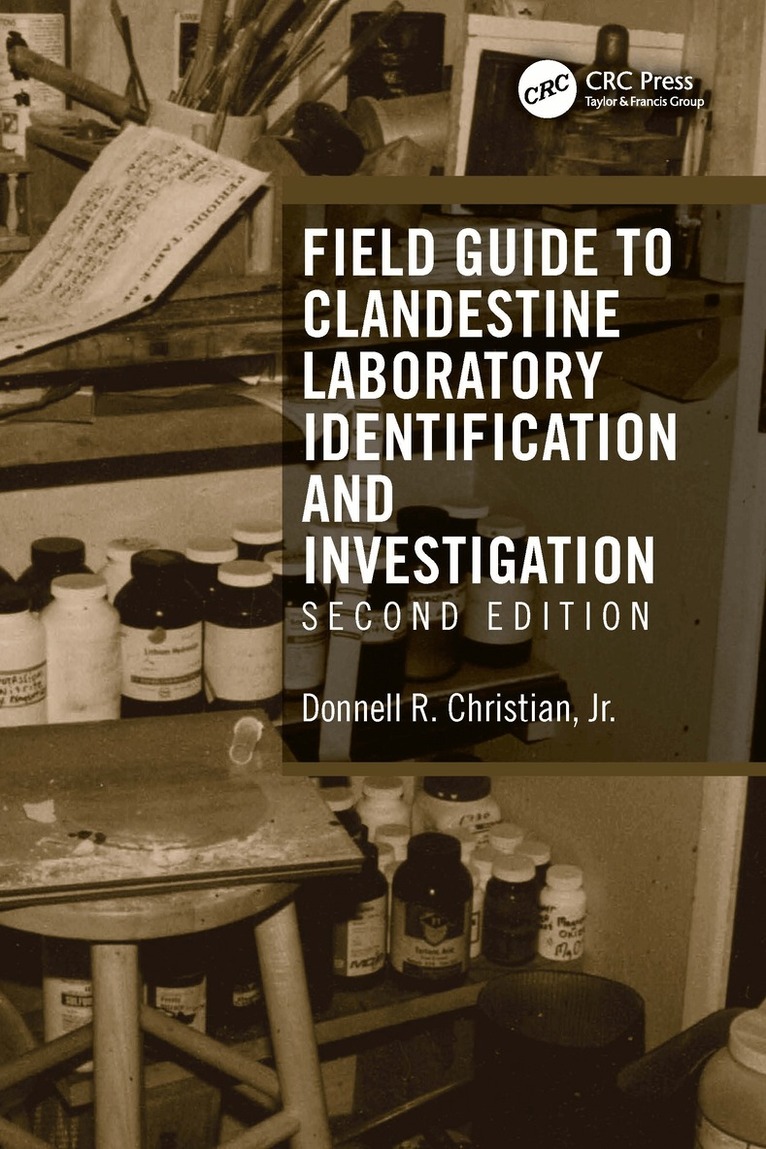
Clandestine labs that manufacture drugs or explosives may be encountered virtually anywhere. They can range from complex operations employing scientific equipment and exotic chemicals or simply kitchen utensils and chemicals purchased at a local grocery or hardware store. Regardless of their form, the key to detecting clandestine labs is the ability to recognize the combinations of equipment and chemicals that constitute the lab in the first place. The first line of defense against the manufacturers—who supply the drug trade and terrorists with their tools of destruction—is law enforcement, the fire services, and other emergency responders. Field Guide to Clandestine Laboratory Identification and Investigation, Second Edition provides the information necessary to recognize operations that produce these deadly brews. As with the prior edition, the book has sections covering the chemicals and equipment commonly used in the manufacture of drugs and explosives. They are grouped in a manner that allows the emergency responder to quickly identify common combinations of equipment and chemicals that could potentially be used to manufacture drugs or explosives. Since many clandestine manufacturing operations use commonly available materials that have legitimate uses, the author outlines how to quickly assess and recognize key indicators associated with clandestine laboratory operations. Sections within the book address information concerning both the hazards associated with those chemicals involved and the personal protective equipment needed to abate the hazards. In addition, documentation requirements, field-testing, and sampling procedures are detailed for use once the operation has been seized and secured. Reproducible worksheets are provided to be used either as, or to supplement, the on-scene investigators’ field notes and assist in providing a standardized manner to objectively record information about the crime scene. The ability to identify the tools used to manufacture contraband drugs and explosives is a key element in the battle against drug abuse and terrorism, making the Field Guide to Clandestine Laboratory Identification and Investigation, Second Edition an indispensible resource for responders and investigators alike.
1 977 kr
Skickas inom 10-15 vardagar
Clandestine labs that manufacture drugs or explosives may be encountered virtually anywhere. They can range from complex operations employing scientific equipment and exotic chemicals or simply kitchen utensils and chemicals purchased at a local grocery or hardware store. Regardless of their form, the key to detecting clandestine labs is the ability to recognize the combinations of equipment and chemicals that constitute the lab in the first place. The first line of defense against the manufacturers—who supply the drug trade and terrorists with their tools of destruction—is law enforcement, the fire services, and other emergency responders. Field Guide to Clandestine Laboratory Identification and Investigation, Second Edition provides the information necessary to recognize operations that produce these deadly brews. As with the prior edition, the book has sections covering the chemicals and equipment commonly used in the manufacture of drugs and explosives. They are grouped in a manner that allows the emergency responder to quickly identify common combinations of equipment and chemicals that could potentially be used to manufacture drugs or explosives. Since many clandestine manufacturing operations use commonly available materials that have legitimate uses, the author outlines how to quickly assess and recognize key indicators associated with clandestine laboratory operations. Sections within the book address information concerning both the hazards associated with those chemicals involved and the personal protective equipment needed to abate the hazards. In addition, documentation requirements, field-testing, and sampling procedures are detailed for use once the operation has been seized and secured. Reproducible worksheets are provided to be used either as, or to supplement, the on-scene investigators’ field notes and assist in providing a standardized manner to objectively record information about the crime scene. The ability to identify the tools used to manufacture contraband drugs and explosives is a key element in the battle against drug abuse and terrorism, making the Field Guide to Clandestine Laboratory Identification and Investigation, Second Edition an indispensible resource for responders and investigators alike.
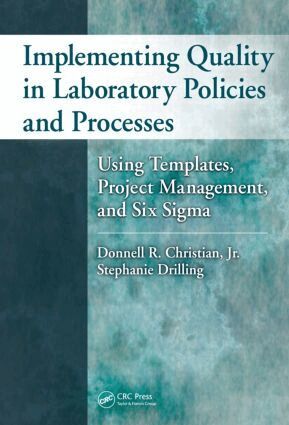
Implementing Quality in Laboratory Policies and Processes
Using Templates, Project Management, and Six Sigma
Inbunden, Engelska, 2009
13 528 kr
Skickas inom 7-10 vardagar
In order to gain accreditation, every laboratory must have a superior quality assurance program. The keys to a successful program are the operational and technical manuals and associated documents which define the program and its various components. Written by experts with global experience in setting up laboratories, Implementing Quality in Laboratory Policies and Processes: Using Templates, Project Management, and Six Sigma provides templates for the various policies, procedures, and forms that should be contained in the quality assurance, operational, and technical manuals of a laboratory seeking accreditation.Templates for the entire project life cycleThe book begins with a general introduction and overview of quality assurance and then moves on to cover implementation strategies. It contains best practices and templates for the project management of the design and implementation of the laboratory operational and technical manuals required to establish a quality assurance program. The templates span the entire project life cycle, from initiation, to planning, to execution, to monitoring, and finally, to closure. The book also examines how Six Sigma concepts can be used to optimize laboratories, and contains templates that cover administrative issues, quality assurance, sample control, and health and safety issues. In addition, there is a section of criteria files that relate the individual document templates to specific accreditation criterion.Addresses the standards of ISO 17025The results of any laboratory examination have the potential to be presented in court and can ultimately affect the life and liberty of the parties involved. Therefore, a stringent quality assurance program, including well-documented policies and a procedure manual, is essential. Ensuring that laboratories meet the standards of ISO 17025, this volume is a critical component of any laboratory’s accreditation process.
985 kr
Skickas inom 10-15 vardagar
Basic Principles of Forensic Chemistry is designed to provide a clear and concise understanding of forensic chemistry. The text begins with an introduction to the basic principles of chemistry and expands through organic chemistry into forensic investigation. The detailed chapters focus on both the theoretical and practical aspects of forensic chemistry with emphasis on controlled substance testing and identification. Leading experts in the field contribute general examination techniques followed by applications to more specific models. In addition, the text contains a comprehensive collection of information and data on controlled substances commonly encountered in forensic investigation including; detailed structural analysis, physical and physiological effects, functional group reactivity, and results of analytical examination. Also illustrated is arguably the greatest challenge to the forensic chemist: the investigation and processing of clandestine laboratory operations. The Forensic Chemistry Laboratory Manual is included on a CD-ROM and contains a collection of practical exercises designed to support theoretical principles covered in the text. This provides the student with valuable hands-on experience while adding clarity and continuity to the topics of discussion.Essential and comprehensive, Basic Principles of Forensic Chemistry provides the fundamental knowledge required for a rewarding journey into the field of forensic chemistry.
1 484 kr
Skickas inom 10-15 vardagar
Basic Principles of Forensic Chemistry is designed to provide a clear and concise understanding of forensic chemistry. The text begins with an introduction to the basic principles of chemistry and expands through organic chemistry into forensic investigation. The detailed chapters focus on both the theoretical and practical aspects of forensic chemistry with emphasis on controlled substance testing and identification. Leading experts in the field contribute general examination techniques followed by applications to more specific models. In addition, the text contains a comprehensive collection of information and data on controlled substances commonly encountered in forensic investigation including; detailed structural analysis, physical and physiological effects, functional group reactivity, and results of analytical examination. Also illustrated is arguably the greatest challenge to the forensic chemist: the investigation and processing of clandestine laboratory operations. The Forensic Chemistry Laboratory Manual is included on a CD-ROM and contains a collection of practical exercises designed to support theoretical principles covered in the text. This provides the student with valuable hands-on experience while adding clarity and continuity to the topics of discussion.Essential and comprehensive, Basic Principles of Forensic Chemistry provides the fundamental knowledge required for a rewarding journey into the field of forensic chemistry.