Duncan Campbell-Smith – författare
Visar alla böcker från författaren Duncan Campbell-Smith. Handla med fri frakt och snabb leverans.
7 produkter
7 produkter
E-bok
Engelska, 2008161 kr
Läs direkt efter köp
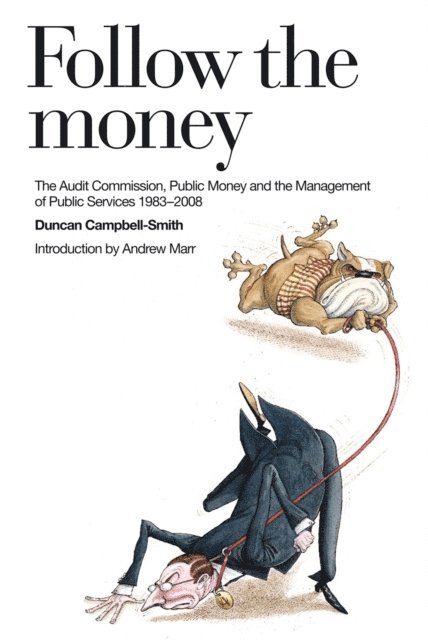
Most books on politics and government take a view from the top down. They focus on the individuals and institutions that set policies in place and make the laws. But how are these policies and laws translated into action on the ground, where their success or failure helps determine the day to day running of schools and hospitals, police forces and councils? This is the much less familiar territory explored by Follow The Money. It tells the story of the men and women responsible for keeping track of the money spent locally on public services since the early 1980s. What emerges is a rare behind-the-scenes account of the political world in which central government edicts come up against the reality of how things are made to happen at the grass roots. Follow The Money shows how the Commission has helped over 25 years to transform the management of public services, including the NHS, while mediating in an often tense relationship between central and local government from the Thatcher era to the years of New Labour. The result, encompassing a string of scandals and battles between town hall and Whitehall, is a compelling narrative for which an accounting qualification is most certainly not required.
E-bok
Engelska, 2011161 kr
Läs direkt efter köp
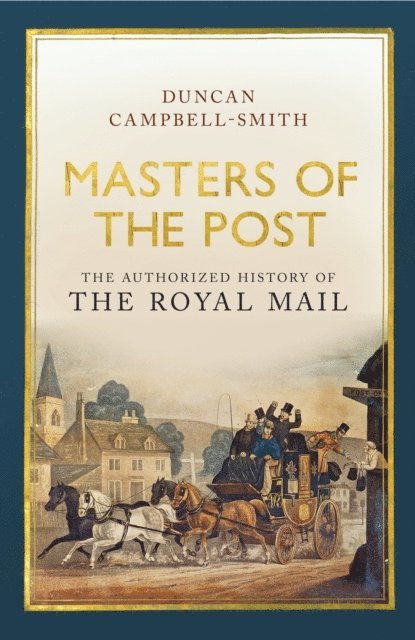
The origins of the Post Office go back to the early years of the Tudor monarchy: Brian Tuke, a former King's Bailiff in Sandwich, was acknowledged as the first 'Master of the Posts' by Cardinal Wolsey in 1512, and went on to build up a network of 'postmasters' across England for Henry VIII. Over the following five hundred years the Royal Mail expanded to an unimaginable degree to become the largest employer in the country, and the face of the British state for most people in their everyday lives. But it also faced the demands of an increasingly commercial marketplace. With the election of Margaret Thatcher in 1979, the possibility of privatising the Royal Mail has prompted passionate arguments - and has added immeasurably to the difficulties of running it. In charting the whole of this extraordinary story, Duncan Campbell-Smith recounts a series of remarkable tales, including how postal engineers built the first programmable computer for the wartime code-breakers of Bletchley Park and how the Royal Mail managed to successfully continue delivering post to the front lines during two world wars, but also how they failed to avert the Great Train Robbery of 1963. He brings to life many of the dominant personalities in the Royal Mail's history - from Rowland Hill, who imposed a uniform penny post and set the great Victorian expansion on its way, to Tony Benn who championed the modernisation of the service in the 1960s and Tom Jackson who led the postal workers' biggest union through fifteen frequently stormy years up to 1982. This is the first complete history of the Royal Mail up to the present day, based on its comprehensive archives, and including the first detailed account of the past half-century of Britain's postal history, made possible by privileged access to confidential records. Today's debate over the future of the Royal Mail is shown to be just the ;atest chapter in a centuries-old conflict between its roles raising revenue and serving the public. Will its employees remain, like Brian Tuke's postmasters, servants of the Crown? This book could hardly appear at a more timely moment.
E-bok
Engelska, 2021161 kr
Läs direkt efter köp
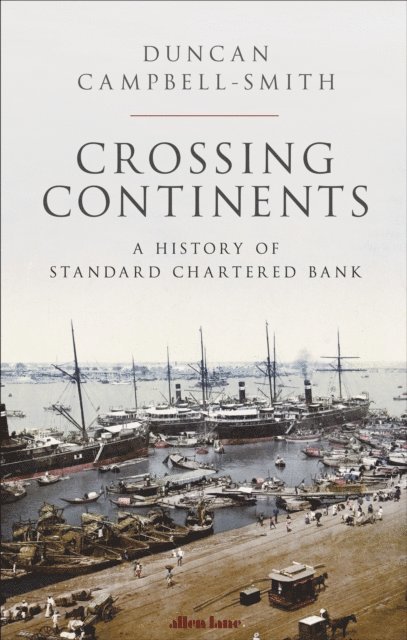
For almost a hundred years from the 1860s, the City of London's overseas banks financed the global trade that lay at the core of the British Empire. Foremost among them from the beginning were two start-up ventures: the Standard Bank of South Africa, which soon developed a powerful domestic franchise at the Cape, and the Chartered Bank of India, Australia and China. This book traces their stories in the nineteenth century, their glory days before 1914 - and their remarkable survival in the face of global wars and the collapse of world trade in the first half of the twentieth century.The unravelling of the Empire after 1945 eventually forced Britain's overseas banks to confront a different future. The Standard and the Chartered, alarmed at the expansion of American banking, determined in 1969 on a merger as a way of sustaining the best of the City's overseas traditions. But from the start, Standard Chartered had to grapple with the fading fortunes of its own inherited franchise - badly dented in both Asia and Africa - and with radical changes in the nature of banking. Its British managers, steeped in the past, proved ill-suited to the challenge. By the late 1980s, efforts to expand in Europe and the USA had brought the merged Group to the brink of collapse.Yet it survived - and then pulled off a dramatic recovery. Standard Chartered realigned itself, just in time, with the phenomenal growth of Asia's 'emerging markets', many of them in countries where the Chartered had flourished a century earlier. In the process, the Group was transformed. Trebling its workforce, it brushed aside the global financial crisis of 2008 and by 2012 could look back on a decade of astonishing growth. Recent times have added an eventful postscript to a long and absorbing history.Crossing Continents recounts Standard Chartered's story with a wealth of detail from one of the richest archives available to any commercial bank. The book also affords a rare and compelling perspective on the evolution of international trade and finance, showing how Britain's commercial influence has actually worked in practice around the world over one hundred and fifty years.
Inbunden, Engelska, 2021
415 kr
Skickas
For almost a hundred years from the 1860s, the City of London's overseas banks financed the global trade that lay at the core of the British Empire. Foremost among them from the beginning were two start-up ventures: the Standard Bank of South Africa, which soon developed a powerful domestic franchise at the Cape, and the Chartered Bank of India, Australia and China. This book traces their stories in the nineteenth century, their glory days before 1914 - and their remarkable survival in the face of global wars and the collapse of world trade in the first half of the twentieth century.The unravelling of the Empire after 1945 eventually forced Britain's overseas banks to confront a different future. The Standard and the Chartered, alarmed at the expansion of American banking, determined in 1969 on a merger as a way of sustaining the best of the City's overseas traditions. But from the start, Standard Chartered had to grapple with the fading fortunes of its own inherited franchise - badly dented in both Asia and Africa - and with radical changes in the nature of banking. Its British managers, steeped in the past, proved ill-suited to the challenge. By the late 1980s, efforts to expand in Europe and the USA had brought the merged Group to the brink of collapse.Yet it survived - and then pulled off a dramatic recovery. Standard Chartered realigned itself, just in time, with the phenomenal growth of Asia's 'emerging markets', many of them in countries where the Chartered had flourished a century earlier. In the process, the Group was transformed. Trebling its workforce, it brushed aside the global financial crisis of 2008 and by 2012 could look back on a decade of astonishing growth. Recent times have added an eventful postscript to a long and absorbing history.Crossing Continents recounts Standard Chartered's story with a wealth of detail from one of the richest archives available to any commercial bank. The book also affords a rare and compelling perspective on the evolution of international trade and finance, showing how Britain's commercial influence has actually worked in practice around the world over one hundred and fifty years.
Inbunden, Engelska, 2027
415 kr
Kommande
'What the Nile is to Egypt,' wrote a Victorian economist, 'that has been her banking system to Scotland.' Founded with a Charter by King George I in 1727, the Royal Bank was central to that system for almost three centuries. It helped to fund Scotland's Industrial Revolution, to underpin Glasgow as a principal port of the British Empire, to provide capital for the railways and to mobilise Scots' savings via branches that covered almost every town in the country.The Royal expanded into England in the 1930s, prompting many debates after 1945 over the positioning of the bank between Edinburgh and London. After doubling its size in Scotland in 1969, by merging with a rival, the bank focused on its home marketplace. Twenty years later, this had left it adrift of profound changes in contemporary banking practices.There followed in the 1990s a dramatic corporate upheaval under George Mathewson. Its success, followed by a takeover of the giant National Westminster Bank in 2000, launched a bid for leadership not just in Britain but on a global scale. Intensely ambitious executives, led by Fred Goodwin, turned the Royal into the single largest bank in the world by 2008 - but they had pursued this goal with a recklessness that assured the Royal of a pivotal role in the Global Financial Crisis and brought it crashing to the ground. Only in 2025 was a salvaged version of the original Royal Bank restored to health, trading now as NatWest.
134 kr
Läs direkt efter köp
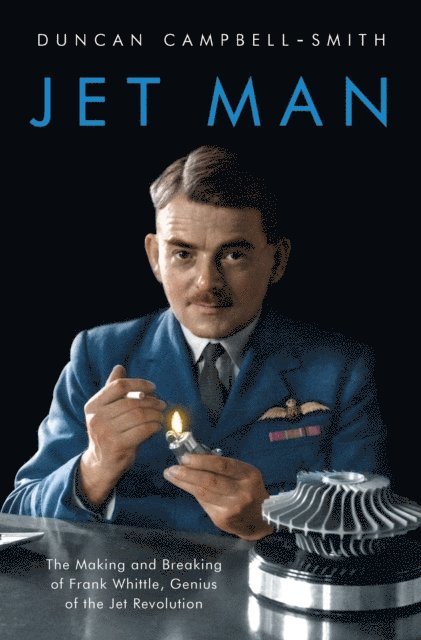
The story of Frank Whittle – RAF pilot, mathematician of genius, inventor of the jet engine and British hero. ''Wonderful'' David Edgerton, TLS ''A fascinating account'' Aeroplane Monthly ''Casts new light on the intense, heroic character of Frank Whittle'' Leo McKinstry ''[A] thorough dissection of the evolution of the jet engine... I recommend this mighty tome unreservedly'' Journal of Aeronautical History ''A long overdue corrective of an extraordinary man'' James Hamilton-Paterson ''A fine, deeply researched book'' Military History MonthlyIn 1938, a thirty-one-year-old RAF pilot and engineer named Frank Whittle – given special leave to pursue his own startlingly original concept of flight – presented the Air Ministry with a written proposal for a revolutionary jet-powered fighter aircraft. A ready response might have changed the course of history, but Whittle got no reply.In this gripping and insightful biography, Duncan Campbell-Smith charts Whittle''s success at building a pre-war jet engine against all the odds – and tracks his desperate struggle to have it launched into active service against Hitler''s Luftwaffe. It arrived too late – but nonetheless transformed the future of aviation.
Häftad, Engelska, 2021
132 kr
Skickas
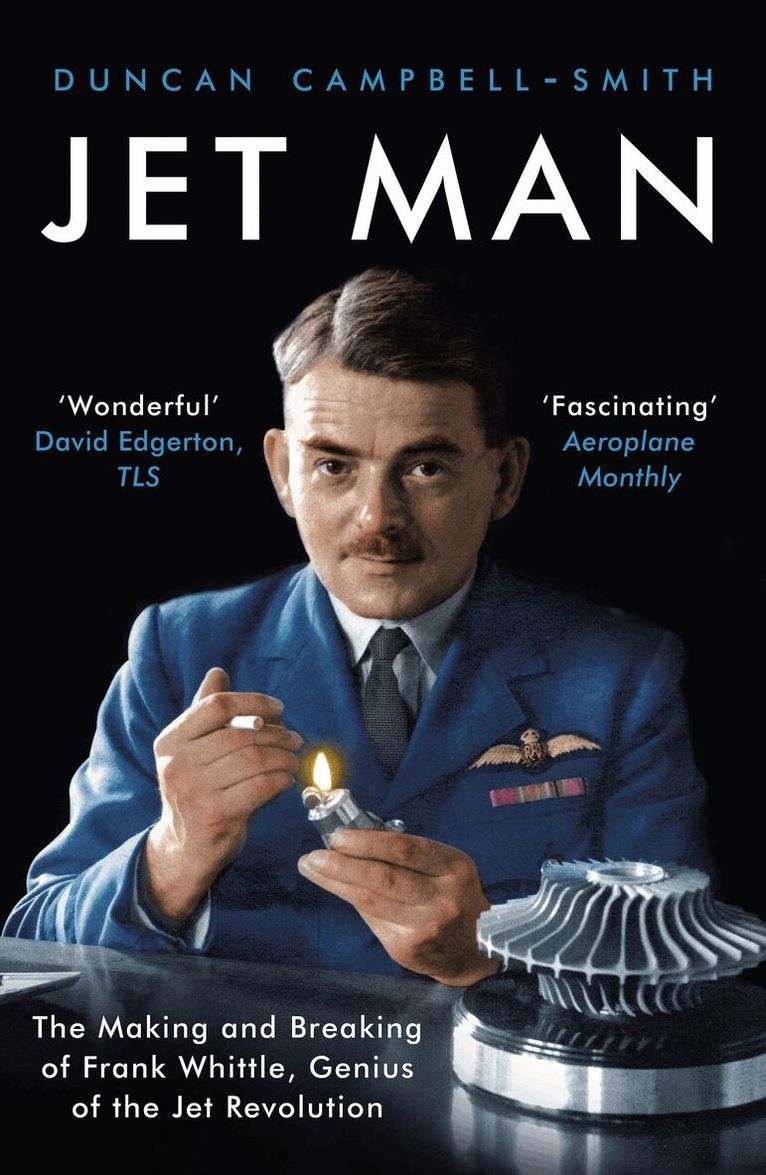
The story of Frank Whittle – RAF pilot, mathematician of genius, inventor of the jet engine and British hero. 'Wonderful' David Edgerton, TLS 'A fascinating account' Aeroplane Monthly 'Casts new light on the intense, heroic character of Frank Whittle' Leo McKinstry '[A] thorough dissection of the evolution of the jet engine... I recommend this mighty tome unreservedly' Journal of Aeronautical History 'A long overdue corrective of an extraordinary man' James Hamilton-Paterson 'A fine, deeply researched book' Military History MonthlyIn 1938, a thirty-one-year-old RAF pilot and engineer named Frank Whittle – given special leave to pursue his own startlingly original concept of flight – presented the Air Ministry with a written proposal for a revolutionary jet-powered fighter aircraft. A ready response might have changed the course of history, but Whittle got no reply.In this gripping and insightful biography, Duncan Campbell-Smith charts Whittle's success at building a pre-war jet engine against all the odds – and tracks his desperate struggle to have it launched into active service against Hitler's Luftwaffe. It arrived too late – but nonetheless transformed the future of aviation.