Duncan Hardy – författare
Visar alla böcker från författaren . Handla med fri frakt och snabb leverans.
5 produkter
5 produkter
E-bok
PDF, Engelska, 20181 540 kr
Läs direkt efter köp
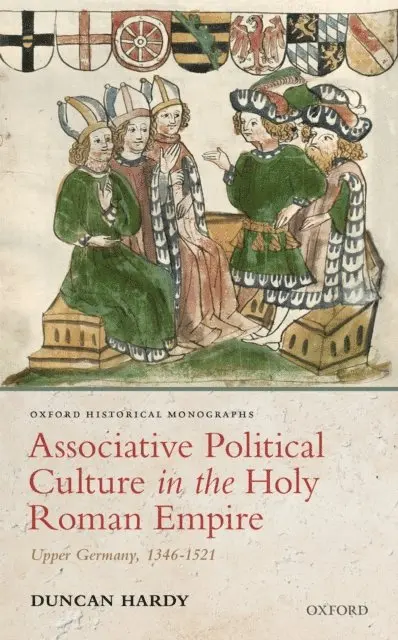
What was the Holy Roman Empire in the fourteenth to sixteenth centuries? At the turning point between the medieval and early modern periods, this vast Central European polity was the continent''s most politically fragmented. The imperial monarchs were often weak and distant, while a diverse array of regional actors played an autonomous role in political life. The Empire''s obvious differences compared with more centralized European kingdoms have stimulated negativehistorical judgements and fraught debates, which have found expression in recent decades in the concepts of fractured ''territorial states'' and a disjointed ''imperial constitution''. Associative Political Culture in the Holy Roman Empire challenges these interpretations through a wide-ranging case studyof Upper Germany — the southern regions of modern-day Germany plus Alsace, Switzerland, and western Austria — between 1346 and 1521. By examining the interactions of princes, prelates, nobles, and towns comparatively, Associative Political Culture in the Holy Roman Empire demonstrates that a range of actors and authorities shared the same toolkit of technologies, rituals, judicial systems, and concepts and configurations of government. Crucially, Upper German elites all participatedin leagues, alliances, and other treaty-based associations. As frameworks for collective activity, associations were a vital means of enabling and regulating warfare, justice and arbitration, and even lordship and administration.On the basis of this evidence, Associative Political Culture in the Holy Roman Empire offers a new and more coherent depiction of the Holy Roman Empire as a sprawling community of interdependent elites who interacted within the framework of a shared political culture.
1 540 kr
Läs direkt efter köp
What was the Holy Roman Empire in the fourteenth to sixteenth centuries? At the turning point between the medieval and early modern periods, this vast Central European polity was the continent''s most politically fragmented. The imperial monarchs were often weak and distant, while a diverse array of regional actors played an autonomous role in political life. The Empire''s obvious differences compared with more centralized European kingdoms have stimulated negativehistorical judgements and fraught debates, which have found expression in recent decades in the concepts of fractured ''territorial states'' and a disjointed ''imperial constitution''. Associative Political Culture in the Holy Roman Empire challenges these interpretations through a wide-ranging case studyof Upper Germany — the southern regions of modern-day Germany plus Alsace, Switzerland, and western Austria — between 1346 and 1521. By examining the interactions of princes, prelates, nobles, and towns comparatively, Associative Political Culture in the Holy Roman Empire demonstrates that a range of actors and authorities shared the same toolkit of technologies, rituals, judicial systems, and concepts and configurations of government. Crucially, Upper German elites all participatedin leagues, alliances, and other treaty-based associations. As frameworks for collective activity, associations were a vital means of enabling and regulating warfare, justice and arbitration, and even lordship and administration.On the basis of this evidence, Associative Political Culture in the Holy Roman Empire offers a new and more coherent depiction of the Holy Roman Empire as a sprawling community of interdependent elites who interacted within the framework of a shared political culture.
Inbunden, Engelska, 2018
2 205 kr
Skickas inom 3-6 vardagar
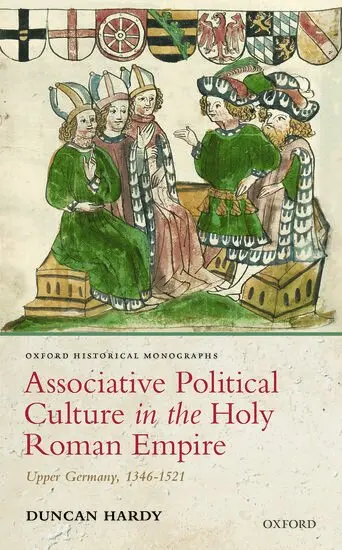
What was the Holy Roman Empire in the fourteenth to sixteenth centuries? At the turning point between the medieval and early modern periods, this vast Central European polity was the continent's most politically fragmented. The imperial monarchs were often weak and distant, while a diverse array of regional actors played an autonomous role in political life. The Empire's obvious differences compared with more centralized European kingdoms have stimulated negative historical judgements and fraught debates, which have found expression in recent decades in the concepts of fractured 'territorial states' and a disjointed 'imperial constitution'. Associative Political Culture in the Holy Roman Empire challenges these interpretations through a wide-ranging case study of Upper Germany -- the southern regions of modern-day Germany plus Alsace, Switzerland, and western Austria -- between 1346 and 1521. By examining the interactions of princes, prelates, nobles, and towns comparatively, Associative Political Culture in the Holy Roman Empire demonstrates that a range of actors and authorities shared the same toolkit of technologies, rituals, judicial systems, and concepts and configurations of government. Crucially, Upper German elites all participated in leagues, alliances, and other treaty-based associations. As frameworks for collective activity, associations were a vital means of enabling and regulating warfare, justice and arbitration, and even lordship and administration.On the basis of this evidence, Associative Political Culture in the Holy Roman Empire offers a new and more coherent depiction of the Holy Roman Empire as a sprawling community of interdependent elites who interacted within the framework of a shared political culture.
Inbunden, Engelska, 2025
1 227 kr
Skickas inom 5-8 vardagar
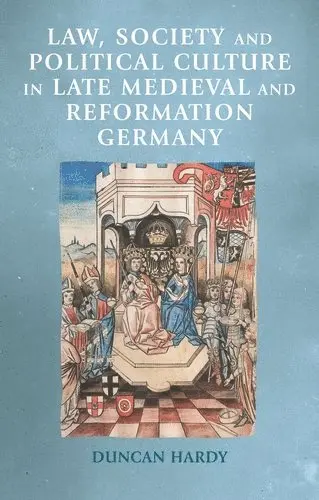
This book offers a selection of edited and translated sources that shed light on law, society and political culture in Germany between the mid-fourteenth and mid-sixteenth centuries, enabling readers to discover the tumultuous late medieval and Reformation era in the Holy Roman Empire in unprecedented depth. The selection includes all the major legislation issued in the Empire from the Golden Bull of 1356 to the Peace of Augsburg in 1555. Most of these laws, which have shaped the constitutional development of Germany in its various incarnations down to the twenty-first century, are translated into English here for the first time. Thematic chapters cover the unique elective monarchy, imperial diets, plans for imperial and ecclesiastical reform, alliances and associations, warfare and arbitration and lordship and administration at local levels. Each theme is contextualised by the author’s detailed interpretive prefaces.
Häftad, Engelska, 2025
364 kr
Skickas
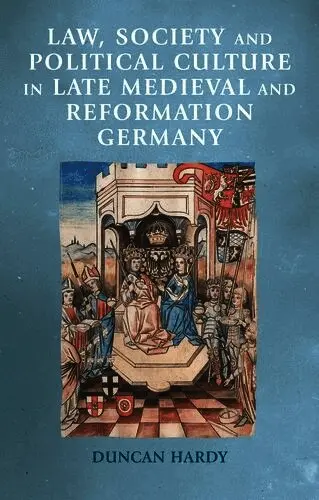
This book offers a selection of edited and translated sources that shed light on law, society and political culture in Germany between the mid-fourteenth and mid-sixteenth centuries, enabling readers to discover the tumultuous late medieval and Reformation era in the Holy Roman Empire in unprecedented depth. The selection includes all the major legislation issued in the Empire from the Golden Bull of 1356 to the Peace of Augsburg in 1555. Most of these laws, which have shaped the constitutional development of Germany in its various incarnations down to the twenty-first century, are translated into English here for the first time. Thematic chapters cover the unique elective monarchy, imperial diets, plans for imperial and ecclesiastical reform, alliances and associations, warfare and arbitration and lordship and administration at local levels. Each theme is contextualised by the author’s detailed interpretive prefaces.