Eduardo Pérez-Rasilla – författare
Visar alla böcker från författaren Eduardo Pérez-Rasilla. Handla med fri frakt och snabb leverans.
5 produkter
Theatre of Twenty-First Century Spain / El teatro de España del siglo XXI
Identities, Anxieties, and Social Immediacies / Identidades, ansiedades e urgencias sociales
Av Cerstin Bauer-Funke, Simon Breden m. fl.
Inbunden, 2022
1274 kr
Lägg i varukorg
Theatre of Twenty-First Century Spain / El teatro de España del siglo XXI
Identities, Anxieties, and Social Immediacies / Identidades, ansiedades e urgencias sociales
Av Cerstin Bauer-Funke, Simon Breden m. fl.
Häftad, 2023
738 kr
Lägg i varukorg
On Spectatorship
An Approach to Contemporary Spanish Theatre
Av Anxo Abuín González, Eduardo Pérez-Rasilla
Häftad, 2024
627 kr
Lägg i varukorg
This volume should be understood in the context of the "postdramatic" and "postspectacular" paradigms that have questioned traditional concepts regarding the representation and the role of the spectator in the creation of meaning and that have also emphasized the importance of performativity as a …
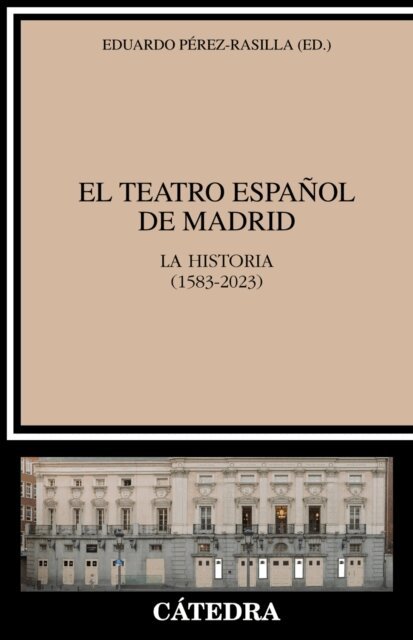
El Teatro Español de Madrid
La historia (1583-2023)
E-bok, 2023
184 kr
Lägg i varukorg
Este libro quiere ser un lugar de fácil acceso para la historia del Teatro Español, un espacio emblemático en Europa y cuya historia es tan amplia que sorprende incluso a aquellos especialistas que, conociéndola bien, vuelven a sumergirse en ella a la búsqueda de nuevos datos o episodios poco …