Elizabeth Macaulay-Lewis - Böcker
Visar alla böcker från författaren Elizabeth Macaulay-Lewis. Handla med fri frakt och snabb leverans.
6 produkter
6 produkter
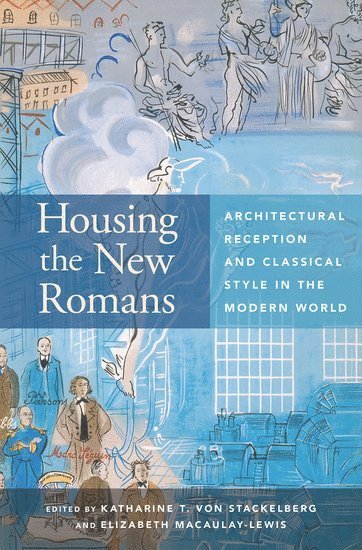
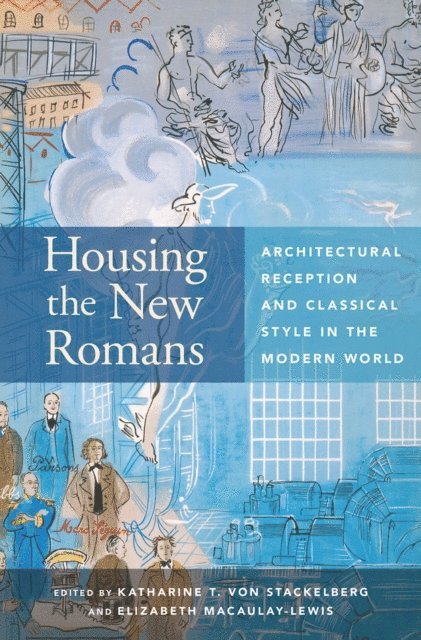
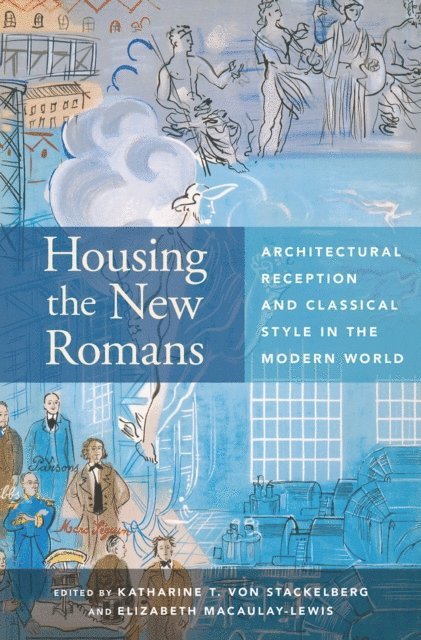
Housing the New Romans
Architectural Reception and Classical Style in the Modern World
Inbunden, Engelska, 2017
1 236 kr
Skickas inom 7-10 vardagar
In the last twenty years, reception studies have significantly enhanced our understanding of the ways in which Classics has shaped modern Western culture, but very little attention has been directed toward the reception of classical architecture. Housing the New Romans: Architectual Reception and Classical Style in the Modern World addresses this gap by investigating ways in which appropriation and allusion facilitated the reception of Classical Greece and Rome through the requisition and redeployment of classicizing tropes to create neo-Antique sites of "dwelling" in the 19th and early 20th centuries. The volume, across nine essays, will cover both European and American iterations of place making, including Sir John Soanes' house in London, the Hôtel de Beauharnais in Paris, and the Getty Villa in California. By focusing on structures and places that are oriented towards private life-houses, hotels, clubs, tombs, and gardens -- the volume directs the critical gaze towards diverse and complex sites of curatorial self-fashioning. The goal of the volume is to provide a multiplicity of interpretative frameworks (e.g. object-agency enchantment, hyperreality, memory-infrastructure) that may be applied to the study of architectural reception. This critical approach makes Housing the New Romans the first work of its kind in the emerging field of architectural and landscape reception studies and in the hitherto textually dominated field of classical reception.
971 kr
Skickas inom 7-10 vardagar
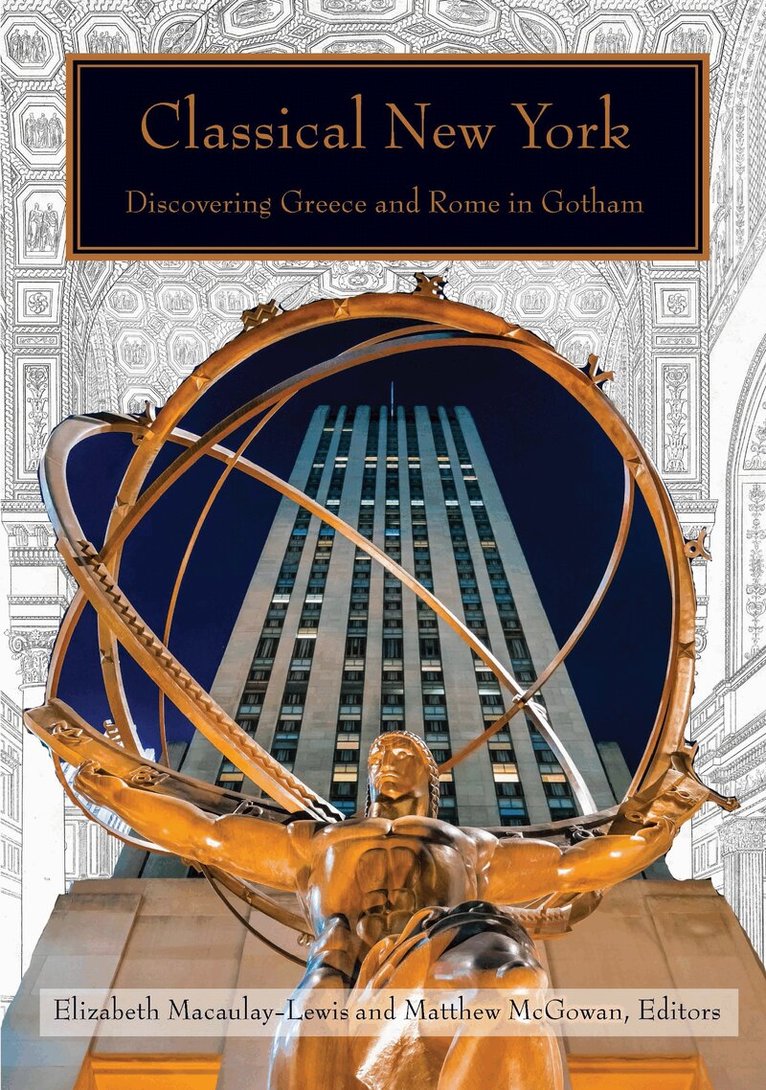
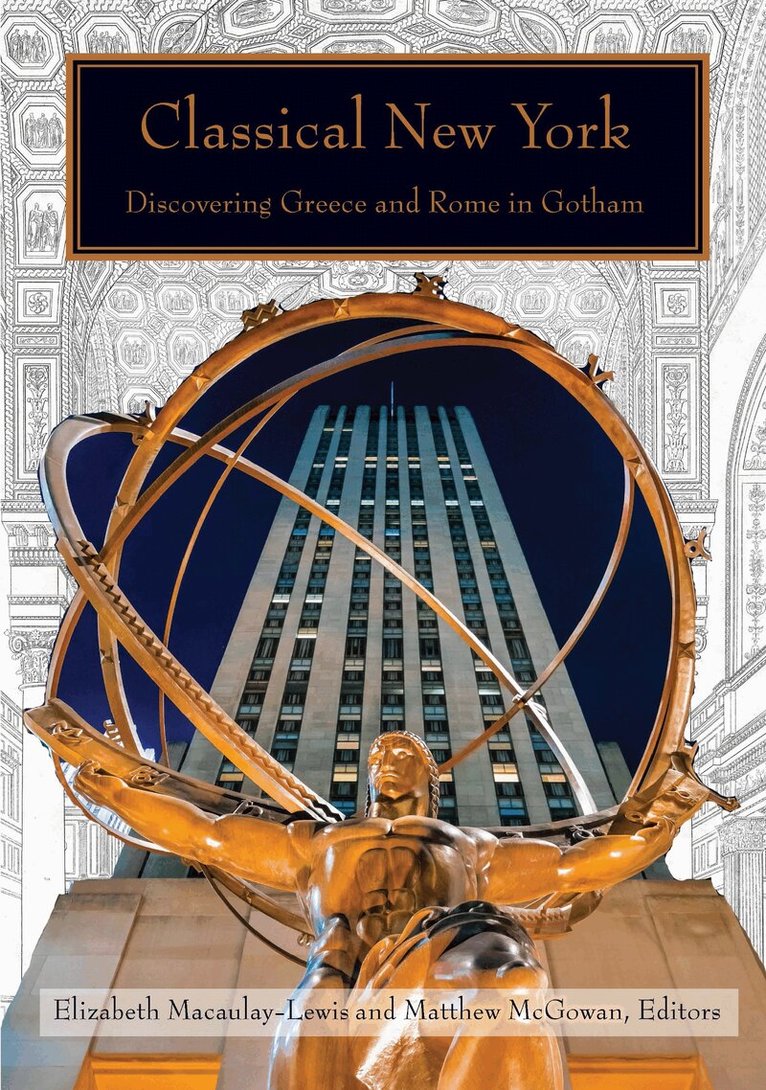
During the rise of New York from the capital of an upstart nation to a global metropolis, the visual language of Greek and Roman antiquity played a formative role in the development of the city's art and architecture. This compilation of essays offers a survey of diverse reinterpretations of classical forms in some of New York's most iconic buildings, public monuments, and civic spaces.Classical New York examines the influence of Greco-Roman thought and design from the Greek Revival of the late eighteenth and early nineteenth centuries through the late-nineteenth-century American Renaissance and Beaux Arts period and into the twentieth century's Art Deco. At every juncture, New Yorkers looked to the classical past for knowledge and inspiration in seeking out new ways to cultivate a civic identity, to design their buildings and monuments, and to structure their public and private spaces.Specialists from a range of disciplines—archaeology, architectural history, art history, classics, and history— focus on how classical art and architecture are repurposed to help shape many of New York City's most evocative buildings and works of art. Federal Hall evoked the Parthenon as an architectural and democratic model; the Pantheon served as a model for the creation of Libraries at New York University and Columbia University; Pennsylvania Station derived its form from the Baths of Caracalla; and Atlas and Prometheus of Rockefeller Center recast ancient myths in a new light during the Great Depression.Designed to add breadth and depth to the exchange of ideas about the place and meaning of ancient Greece and Rome in our experience of New York City today, this examination of post-Revolutionary art, politics, and philosophy enriches the conversation about how we shape space—be it civic, religious, academic, theatrical, or domestic—and how we make use of that space and the objects in it.
269 kr
Skickas inom 10-15 vardagar
During the rise of New York from the capital of an upstart nation to a global metropolis, the visual language of Greek and Roman antiquity played a formative role in the development of the city's art and architecture. This compilation of essays offers a survey of diverse reinterpretations of classical forms in some of New York's most iconic buildings, public monuments, and civic spaces.Classical New York examines the influence of Greco-Roman thought and design from the Greek Revival of the late eighteenth and early nineteenth centuries through the late-nineteenth-century American Renaissance and Beaux Arts period and into the twentieth century's Art Deco. At every juncture, New Yorkers looked to the classical past for knowledge and inspiration in seeking out new ways to cultivate a civic identity, to design their buildings and monuments, and to structure their public and private spaces.Specialists from a range of disciplines—archaeology, architectural history, art history, classics, and history— focus on how classical art and architecture are repurposed to help shape many of New York City's most evocative buildings and works of art. Federal Hall evoked the Parthenon as an architectural and democratic model; the Pantheon served as a model for the creation of Libraries at New York University and Columbia University; Pennsylvania Station derived its form from the Baths of Caracalla; and Atlas and Prometheus of Rockefeller Center recast ancient myths in a new light during the Great Depression.Designed to add breadth and depth to the exchange of ideas about the place and meaning of ancient Greece and Rome in our experience of New York City today, this examination of post-Revolutionary art, politics, and philosophy enriches the conversation about how we shape space—be it civic, religious, academic, theatrical, or domestic—and how we make use of that space and the objects in it.
876 kr
Skickas inom 7-10 vardagar
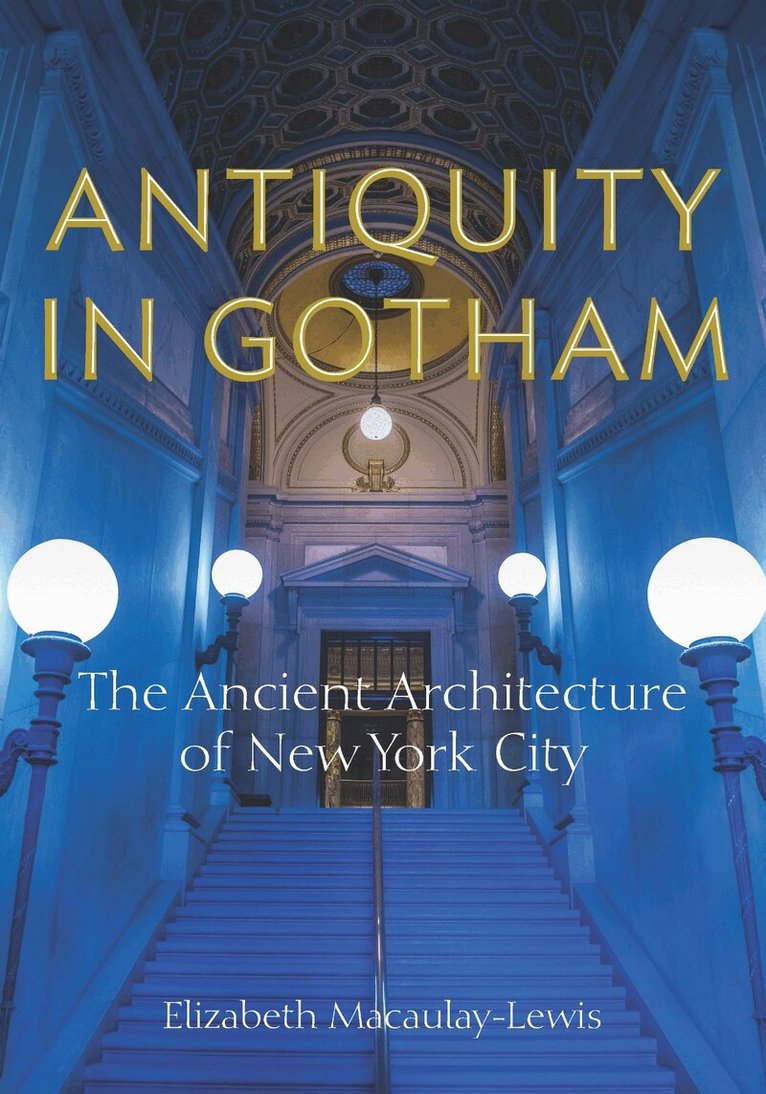
The first detailed study of "Neo-Antique" architecture applies an archaeological lens to the study of New York City's structuresSince the city's inception, New Yorkers have deliberately and purposefully engaged with ancient architecture to design and erect many of its most iconic buildings and monuments, including Grand Central Terminal and the Soldiers' and Sailors' Memorial Arch in Brooklyn, as well as forgotten gems such as Snug Harbor on Staten Island and the Gould Memorial Library in the Bronx. Antiquity in Gotham interprets the various ways ancient architecture was re-conceived in New York City from the eighteenth century to the early twenty-first century. Contextualizing New York's Neo-Antique architecture within larger American architectural trends, author Elizabeth Macaulay-Lewis applies an archaeological lens to the study of the New York buildings that incorporated these various models in their design, bringing together these diverse sources of inspiration into a single continuum. Antiquity in Gotham explores how ancient architecture communicated the political ideals of the new republic through the adaptation of Greek and Roman architecture, how Egyptian temples conveyed the city's new technological achievements, and how the ancient Near East served many artistic masters, decorating the interiors of glitzy Gilded Age restaurants and the tops of skyscrapers. Rather than classifying neo-classical (and Greek Revival), Egyptianizing, and architecture inspired by the ancient Near East into distinct categories, Macaulay-Lewis applies the Neo-Antique framework that considers the similarities and differences—intellectually, conceptually, and chronologically—among the reception of these different architectural traditions. This fundamentally interdisciplinary project draws upon all available evidence and archival materials—such as the letters and memos of architects and their patrons, and the commentary in contemporary newspapers and magazines—to provide a lively multi-dimensional analysis that examines not only the city's ancient buildings and rooms themselves but also how New Yorkers envisaged them, lived in them, talked about them, and reacted to them. Antiquity offered New Yorkers architecture with flexible aesthetic, functional, cultural, and intellectual resonances—whether it be the democratic ideals of Periclean Athens, the technological might of Pharaonic Egypt, or the majesty of Imperial Rome. The result of these dialogues with ancient architectural forms was the creation of innovative architecture that has defined New York City's skyline throughout its history.
Del 72 - Annual of ASOR
Bayt Farhi and the Sephardic Palaces of Ottoman Damascus in the Late 18th and 19th Centuries
Inbunden, Engelska, 2018
1 373 kr
Tillfälligt slut
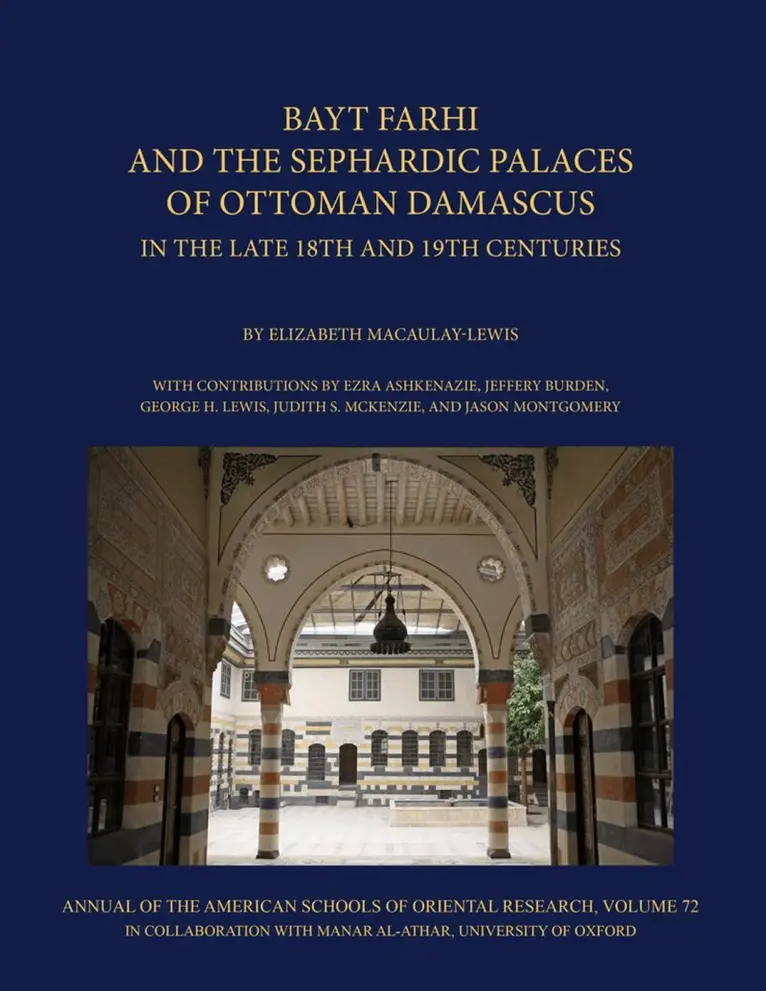
One of the largest and most important palatial houses of late 18th- and early 19th-century Damascus, Bayt Farhi belonged to the Farhi family, who served as financial administrators to successive Ottoman governors in Damascus and Acre.Lavishly illustrated with extensive colour photographs, plans, and reconstruction drawings the book brings to life the home environment of the lost elite Sephardic community of Ottoman Damascus. It will be an essential resource for those studying the architecture, history, and culture of Syria and the Ottoman Empire.Bayt Farhi's outstanding architecture and decoration is documented and presented in this first comprehensive analysis of it and Damascus's other prominent Sephardic mansions Matkab 'Anbar, Bayt Dahdah, Bayt Stambouli, and Bayt Lisbona. The Hebrew poetic inscriptions in these residences reveal how the Farhis and other leading Sephardic families perceived themselves and how they presented themselves to their own community and other Damascenes. A history of the Farhis and the Jews of Damascus provides the context for these houses, along with the architectural development of the monumental Damascene courtyard house.Co-published with Manar al-Athar, University of Oxford.
238 kr
Skickas inom 7-10 vardagar
The first detailed study of "Neo-Antique" architecture applies an archaeological lens to the study of New York City's structuresSince the city's inception, New Yorkers have deliberately and purposefully engaged with ancient architecture to design and erect many of its most iconic buildings and monuments, including Grand Central Terminal and the Soldiers' and Sailors' Memorial Arch in Brooklyn, as well as forgotten gems such as Snug Harbor on Staten Island and the Gould Memorial Library in the Bronx. Antiquity in Gotham interprets the various ways ancient architecture was re-conceived in New York City from the eighteenth century to the early twenty-first century. Contextualizing New York's Neo-Antique architecture within larger American architectural trends, author Elizabeth Macaulay-Lewis applies an archaeological lens to the study of the New York buildings that incorporated these various models in their design, bringing together these diverse sources of inspiration into a single continuum. Antiquity in Gotham explores how ancient architecture communicated the political ideals of the new republic through the adaptation of Greek and Roman architecture, how Egyptian temples conveyed the city's new technological achievements, and how the ancient Near East served many artistic masters, decorating the interiors of glitzy Gilded Age restaurants and the tops of skyscrapers. Rather than classifying neo-classical (and Greek Revival), Egyptianizing, and architecture inspired by the ancient Near East into distinct categories, Macaulay-Lewis applies the Neo-Antique framework that considers the similarities and differences—intellectually, conceptually, and chronologically—among the reception of these different architectural traditions. This fundamentally interdisciplinary project draws upon all available evidence and archival materials—such as the letters and memos of architects and their patrons, and the commentary in contemporary newspapers and magazines—to provide a lively multi-dimensional analysis that examines not only the city's ancient buildings and rooms themselves but also how New Yorkers envisaged them, lived in them, talked about them, and reacted to them. Antiquity offered New Yorkers architecture with flexible aesthetic, functional, cultural, and intellectual resonances—whether it be the democratic ideals of Periclean Athens, the technological might of Pharaonic Egypt, or the majesty of Imperial Rome. The result of these dialogues with ancient architectural forms was the creation of innovative architecture that has defined New York City's skyline throughout its history.