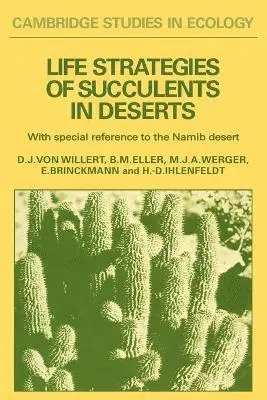
Deserts provide a seemingly hostile environment in which plants can, nevertheless, survive and grow. This book, originally published in 1992, considers the ecological strategies adopted by desert succulents to overcome these problems. Much fresh data on the physiological ecology of succulent plants of southern Africa is presented - the results of more than ten years' work by the authors, both in the field and the laboratory. This information forms the basis for a better understanding of the water relations and carbon balance of succulents during short- and long-term drought and leads the authors to a definition of succulence as a tool for the temporary storage of water, essential for the conservation of physiological performance during times of drought. The authors conclude by providing a basic scheme in which the significant functional aspects of succulent life strategies are given, revealing the main trends in the biology of these fascinating plants.
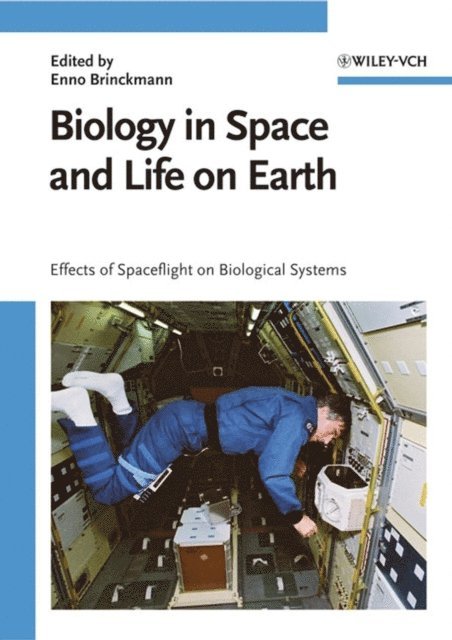
This concise yet comprehensive treatment of the effects of spaceflight on biological systems includes issues at the forefront of life sciences research, such as gravitational biology, immune system response, bone cell formation and the effects of radiation on biosystems. Edited by a leading specialist at the European Space Agency (ESA) with contributions by internationally renowned experts, the chapters are based on the latest space laboratory experiments, including those on SPACELAB, ISS, parabolic flights and unmanned research satellites. An indispensable source for biologists, medical researchers and astronautics experts alike. The results of Space flight experiments, ground controls and flight simulations pave the way for a better understanding of gravity reactions in various organisms down to molecular mechanisms. This publication marks also the beginning of a new Space flight era with the construction and exploitation of the International Space Station (ISS) which provides a platform for an in-depth continuation of experiments under weightlessness in Low Earth Orbit and beyond.
Deserts provide a seemingly hostile environment in which plants can, nevertheless, survive and grow. This book, originally published in 1992, considers the ecological strategies adopted by desert succulents to overcome these problems. Much fresh data on the physiological ecology of succulent plants of southern Africa is presented - the results of more than ten years' work by the authors, both in the field and the laboratory. This information forms the basis for a better understanding of the water relations and carbon balance of succulents during short- and long-term drought and leads the authors to a definition of succulence as a tool for the temporary storage of water, essential for the conservation of physiological performance during times of drought. The authors conclude by providing a basic scheme in which the significant functional aspects of succulent life strategies are given, revealing the main trends in the biology of these fascinating plants.
This concise yet comprehensive treatment of the effects of spaceflight on biological systems includes issues at the forefront of life sciences research, such as gravitational biology, immune system response, bone cell formation and the effects of radiation on biosystems. Edited by a leading specialist at the European Space Agency (ESA) with contributions by internationally renowned experts, the chapters are based on the latest space laboratory experiments, including those on SPACELAB, ISS, parabolic flights and unmanned research satellites. An indispensable source for biologists, medical researchers and astronautics experts alike. The results of Space flight experiments, ground controls and flight simulations pave the way for a better understanding of gravity reactions in various organisms down to molecular mechanisms. This publication marks also the beginning of a new Space flight era with the construction and exploitation of the International Space Station (ISS) which provides a platform for an in-depth continuation of experiments under weightlessness in Low Earth Orbit and beyond.