Fraser Smith - Böcker
Visar alla böcker från författaren Fraser Smith. Handla med fri frakt och snabb leverans.
9 produkter
9 produkter
712 kr
Skickas inom 10-15 vardagar
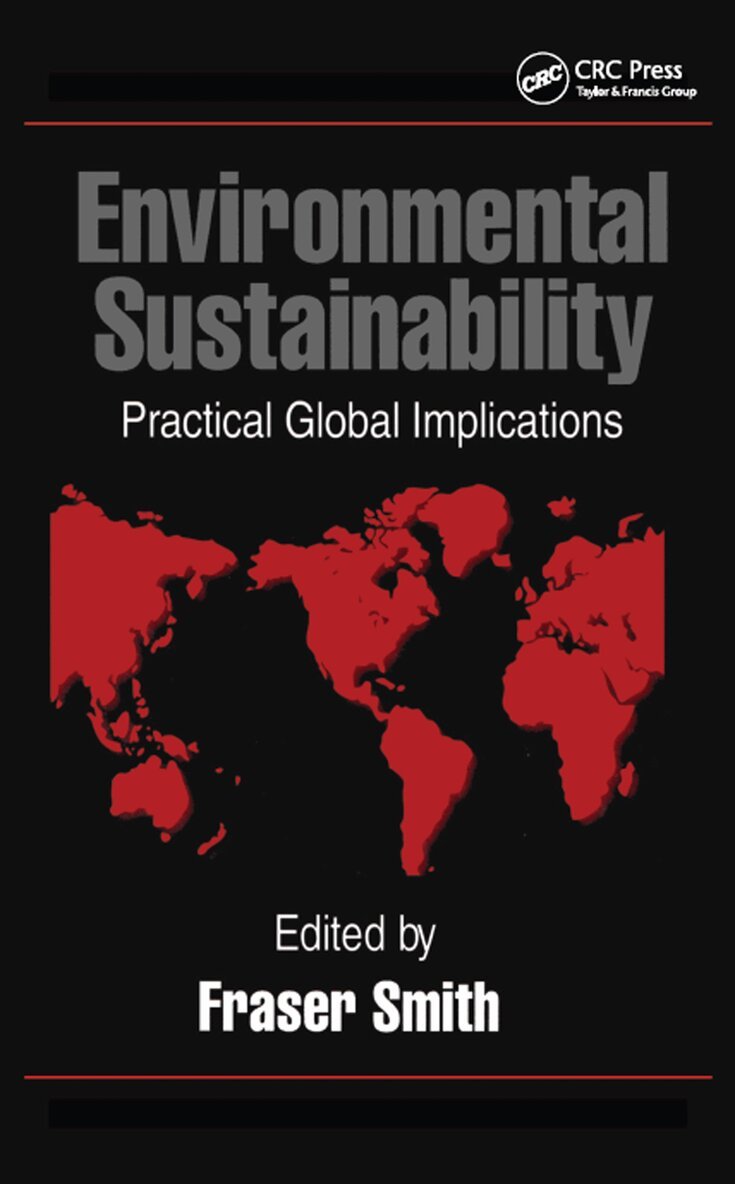
In 1994, representatives from all over the world met in Costa Rica to discuss the impact of ecological economics on developing countries. That groundbreaking conference laid the foundation for this new collection of research on environmental sustainability.While most discussions on sustainable development focus on the industrialized nations, Environmental Sustainability: Practical Global Applications takes a different angle: it presents the views of the developing countries themselves on issues such as wildlife resources in Nambia, timber production in Costa Rica, property rights and land reform in South Africa, and other steps being taken to implement environmentally sustainable economies around the world.This is an ideal text for students of natural and social sciences, development professionals and entrepreneurs seeking opportunities for ecologically sustainable businesses. Academics will find it useful as a source of current research and for making new contacts in the field. For anyone interested in exploring the link between man and his environment-specifically, the relationship between economics and ecology- Environmental Sustainability, is a must.
310 kr
Skickas inom 3-6 vardagar
Complete Brain Exercise Book
Train Your Brain - Improve Memory, Language, Motor Skills and More
Häftad, Engelska, 2015
239 kr
Skickas
159 kr
Skickas inom 5-8 vardagar
1 459 kr
Tillfälligt slut
In 1994, representatives from all over the world met in Costa Rica to discuss the impact of ecological economics on developing countries. That groundbreaking conference laid the foundation for this new collection of research on environmental sustainability.While most discussions on sustainable development focus on the industrialized nations, Environmental Sustainability: Practical Global Applications takes a different angle: it presents the views of the developing countries themselves on issues such as wildlife resources in Nambia, timber production in Costa Rica, property rights and land reform in South Africa, and other steps being taken to implement environmentally sustainable economies around the world.This is an ideal text for students of natural and social sciences, development professionals and entrepreneurs seeking opportunities for ecologically sustainable businesses. Academics will find it useful as a source of current research and for making new contacts in the field. For anyone interested in exploring the link between man and his environment-specifically, the relationship between economics and ecology- Environmental Sustainability, is a must.
928 kr
Tillfälligt slut
1 948 kr
Skickas inom 10-15 vardagar
This book offers comprehensive coverage of naturopathic medicine. The principles and values of this profession are already clearly stated (i.e., Find and Treat the Cause; Treat the Whole Person, etc.), but few are the textbooks that provide a clear exposition of what the approach is that differs from what is described as conventional or allopathic medicine. The toolkit – herbs or nutrients – then becomes the defining feature, but this is not the most important attribute. To paraphrase the historian of medicine Harris Coulter – in this approach the body reacts creatively to stressors – and the Empirical school or natural medicine approach is more focused on supporting adaptive responses than suppressing symptoms. Or to put it another way, naturopathic physicians certainly do things to ameliorate symptoms, but their real interest is to discern what disturbances to the determining factors of health lead to imbalances, physiological dysfunction, and are generating the symptoms. This is not an attempt to argue that all health issues can get better on their own or that conventional medical interventions aren’t capable of producing stellar outcomes. Conventional medicine holds great value, but there remains a concurrent need for a naturopathic approach that helps rebuild the body.There is a need for an approach in medicine that works to support adaptive responses of the body, reduce maladaptive responses, address determining factors of health, and sometimes create temporary homeostasis with agents such as drugs (or certain natural medicines) can play to maintain life when the body’s healing responses are insufficient. This book takes this approach and begins by examining what health is and then what states lead to disease. In terms of the basis of disease states, the book teaches about how the lack of coordination in the body’s bioregulatory systems (hormones, nervous system, cell signaling) can lead to disease, as well as the impact of irreversible degeneration, genetic damage, chronic stress, etc. The book takes the reader to some of the more common and well described reasons for these states of dysfunction, including the body’s inability to process environmental toxins and disruptions to the human microbiome. The book then teaches how to assess a patient, and how various natural therapies impact root causes of disease, the long term consequences, and the various clinical manifestations.The book then takes a systems approach – cardiovascular, pulmonary, etc. This is where most books on the subject start, but instead of breaking out a number of conditions and giving protocols of diet, supplements, herbs etc., the author examines how to restore stability and function to that system. There is in depth coverage of how to confront degenerative processes that make self-healing far more challenging, or perhaps not entirely attainable. The application of the model of healing outlined in previous chapters is applied to each system. Special topics are then covered, ranging from lifespan/primary care considerations to the role of research, the rise of advanced data analytics as decision assistance, to the environmental, cultural, and global determinants of health. Each chapter will additionally include tables that summarize key diagnosis or treatment points, arrayed in an order that reflects the model presented in the book.This is an ideal guide for students in naturopathic medicine, as well as physicians and medical professionals looking to learn more about this field aimed towards maximizing patient resilience.
1 423 kr
Skickas inom 10-15 vardagar
This book offers comprehensive coverage of naturopathic medicine. The principles and values of this profession are already clearly stated (i.e., Find and Treat the Cause; Treat the Whole Person, etc.), but few are the textbooks that provide a clear exposition of what the approach is that differs from what is described as conventional or allopathic medicine. The toolkit – herbs or nutrients – then becomes the defining feature, but this is not the most important attribute. To paraphrase the historian of medicine Harris Coulter – in this approach the body reacts creatively to stressors – and the Empirical school or natural medicine approach is more focused on supporting adaptive responses than suppressing symptoms. Or to put it another way, naturopathic physicians certainly do things to ameliorate symptoms, but their real interest is to discern what disturbances to the determining factors of health lead to imbalances, physiological dysfunction, and are generating the symptoms. This is not an attempt to argue that all health issues can get better on their own or that conventional medical interventions aren’t capable of producing stellar outcomes. Conventional medicine holds great value, but there remains a concurrent need for a naturopathic approach that helps rebuild the body.There is a need for an approach in medicine that works to support adaptive responses of the body, reduce maladaptive responses, address determining factors of health, and sometimes create temporary homeostasis with agents such as drugs (or certain natural medicines) can play to maintain life when the body’s healing responses are insufficient. This book takes this approach and begins by examining what health is and then what states lead to disease. In terms of the basis of disease states, the book teaches about how the lack of coordination in the body’s bioregulatory systems (hormones, nervous system, cell signaling) can lead to disease, as well as the impact of irreversible degeneration, genetic damage, chronic stress, etc. The book takes the reader to some of the more common and well described reasons for these states of dysfunction, including the body’s inability to process environmental toxins and disruptions to the human microbiome. The book then teaches how to assess a patient, and how various natural therapies impact root causes of disease, the long term consequences, and the various clinical manifestations.The book then takes a systems approach – cardiovascular, pulmonary, etc. This is where most books on the subject start, but instead of breaking out a number of conditions and giving protocols of diet, supplements, herbs etc., the author examines how to restore stability and function to that system. There is in depth coverage of how to confront degenerative processes that make self-healing far more challenging, or perhaps not entirely attainable. The application of the model of healing outlined in previous chapters is applied to each system. Special topics are then covered, ranging from lifespan/primary care considerations to the role of research, the rise of advanced data analytics as decision assistance, to the environmental, cultural, and global determinants of health. Each chapter will additionally include tables that summarize key diagnosis or treatment points, arrayed in an order that reflects the model presented in the book.This is an ideal guide for students in naturopathic medicine, as well as physicians and medical professionals looking to learn more about this field aimed towards maximizing patient resilience.
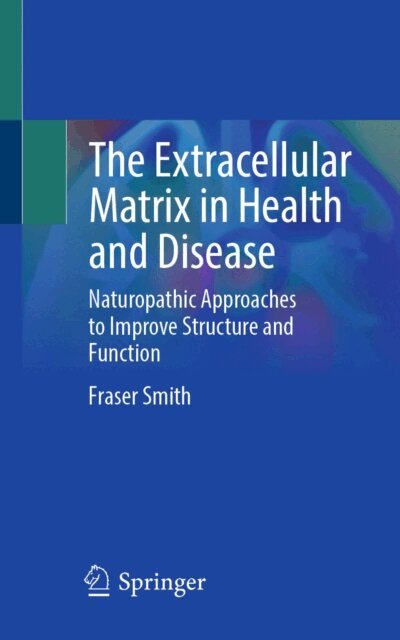
Extracellular Matrix in Health and Disease
Naturopathic Approaches to Improve Structure and Function
Häftad, Engelska, 2025
1 423 kr
Skickas inom 10-15 vardagar
This book connects naturopathic medicine modalities with restoring extracellular matrix function. It begins with an overview of the regulatory functions of the extracellular matrix. At one time, this area in between cells was considered support material, now it is understood that the life of the cell is dependent upon its function. The architecture of the ECM and the particular geometric qualities of its molecules have an enormous impact on proper function of cells. The human body and its organs and tissue can experience various levels of dysfunction ranging from a relatively easy to reverse hypofunction to impaired self-regulation, inflammation, fibrosis and extracellular matrix breakdown, and finally organ failure. Through all of these stages, there are discrete changes to the ECM, which contribute to, and are exacerbated by the local dysfunction. Naturopathic therapies, including nutritional factors, plant extracts, manual techniques, hydrotherapy, and low dose hormetins, can have a stabilizing and repairing effect on the ECM. Moreover, since the ECM represents an interconnected microtuble, transmemberane, and protein scaffold that is pan-cellular, there are opportunities for whole person therapy in delivering treatments that impact the ECM. Cancer, a disease that starts with genetic alterations, is extremely active in the ECM, depositing, modifying, and destroying ECM as part of a strategy of proliferation and dissemination. Natural agents that work to combat these influences of tumor cells on the ECM and its resident fibroblasts and macrophages are important to be aware of. This exciting and expanding field of study deserves a look in the light of naturopathic therapeutics. This is an ideal guide for clinicians using naturopathic methods to assist their patients.