Frederick Steinhardt – författare
Visar alla böcker från författaren . Handla med fri frakt och snabb leverans.
4 produkter
4 produkter
E-bok
Engelska, 202177 kr
Läs direkt efter köp
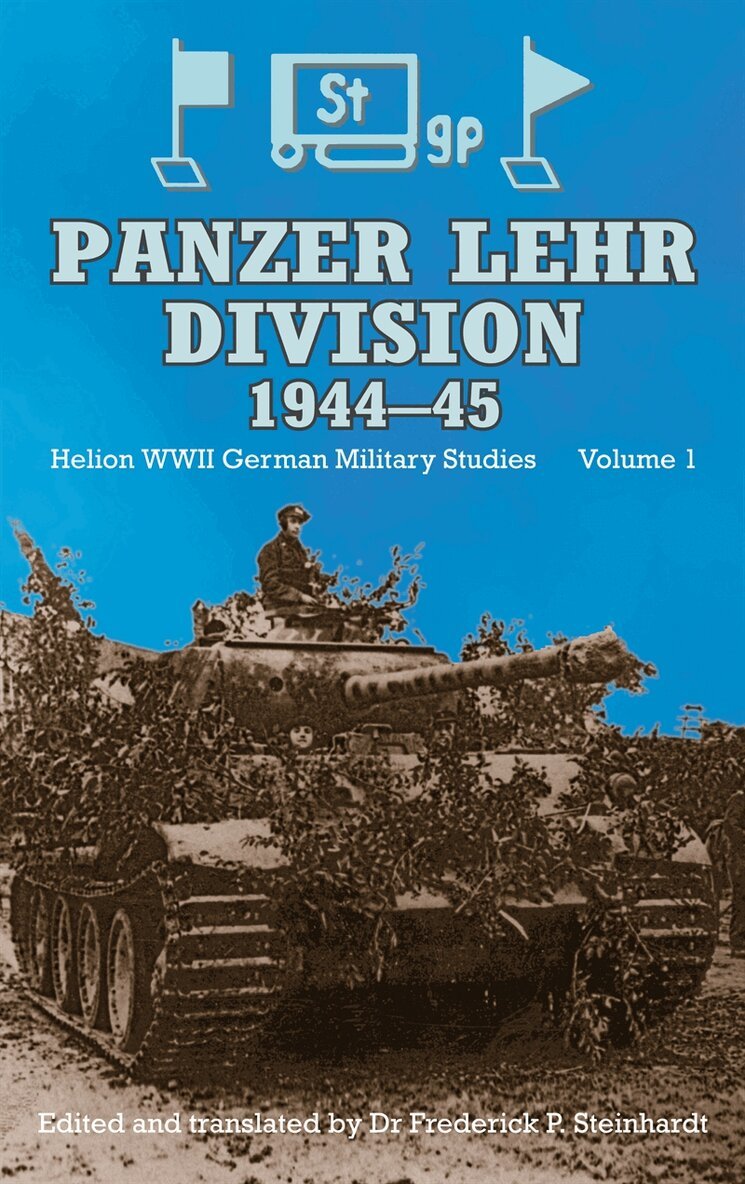
The Panzer Lehr Division was one of the most élite German armoured formations in existence in early 1944. Its baptism of fire was in the deadly Normandy bocage. Although suffering heavy losses in Normandy, the Division continued to fight in North-West Europe until the end of the war, seeing particularly notable service during the Ardennes Offensive and in the Ruhr. The first volume in the new Helion series WWII German Military Studies prints an extensive number of reports written by former officers of the Division, principally its commander Fritz Bayerlein. Virtually all of these reports have remained unpublished since they were written soon after the end of WWII. They cover all aspects of the Division's history, although with particular emphasis upon events in Normandy, the Ardennes and Germany. A number of the reports include detailed order-of-battle and other organisational data. A very large number of situation maps are also featured. Important though the reprinting of these documents is, this book is made doubly important thanks to the linking text and expert annotations from editor Fred Steinhardt. In effect, this book provides an extremely detailed chronological history of the Division's activities, in greater detail than has yet appeared in print before. / This new series is designed at bringing into print previously unavailable archival material covering all aspects of the German Armed Forces during the 1933-45 period. / Volume 1 contains an extensive series of previously unpublished reports covering all aspects of Panzer Lehr Division's combat history, especially in Normandy, the Ardennes and Germany 1944-45. / Many reports feature detailed order-of-battle data and are supported by a large number of situation maps. / Extensive linking commentary and annotations from the editor mean the book as a whole provides an extremely detailed narrative of the Division's activities 1944-45. / Publication marks a major contribution to the history of the Panzertruppen during the final year of WWII.
E-bok
Engelska, 2021123 kr
Läs direkt efter köp
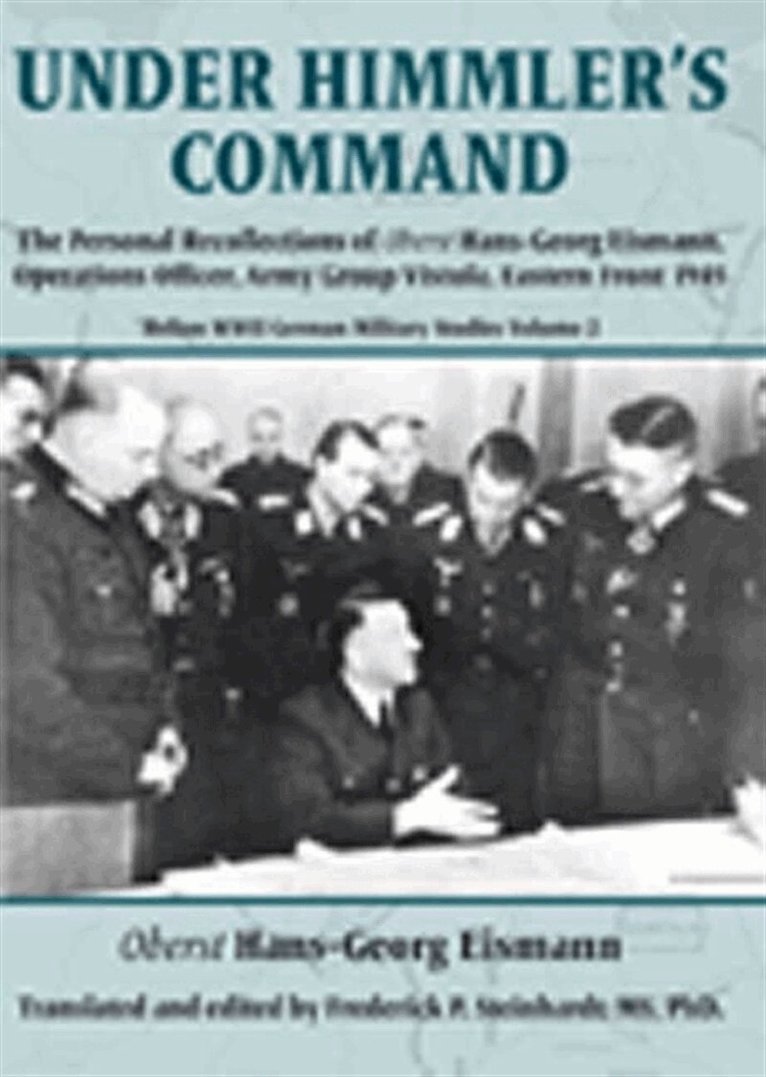
Under Himmler's Command addresses two areas of World War II hitherto neglected - Heinrich Himmler as a military commander, and the German staff officer corps during the last months of the war on the Eastern Front. The author, Hans-Georg Eismann, was the Operations Officer for Army Group Vistula, a German formation created in late January 1945 to which Heinrich Himmler was appointed as commander. Eismann's memoir of this period has remained unpublished for over fifty years, and its wider circulation is long overdue. Full of fascinating detail he recounts the disturbing and sometimes bizarre atmosphere that pervaded the German high command in the East during the final months of the war. Much light is thereby thrown on Himmler the military commander, and on the final climactic battles fought on the Eastern Front during 1945.
Häftad, Engelska, 2015
187 kr
Skickas
E-bok
Engelska, 2021123 kr
Läs direkt efter köp
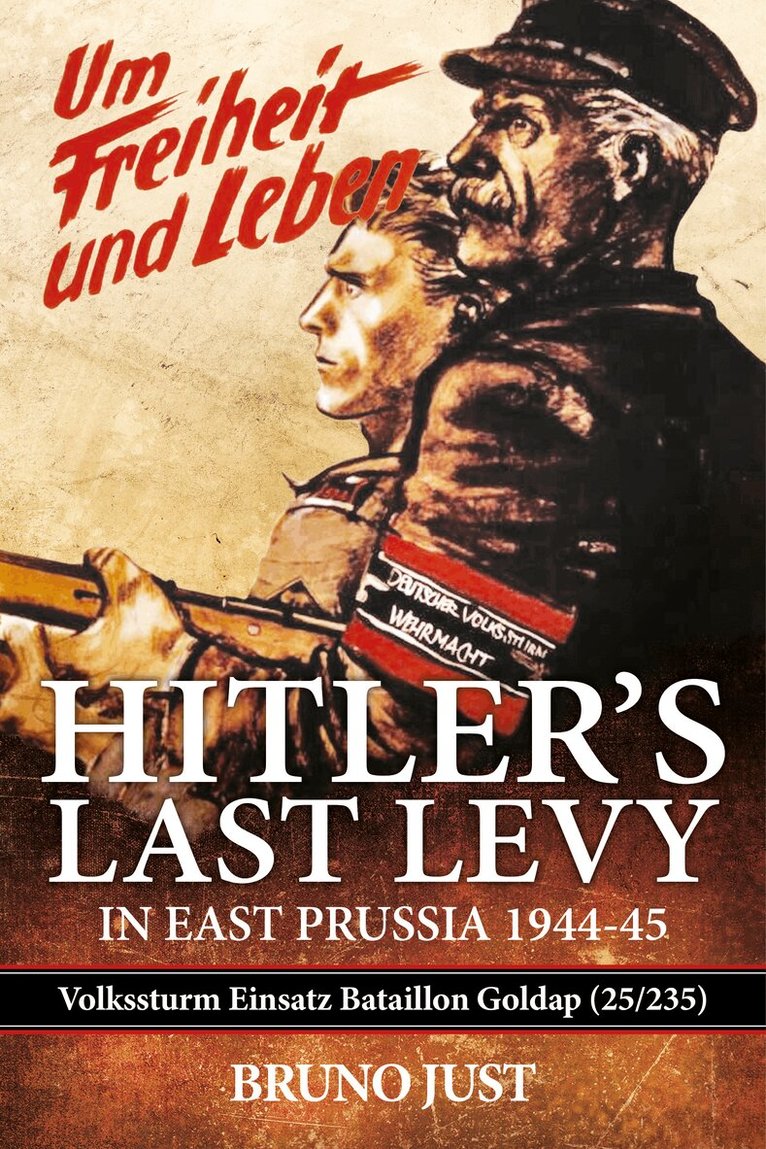
On 16 October, 1944, the 3rd White Russian Front launched its massive offensive against Heeresgruppe Mitte. The German 4th Armee, whose line of defense stretched from Nowograd on the Narew to Memel, was quickly broken through. This is the very personal war-diary of the adjutant of Volkssturm Einsatz Bataillon Goldap (25/235), which was activated, with a strength of 400 men, on 17 October, 1944. Inadequately armed with Russian infantry rifles lacking slings, light machine guns and Panzerfäuste, with no uniforms, entrenching tools, identity discs, blankets or medical packets, the battalion was hastily thrown into action three days later, on October 20, in the Goldap sector of the 4th Armee front, losing 76 killed and wounded in its first action. Withdrawn on 23 October for urgently needed training and better armament, the battalion went back into action on 18 January in the Eichwald northeast of Insterburg, near Stobingen, and fought on, with hardly a break, falling back to the city of Königsberg and taking a valiant part in the bitter defense that enabled the escape of refugees and most of the surviving military units by sea. The 70 survivors of the battalion owed their personal survival to an order forged by their last battalion commander that led to their relief by a Wehrmacht division and enshipment for Denmark. The author chronicles daily life dominated by desperate military action, interspersed with brief glimpses of his family, as he crosses paths with his wife and daughter, caught up in the mass of refugees fleeing before the advancing Russians. There are very few personal accounts of Hitler’s last levy, the Volkssturm. For years, the handwritten diary and a copy typed by the author, remained in the files of the Bundesarchiv (L) in Bayreuth. The author’s granddaughter approved publication for distribution, in photocopied form, to survivors and family members of the battalion. Such copies, in German, are hard to find. Now at last, this precious document from the closing days of World War II in East Prussia has become available in English translation, with careful footnotes filling in details regarding the Volkssturm, a unique force called into being by the Nazi Party in the closing months of the war, conceived as a party-led alternative to the Wehrmacht. Ill-equipped, pitifully armed (when armed at all) and poorly led, nevertheless on the Eastern Front – where the youngsters and older men comprising its battalions were highly motivated in a desperate attempt to delay the onrushing Russian hordes so that their wives and children could escape rape, torture, mutilation and murder at Russian hands – the Volkssturm sometimes achieved their goal.EPUB3: Reflowable