Geoffrey R. Dixon – författare
Visar alla böcker från författaren . Handla med fri frakt och snabb leverans.
12 produkter
12 produkter
Inbunden, Engelska, 2010
2 698 kr
Skickas inom 10-15 vardagar
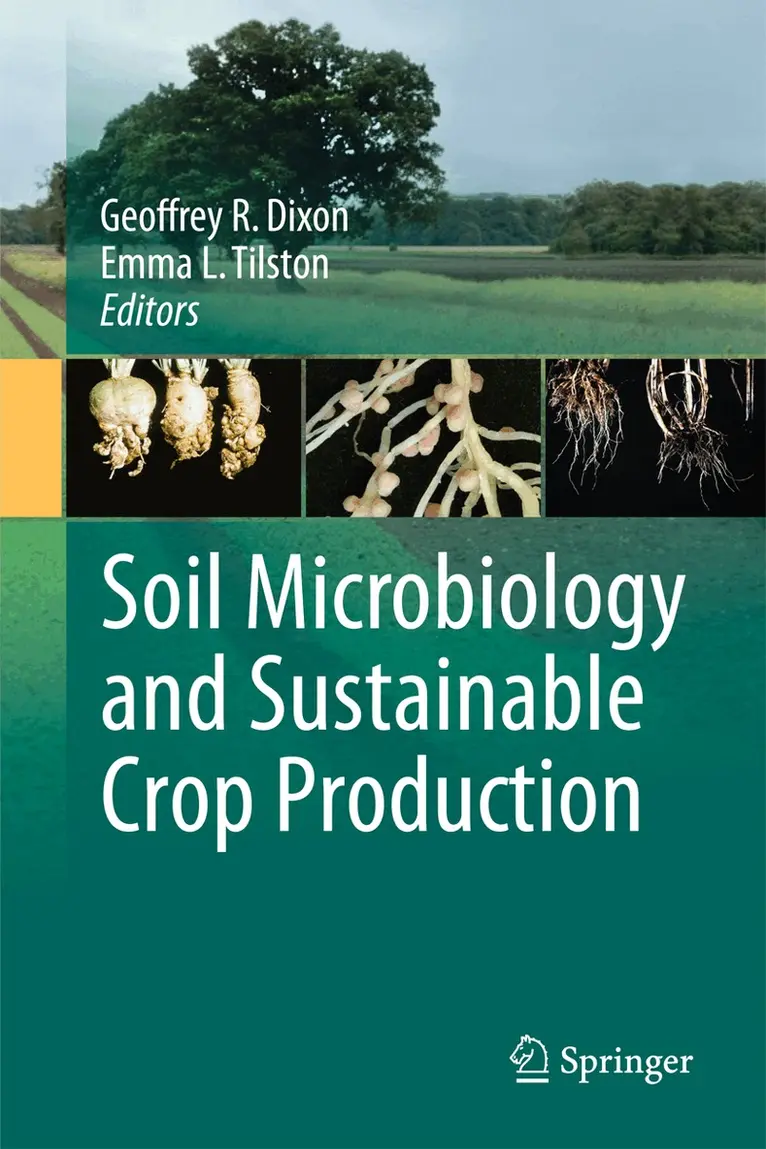
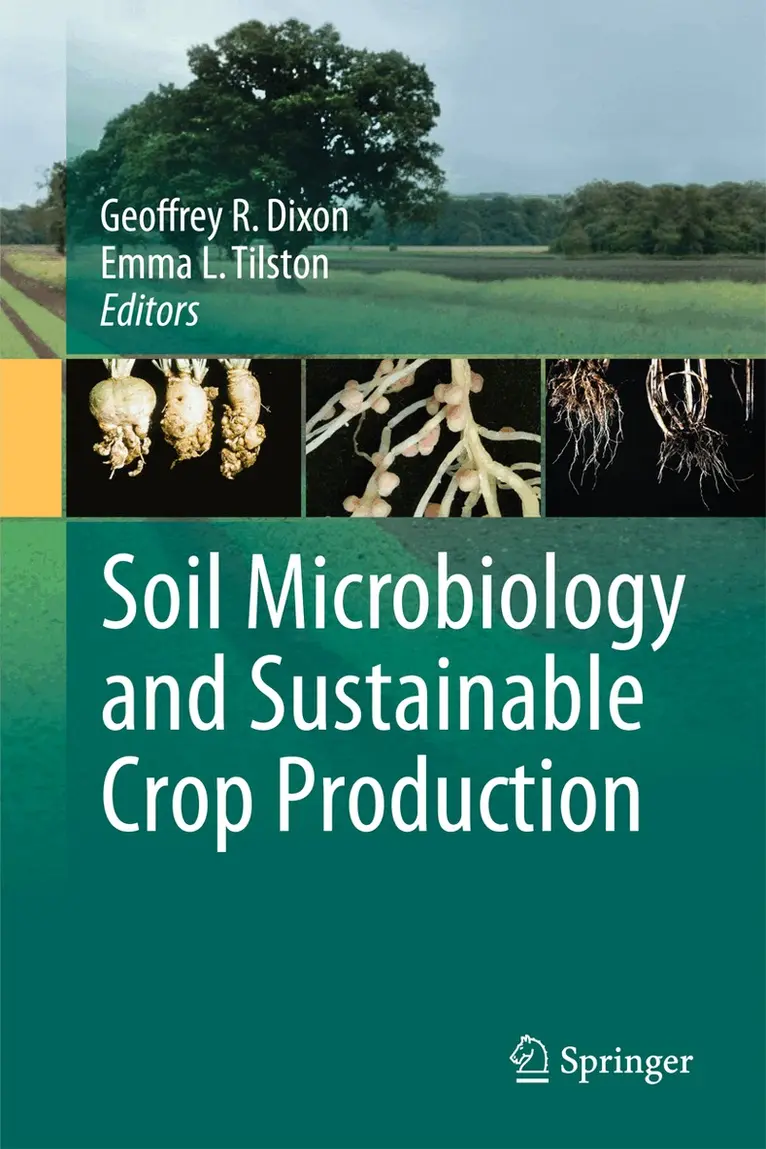
Soils into which crop plants root and from which they obtain essential minerals and water contain huge arrays of microbes. Many have highly beneficial effects on crop growth and productivity, others are pathogens causing diseases and losses to yield and quality, a few microbes offer protection from these pathogenic forms and others have little or no effect. These intimate and often complex inter-relationships are being explored with increasing success providing exciting opportunities for increasing crop yields and quality in sustainable harmony with the populations of beneficial soil microbes and to the detriment of pathogens. This book explores current knowledge for each of these aspects of soil microbiology and indicates where future progress is most likely to aid in increasing crop productivity by means which are environmentally benign and beneficial.
E-bok
PDF, Engelska, 20103 351 kr
Läs direkt efter köp
Soils into which crop plants root and from which they obtain essential minerals and water contain huge arrays of microbes. Many have highly beneficial effects on crop growth and productivity, others are pathogens causing diseases and losses to yield and quality, a few microbes offer protection from these pathogenic forms and others have little or no effect. These intimate and often complex inter-relationships are being explored with increasing success providing exciting opportunities for increasing crop yields and quality in sustainable harmony with the populations of beneficial soil microbes and to the detriment of pathogens. This book explores current knowledge for each of these aspects of soil microbiology and indicates where future progress is most likely to aid in increasing crop productivity by means which are environmentally benign and beneficial.
Häftad, Engelska, 2014
2 698 kr
Skickas inom 10-15 vardagar
Soils into which crop plants root and from which they obtain essential minerals and water contain huge arrays of microbes. Many have highly beneficial effects on crop growth and productivity, others are pathogens causing diseases and losses to yield and quality, a few microbes offer protection from these pathogenic forms and others have little or no effect. These intimate and often complex inter-relationships are being explored with increasing success providing exciting opportunities for increasing crop yields and quality in sustainable harmony with the populations of beneficial soil microbes and to the detriment of pathogens. This book explores current knowledge for each of these aspects of soil microbiology and indicates where future progress is most likely to aid in increasing crop productivity by means which are environmentally benign and beneficial.
Inbunden, Engelska, 2014
1 622 kr
Skickas inom 10-15 vardagar
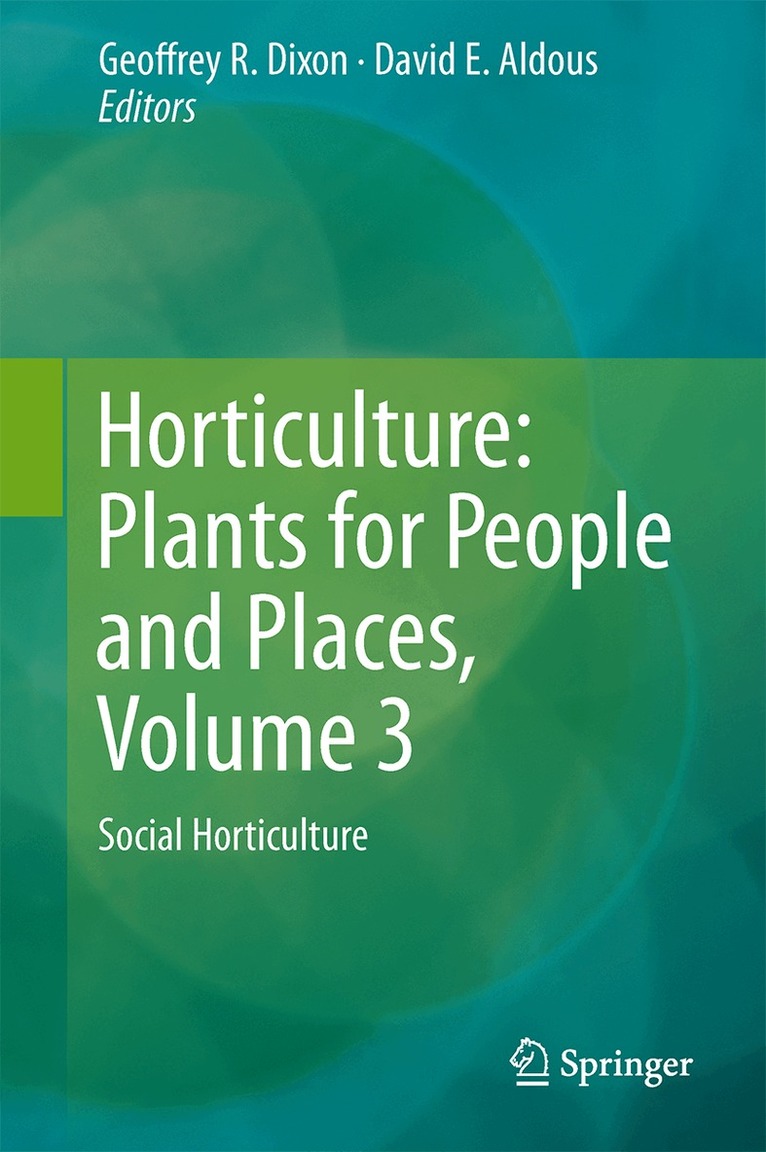
This Trilogy explains “What is Horticulture?”. Volume three of Horticulture: Plants for People and Places presents readers with detailed accounts of the scientific and scholastic concepts which interact with the arts and humanities and which now underpins the rapidly evolving subject of Social Horticulture. This discipline transcends the barriers between science, medicine and the arts. This volume covers:- Horticulture and Society, Diet and Health, Psychological Health, Wildlife, Horticulture and Public Welfare, Education, Extension, Economics, Exports and Biosecurity, Scholarship and Art, Scholarship and Literature, Scholarship and History and the relationship between Horticulture and Gardening. This volume brings the evolution of the Discipline and Vocation of Horticulture firmly into the 21st Century. It covers new ground by providing a detailed analysis of the value of Horticulture as a force for enhancing society in the forms of social welfare, health and well-being, how knowledgeis transferred within and between generations, and the place of Horticulture in the Arts and Humanities. Substantial emphasis is given to the relationships between health, well-being and plants by the internationally acclaimed authors who have contributed accounts of their work in this book.
E-bok
PDF, Engelska, 20141 995 kr
Läs direkt efter köp
This Trilogy explains “What is Horticulture?”. Volume three of Horticulture: Plants for People and Places presents readers with detailed accounts of the scientific and scholastic concepts which interact with the arts and humanities and which now underpins the rapidly evolving subject of Social Horticulture. This discipline transcends the barriers between science, medicine and the arts. This volume covers:- Horticulture and Society, Diet and Health, Psychological Health, Wildlife, Horticulture and Public Welfare, Education, Extension, Economics, Exports and Biosecurity, Scholarship and Art, Scholarship and Literature, Scholarship and History and the relationship between Horticulture and Gardening. This volume brings the evolution of the Discipline and Vocation of Horticulture firmly into the 21st Century. It covers new ground by providing a detailed analysis of the value of Horticulture as a force for enhancing society in the forms of social welfare, health and well-being, how knowledgeis transferred within and between generations, and the place of Horticulture in the Arts and Humanities. Substantial emphasis is given to the relationships between health, well-being and plants by the internationally acclaimed authors who have contributed accounts of their work in this book.
Inbunden, Engelska, 2014
2 483 kr
Skickas inom 10-15 vardagar
This Trilogy explains “What is Horticulture?”. Volume one of Horticulture: Plants for People and Places describes in considerable depth the science, management and technology which underpins the continuous production of fresh and processed horticultural produce. Firstly, there is a consideration of technological innovation derived from basic scientific discoveries which has given rise to entirely new industries, markets, novel crops and changed social habits. Then follows accounts of the modern production of: Field Vegetables, Temperate Fruit, Tropical Fruit, Citrus, Plantation Crops, Berry Crops, Viticulture, Protected Crops, Flower Crops, New Crops, Post-harvest Handling, Supply Chain Management and the Environmental Impact of Production. Each chapter is written by acknowledged world experts. Never before has such an array of plentiful, high quality fresh fruit, vegetables and ornamentals been available year-round in the World’s retail markets. Horticulture gives consumers this giftof nutritious, high quality, safe and diverse fresh foods. This is achieved by manipulating plant growth, reproduction and postharvest husbandry. The multi-billion dollar international industry achieving this is Production Horticulture the subject of this informative book.
E-bok
PDF, Engelska, 20142 207 kr
Läs direkt efter köp
This Trilogy explains “What is Horticulture?”. Volume one of Horticulture: Plants for People and Places describes in considerable depth the science, management and technology which underpins the continuous production of fresh and processed horticultural produce. Firstly, there is a consideration of technological innovation derived from basic scientific discoveries which has given rise to entirely new industries, markets, novel crops and changed social habits. Then follows accounts of the modern production of: Field Vegetables, Temperate Fruit, Tropical Fruit, Citrus, Plantation Crops, Berry Crops, Viticulture, Protected Crops, Flower Crops, New Crops, Post-harvest Handling, Supply Chain Management and the Environmental Impact of Production. Each chapter is written by acknowledged world experts. Never before has such an array of plentiful, high quality fresh fruit, vegetables and ornamentals been available year-round in the World’s retail markets. Horticulture gives consumers this giftof nutritious, high quality, safe and diverse fresh foods. This is achieved by manipulating plant growth, reproduction and postharvest husbandry. The multi-billion dollar international industry achieving this is Production Horticulture the subject of this informative book.
Inbunden, Engelska, 2014
1 622 kr
Skickas inom 10-15 vardagar
This Trilogy explains “What is Horticulture?”. Volume two of Horticulture: Plants for People and Places analyses in depth the scientific, managerial and ecological concepts which underpin Environmental Horticulture. Chapters describe: Horticulture and the Environment, Woody Ornamentals, Herbs and Pharmaceuticals, Urban Greening, Rural Trees, Urban Trees, Turfgrass Science, Interior and External Landscaping, Biodiversity, Climate Change and Organic Production. Each is written by leading international experts. Sustainable use of resources and careful conservation are critically essential for the continuation of life on this Planet. Achieving this is where horticulture, natural flora and fauna and the environment interact in achieving sustainable development. Horticulture is the fundamental partner of ecological and environmental science and provides an understanding of eco-system services. Live plant networks are essential for rural and urban life. They are integral parts of natural communities, the context of historic and modern architecture and a means for rejuvenating cities and uniting communities. Plants provide urban, peri-urban and rural employment, business and tourism opportunities, leisure, rest and relaxation. These facets of Environmental Horticulture are clearly described in this book.
E-bok
PDF, Engelska, 20142 049 kr
Läs direkt efter köp
This Trilogy explains “What is Horticulture?”. Volume two of Horticulture: Plants for People and Places analyses in depth the scientific, managerial and ecological concepts which underpin Environmental Horticulture. Chapters describe: Horticulture and the Environment, Woody Ornamentals, Herbs and Pharmaceuticals, Urban Greening, Rural Trees, Urban Trees, Turfgrass Science, Interior and External Landscaping, Biodiversity, Climate Change and Organic Production. Each is written by leading international experts. Sustainable use of resources and careful conservation are critically essential for the continuation of life on this Planet. Achieving this is where horticulture, natural flora and fauna and the environment interact in achieving sustainable development. Horticulture is the fundamental partner of ecological and environmental science and provides an understanding of eco-system services. Live plant networks are essential for rural and urban life. They are integral parts of natural communities, the context of historic and modern architecture and a means for rejuvenating cities and uniting communities. Plants provide urban, peri-urban and rural employment, business and tourism opportunities, leisure, rest and relaxation. These facets of Environmental Horticulture are clearly described in this book.
Häftad, Engelska, 2016
1 783 kr
Skickas inom 10-15 vardagar
This Trilogy explains “What is Horticulture?”. Volume one of Horticulture: Plants for People and Places describes in considerable depth the science, management and technology which underpins the continuous production of fresh and processed horticultural produce. Firstly, there is a consideration of technological innovation derived from basic scientific discoveries which has given rise to entirely new industries, markets, novel crops and changed social habits. Then follows accounts of the modern production of: Field Vegetables, Temperate Fruit, Tropical Fruit, Citrus, Plantation Crops, Berry Crops, Viticulture, Protected Crops, Flower Crops, New Crops, Post-harvest Handling, Supply Chain Management and the Environmental Impact of Production. Each chapter is written by acknowledged world experts. Never before has such an array of plentiful, high quality fresh fruit, vegetables and ornamentals been available year-round in the World’s retail markets. Horticulture gives consumers this giftof nutritious, high quality, safe and diverse fresh foods. This is achieved by manipulating plant growth, reproduction and postharvest husbandry. The multi-billion dollar international industry achieving this is Production Horticulture the subject of this informative book.
Häftad, Engelska, 2016
1 622 kr
Skickas inom 10-15 vardagar
This Trilogy explains “What is Horticulture?”. Volume two of Horticulture: Plants for People and Places analyses in depth the scientific, managerial and ecological concepts which underpin Environmental Horticulture. Chapters describe: Horticulture and the Environment, Woody Ornamentals, Herbs and Pharmaceuticals, Urban Greening, Rural Trees, Urban Trees, Turfgrass Science, Interior and External Landscaping, Biodiversity, Climate Change and Organic Production. Each is written by leading international experts. Sustainable use of resources and careful conservation are critically essential for the continuation of life on this Planet. Achieving this is where horticulture, natural flora and fauna and the environment interact in achieving sustainable development. Horticulture is the fundamental partner of ecological and environmental science and provides an understanding of eco-system services. Live plant networks are essential for rural and urban life. They are integral parts of natural communities, the context of historic and modern architecture and a means for rejuvenating cities and uniting communities. Plants provide urban, peri-urban and rural employment, business and tourism opportunities, leisure, rest and relaxation. These facets of Environmental Horticulture are clearly described in this book.
Häftad, Engelska, 2016
1 622 kr
Skickas inom 10-15 vardagar
This Trilogy explains “What is Horticulture?”. Volume three of Horticulture: Plants for People and Places presents readers with detailed accounts of the scientific and scholastic concepts which interact with the arts and humanities and which now underpins the rapidly evolving subject of Social Horticulture. This discipline transcends the barriers between science, medicine and the arts. This volume covers:- Horticulture and Society, Diet and Health, Psychological Health, Wildlife, Horticulture and Public Welfare, Education, Extension, Economics, Exports and Biosecurity, Scholarship and Art, Scholarship and Literature, Scholarship and History and the relationship between Horticulture and Gardening. This volume brings the evolution of the Discipline and Vocation of Horticulture firmly into the 21st Century. It covers new ground by providing a detailed analysis of the value of Horticulture as a force for enhancing society in the forms of social welfare, health and well-being, how knowledgeis transferred within and between generations, and the place of Horticulture in the Arts and Humanities. Substantial emphasis is given to the relationships between health, well-being and plants by the internationally acclaimed authors who have contributed accounts of their work in this book.