Geraint Ellis – författare
Visar alla böcker från författaren Geraint Ellis. Handla med fri frakt och snabb leverans.
5 produkter
Learning from Wind Power
Governance, Societal and Policy Perspectives on Sustainable Energy
Av Joseph Szarka, Richard Cowell m. fl.
Inbunden, 2012
1636 kr
Lägg i varukorg
Bringing together contributions from leading researchers, this volume reflects on the political, institutional and social factors that have shaped the recent expansion of wind energy, and to consider what lessons this experience may provide for the future expansion of other renewable technologies.
Learning from Wind Power
Governance, Societal and Policy Perspectives on Sustainable Energy
Av Charles Warren, Peter A. Strachan m. fl.
E-bok, 2012
1516 kr
Lägg i varukorg
Bringing together contributions from leading researchers, this volume reflects on the political, institutional and social factors that have shaped the recent expansion of wind energy, and to consider what lessons this experience may provide for the future expansion of other renewable technologies.
Trumpet Style in Jazz
E-bok, 2013
33 kr
Lägg i varukorg
If you are a musician, a non-musician, a jazz-fan, a social historian or a researcher of American music, then this book will prove invaluable to you, for it contains a series of entertaining face-to-face discussions between the author and leading performers of the day, from: Jimmy McPartland – who …
Learning from Wind Power
Governance, Societal and Policy Perspectives on Sustainable Energy
Av Joseph Szarka, Richard Cowell m. fl.
Häftad, 2012
1096 kr
Lägg i varukorg
Bringing together contributions from leading researchers, this volume reflects on the political, institutional and social factors that have shaped the recent expansion of wind energy, and to consider what lessons this experience may provide for the future expansion of other renewable technologies.
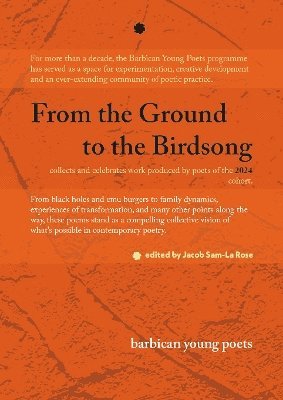
From the Ground to the Birdsong
Av Vera K Yuen, Shyamli B m. fl.
Häftad, 2024
140 kr
Lägg i varukorg
For more than a decade, the Barbican Young Poets programme has served as a base for experimentation, creative development and an ever-extending community of poetic practice. From the Ground to the Birdsong collects and celebrates work produced by poets of the 2024 cohort.From black holes and emu …