Gillian E. Bowen – författare
Visar alla böcker från författaren Gillian E. Bowen. Handla med fri frakt och snabb leverans.
3 produkter
3 produkter
Inbunden, Engelska, 2022
1 611 kr
Skickas inom 7-10 vardagar
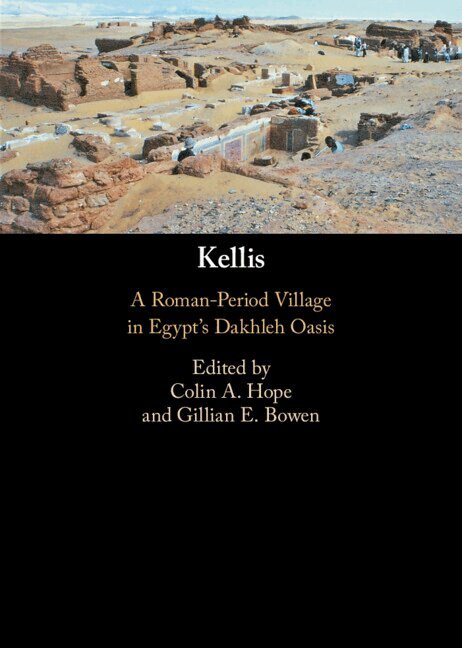
Kellis was a village in the Dakhleh Oasis in the Egyptian Western Desert inhabited continuously from the first to the late fourth century AD. Previously unexcavated, it has in recent decades yielded a wealth of data unsurpassed by most sites of the period due to the excellent state of preservation. We know the layout of the village with its temples, churches, residential sectors and cemeteries, and the excavators have retrieved vast quantities of artefacts, including a wealth of documents. The study of this material yields an integrated picture of life in the village, including the transition from ancient religious beliefs to various branches of Christianity. This volume provides accounts of the lived-in environment and its material culture, social structure and economy, religious beliefs and practices, and burial traditions. The topics are covered by an international team of specialists, culminating in an inter-disciplinary approach that will illuminate life in Roman Egypt.
Häftad, Engelska, 2024
475 kr
Skickas inom 7-10 vardagar
Kellis was a village in the Dakhleh Oasis in the Egyptian Western Desert inhabited continuously from the first to the late fourth century AD. Previously unexcavated, it has in recent decades yielded a wealth of data unsurpassed by most sites of the period due to the excellent state of preservation. We know the layout of the village with its temples, churches, residential sectors and cemeteries, and the excavators have retrieved vast quantities of artefacts, including a wealth of documents. The study of this material yields an integrated picture of life in the village, including the transition from ancient religious beliefs to various branches of Christianity. This volume provides accounts of the lived-in environment and its material culture, social structure and economy, religious beliefs and practices, and burial traditions. The topics are covered by an international team of specialists, culminating in an inter-disciplinary approach that will illuminate life in Roman Egypt.
Inbunden, Engelska, 2023
786 kr
Tillfälligt slut
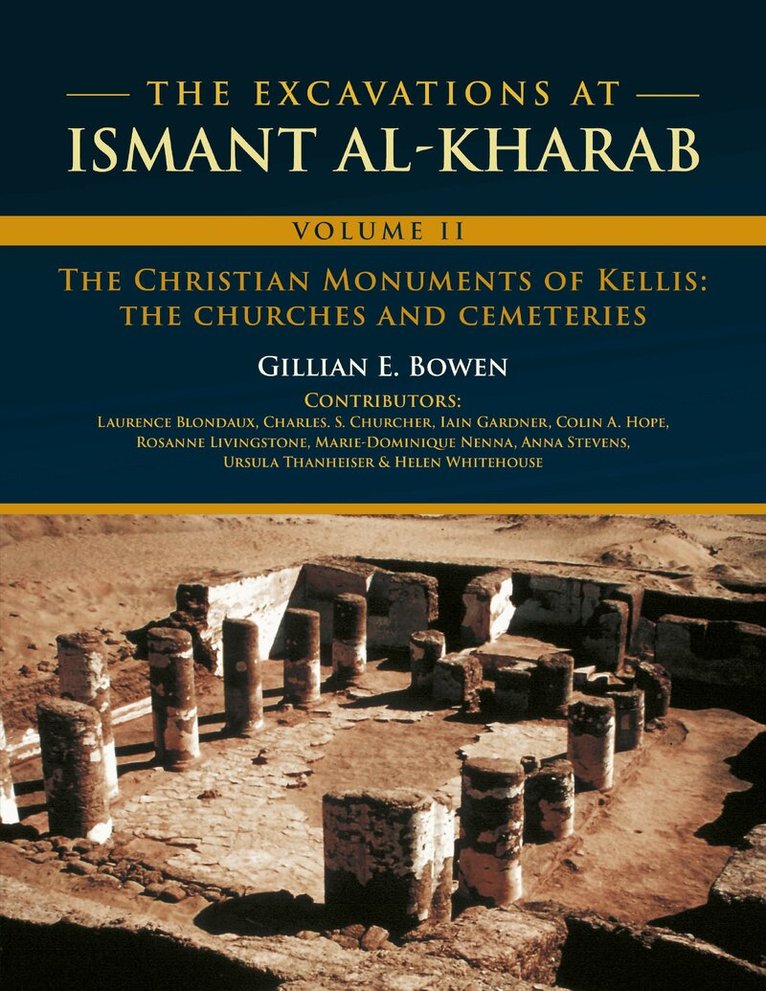
The adoption of Christianity by the Egyptian populace was well underway by the late third century, but evidence for its presence in the archaeological record from the Nile valley is sparse. This is due, in part, to the loss of ancient settlement sites beneath modern cultivation. By comparison, Ismant al-Kharab, ancient Kellis, in Dakhleh Oasis, was abandoned at the end of the fourth century and many of its structures survive intact. The villagers, moreover, left behind a wealth of artefacts and documentation. By the late third century some had converted to Christianity and by the early fourth century three churches were built to accommodate their growing numbers. The churches afford an unparalleled window into three ecclesiastical complexes that served a single village. The Large East Church, moreover, is the earliest surviving example of a purpose-built basilica in Egypt known thus far. It provides a better understanding of the development of Egyptian church architecture and has forced a reappraisal of the dates of certain features that were previously attributed to the fifth century.The community established three burial grounds: Kellis 2, with an estimated 3,500–4,000 graves, a funerary church and associated graveyard, and in a reused monumental mausoleum. Christian cemeteries are known throughout North Africa, Europe, and Britain, but in Egypt few are published in anything but a cursory manner. At Kellis, 800+ graves have been excavated; the earliest burials date to the late third century confirming the evidence of an early conversion by some villagers and its rapid expansion thereafter.This volume provides the first detailed publication of the churches and Christian burial grounds. It incorporates a discussion of the spread of Christianity in Egypt’s Southern Oasis, drawing upon data from the rich textual documentation from the site. The material culture is presented in detail, especially the extensive collection of ceramics, glass, and coins.