Golder N. Wilson – författare
Visar alla böcker från författaren Golder N. Wilson. Handla med fri frakt och snabb leverans.
3 produkter
3 produkter
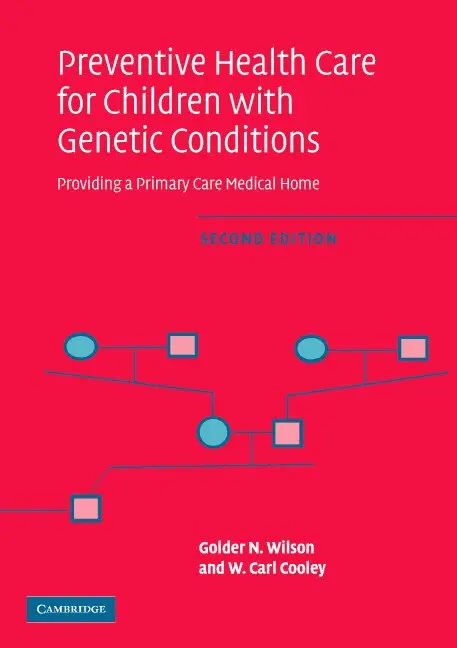
Preventive Health Care for Children with Genetic Conditions
Providing a Primary Care Medical Home
Häftad, Engelska, 2006
1 734 kr
Skickas inom 7-10 vardagar
Originally published as Preventative Management of Children with Congenital Anomalies and Syndromes, this new edition provides health professionals with an invaluable, structured approach to the preventive care of children with congenital disorders. Over 150 conditions ranging from cerebral palsy to Down syndrome are discussed. The large number of conditions covered and the added perspective of a developmental pediatrician (Dr Cooley) provides a valuable resource for carers and parents. For each disorder there is an introductory summary of key information, followed by more detailed listing of general pediatric and speciality concerns, all structured to provide an integrated approach to patient care. For 32 common disorders or disease categories, preventive management checklists are provided: these checklists provide an ongoing record for the child's medical complications and progress and they are designed to be copied and placed in the medical record. The text provides details of medical complications and preventive recommendations supported by key literature and web resources for parents and professionals.
2 734 kr
Skickas inom 10-15 vardagar
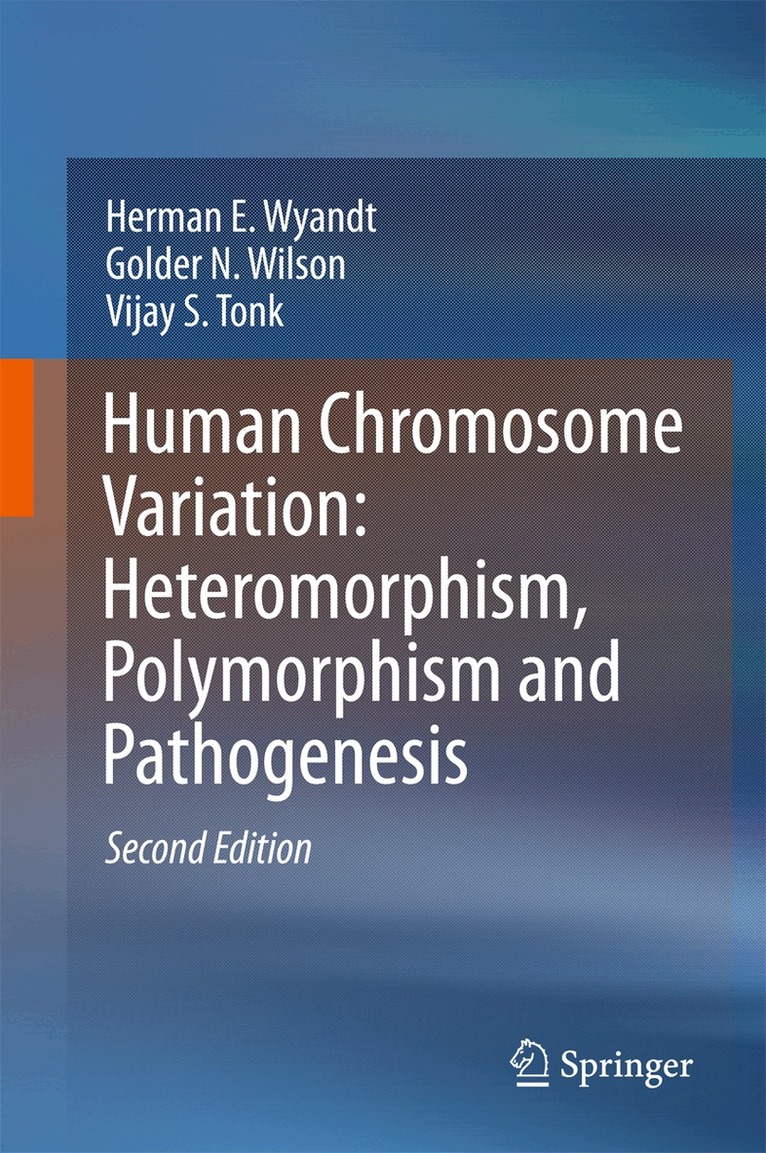
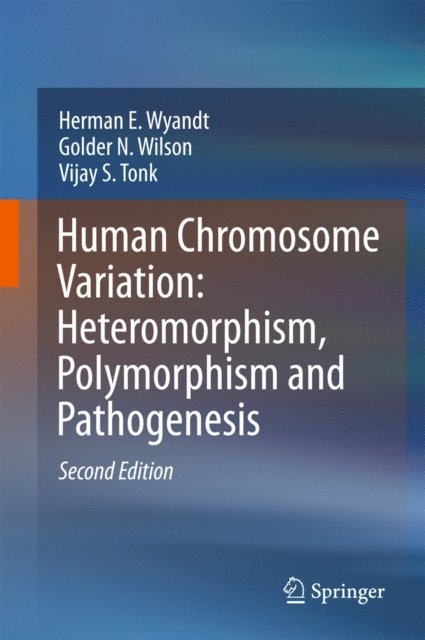
This new edition now titled “Human Chromosome Variation: Heteromorphism, Polymorphism and Pathogenesis” provides the reader with an up-to-date overview of microarrays, fragile sites, copy number variations and whole genome sequencing. Greatly expanding the discussion of microarray analysis in the previous edition of the book, are new chapters on microarray and genomic analysis, plus comprehensive tables on the subtle microdeletions and microduplications that are found on each chromosome, including 235 recurring copy number variants that are associated with well-established or emerging chromosomal syndromes. The current edition features concise information on cytogenetic methods and applications, extending these discussions to DNA analysis and genome sequencing. Sections on euchromatin, heterochromatin, FISH pattern, fragile site, copy number, and DNA sequence variation are integrated with actual clinical examples from cytogenetic laboratories and from clinical practice. The principles that allow for the distinction between benign chromosome / DNA variation and pathogenic heteromorphisms / polymorphisms are discussed and include references to the latest organizational guidelines and genomic or population databases. The two previous incarnations of this book: the ‘Atlas of Human Chromosome Heteromorphism’, and ‘Human Chromosome Variation: Heteromorphism and Polymorphism’ have been standard reference works in most cytogenetic laboratories, used by laboratory directors and clinicians all around the world. While widely used sections from the previous edition on cytogenetic technologies and heteromorphisms are retained intact the present volume adds extensive material on copy number variations (polymorphisms detected by microarray analysis), fragile sites in disease and cancer, and practical views on interpreting emerging technologies, including whole exome sequencing. Thisbook should be of interest to clinicians, technicians and students who are or will be exposed to DNA and/or chromosome analysis and the data derived from these continuously developing techniques. This fully updated book volume will bring the reader up to speed on the latest technologies, their applications, benefits and drawbacks and as such, is a must read for anyone with an interest in DNA and chromosome analysis and the distinction between benign variation and pathogenic mistakes.
2 734 kr
Skickas inom 10-15 vardagar
This new edition now titled “Human Chromosome Variation: Heteromorphism, Polymorphism and Pathogenesis” provides the reader with an up-to-date overview of microarrays, fragile sites, copy number variations and whole genome sequencing. Greatly expanding the discussion of microarray analysis in the previous edition of the book, are new chapters on microarray and genomic analysis, plus comprehensive tables on the subtle microdeletions and microduplications that are found on each chromosome, including 235 recurring copy number variants that are associated with well-established or emerging chromosomal syndromes. The current edition features concise information on cytogenetic methods and applications, extending these discussions to DNA analysis and genome sequencing. Sections on euchromatin, heterochromatin, FISH pattern, fragile site, copy number, and DNA sequence variation are integrated with actual clinical examples from cytogenetic laboratories and from clinical practice. The principles that allow for the distinction between benign chromosome / DNA variation and pathogenic heteromorphisms / polymorphisms are discussed and include references to the latest organizational guidelines and genomic or population databases. The two previous incarnations of this book: the ‘Atlas of Human Chromosome Heteromorphism’, and ‘Human Chromosome Variation: Heteromorphism and Polymorphism’ have been standard reference works in most cytogenetic laboratories, used by laboratory directors and clinicians all around the world. While widely used sections from the previous edition on cytogenetic technologies and heteromorphisms are retained intact the present volume adds extensive material on copy number variations (polymorphisms detected by microarray analysis), fragile sites in disease and cancer, and practical views on interpreting emerging technologies, including whole exome sequencing. Thisbook should be of interest to clinicians, technicians and students who are or will be exposed to DNA and/or chromosome analysis and the data derived from these continuously developing techniques. This fully updated book volume will bring the reader up to speed on the latest technologies, their applications, benefits and drawbacks and as such, is a must read for anyone with an interest in DNA and chromosome analysis and the distinction between benign variation and pathogenic mistakes.