Gordon Lindsay Campbell – författare
Visar alla böcker från författaren Gordon Lindsay Campbell. Handla med fri frakt och snabb leverans.
4 produkter
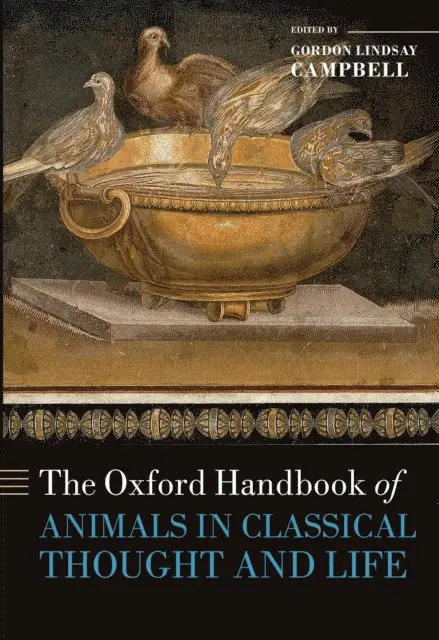
Oxford Handbook of Animals in Classical Thought and Life
E-bok, 2014
2077 kr
Lägg i varukorg
The Oxford Handbook of Animals in Classical Thought and Life is the first comprehensive guide to animals in the ancient world, encompassing all aspects of the topic by featuring authoritative chapters on 33 topics by leading scholars in their fields. As well as an introduction to, and a survey of, …
Oxford Handbook of Animals in Classical Thought and Life
E-bok, 2014
2077 kr
Lägg i varukorg
The Oxford Handbook of Animals in Classical Thought and Life is the first comprehensive guide to animals in the ancient world, encompassing all aspects of the topic by featuring authoritative chapters on 33 topics by leading scholars in their fields. As well as an introduction to, and a survey of, …
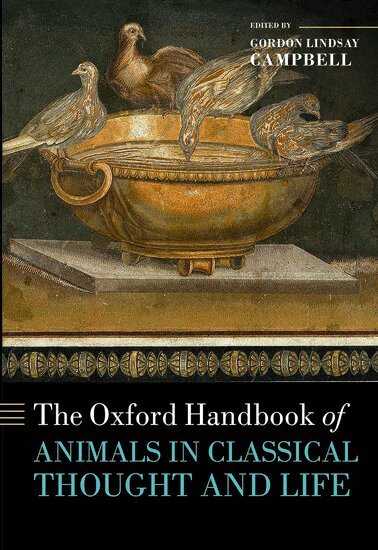
The Oxford Handbook of Animals in Classical Thought and Life
Av CAMPBELL, Gordon Lindsay Campbell
Inbunden, 2014
2902 kr
Lägg i varukorg
The Oxford Handbook of Animals in Classical Thought and Life is the first comprehensive guide to animals in the ancient world, encompassing all aspects of the topic by featuring authoritative chapters on 33 topics by leading scholars in their fields. As well as an introduction to, and a survey of, …
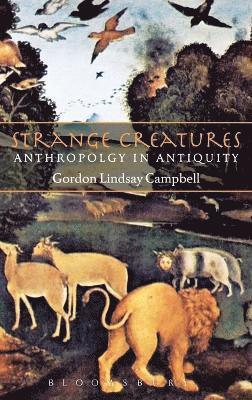
Strange Creatures
Anthropology in Antiquity
Inbunden, 2006
2330 kr
Lägg i varukorg
Traces the anthropological and ethnological theories of the ancient Greeks and Romans from the creation of the world to the invention of the Americas. In ancient Greek and Roman thinking, whether the world is flat or spherical it will have imaginary boundaries and liminal areas where the norms of …