Guangtao Fu – författare
Visar alla böcker från författaren Guangtao Fu. Handla med fri frakt och snabb leverans.
2 produkter
2 produkter
Häftad, Engelska, 2020
441 kr
Skickas
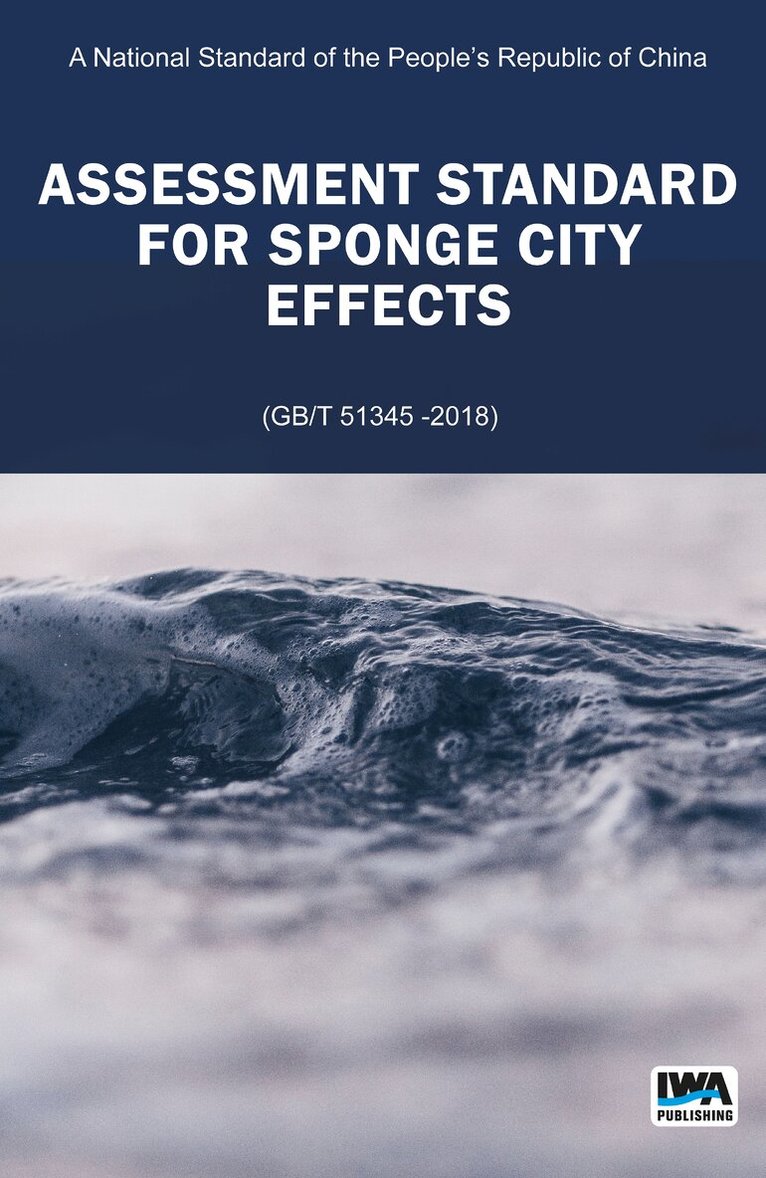
In 2014, China initiated its national action plan for sponge city development aiming to tackle urban water and environmental challenges. Since then, numerous projects have been implemented across 30 pilot cities and beyond in China through two development stages.The sponge city development, based on a systematic approach of “source reduction, process control, and systematic remediation”, adopts comprehensive technical measures of “infiltration, detention, retention, purification, utilization and discharge”, and coordinates the different aspects of water quantity and quality, ecology and safety, centralized and decentralized, green and grey, landscape and function, on-shore and off-shore, surface and underground, etc. It aims to control urban runoff effectively, to minimize the impacts of urban development and construction activities on the natural hydrological characteristics and ecological environment, and to enable the city’s resilience like a “sponge” to adapt to environmental changes and natural disasters.This assessment standard for sponge city effects published by the Ministry of Housing and Urban-Rural Development of P.R. China is an attempt to provide guidance on the assessment of the effects of sponge city development projects and the city development as a whole. The main technical contents of this standard include: 1) general provisions; 2)terms and symbols; 3) basic requirements; 4) assessment items and 5) assessment methods.The publication of the English version of the Chinese assessment standard aims to provide non-Chinese readers an insight into what objectives are to be achieved through sponge city development and how sponge city projects areevaluated in China.
Häftad, Engelska, 2021
1 806 kr
Tillfälligt slut
Building water-wise cities is a pressing need nowadays in both developed and developing countries. This is mainly due to the limitation of the available water resources and aging infrastructure to meet the needs of adapting to social and environmental changes and for urban liveability. This is the first book to provide comprehensive insights into theoretical, systematic, and engineering aspects of water-wise cities with a broad coverage of global issues. The book aims to (1) provide a theoretical framework of water-wise cities and associated sustainable water systems including key concepts and principles, (2) provide a brand-new thinking on the design and management of sustainable urban water systems of various scales towards a paradigm shift under the resource and environmental constraints, and (3) provide a technological perspective with successful case studies of technology selection, integration, and optimization on the “fit-for-purpose” basis.