Gunnar Thor Petursson – författare
Visar alla böcker från författaren Gunnar Thor Petursson. Handla med fri frakt och snabb leverans.
2 produkter
2 produkter
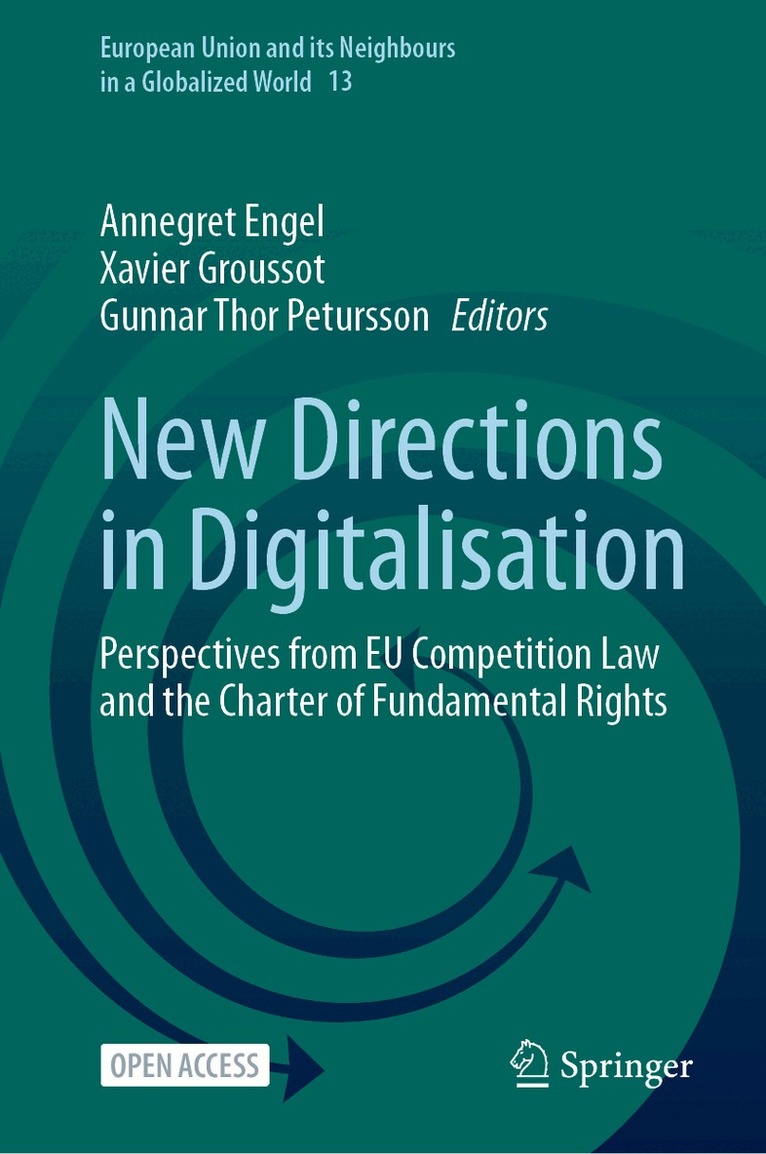
Del 13 - European Union and its Neighbours in a Globalized World
New Directions in Digitalisation
Perspectives from EU Competition Law and the Charter of Fundamental Rights
Inbunden, Engelska, 2024
505 kr
Skickas inom 10-15 vardagar
This open access book brings together experts from both EU competition law as well fundamental rights backgrounds, discussing the most recent developments in EU legislation on digitalisation. Most prominently, it explores the recently introduced Digital Markets Act (DMA), including a discussion on other related legislative acts and the respective case law. It is aimed mostly at academics and researchers in the area of digitalisation, EU competition law, and the EU Charter, but will also provide some useful insights from practitioners in the field. The internet has long been neglected and exempt from being regulated at EU level. In particular, this concerns the application of fundamental rights. The specific challenges for the digital sphere are numerous; worldwide scope, easy access, interoperability, rapid technological change, fluctuating market conditions, anonymity, disinformation, lack of traceability and thus enforcement, to name but a few. Fundamental EU values, in particular including democracy and the respect for human rights, have suffered as a direct result of these growing problems in the digital sphere. More recently, however, the EU has started to actively regulate the new technologies in order to avoid European values being undermined by an unregulated internet. In the specific field of competition law, the development of new technologies has created many challenges and raised questions for the legislator how to regulate big market players: their cross-border nature, vicissitudes, and enormous market powers allow some of them to be able to escape legal scrutiny under the current set of ex-post rules. The DMA now introduces an ex-ante mechanism for competition law and claims to be aligned with the procedural and institutional rights granted under the Charter, which will be scrutinised and challenged by the various contributions in this book.
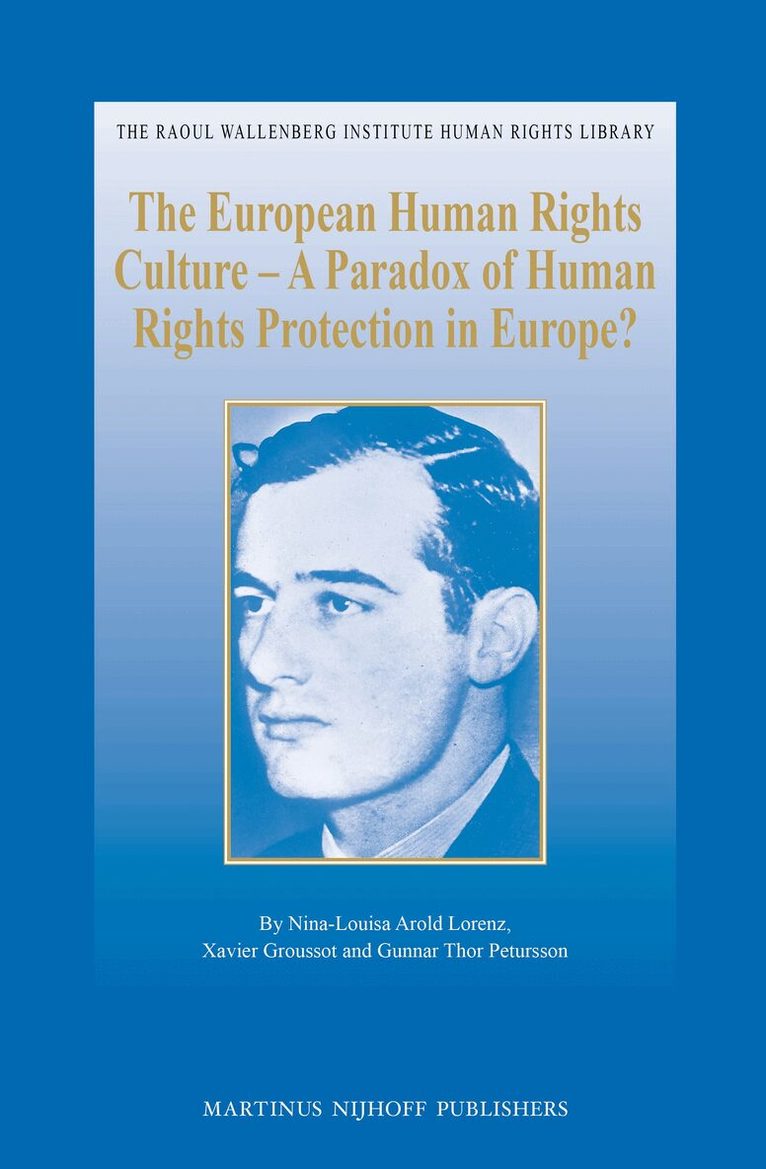
Del 44 - Raoul Wallenberg Institute Human Rights Library
European Human Rights Culture - A Paradox of Human Rights Protection in Europe?
Inbunden, Engelska, 2013
5 080 kr
Skickas inom 5-8 vardagar
The European Human Rights Culture – A Paradox of Human Rights Protection in Europe? analyses the political term “European Human Rights Culture”, a term first introduced by EU Commission President Barroso. Located in the fields of comparative law and European law, this book analyses, through first-hand interviews with the European judiciary, the judicial perspective on the European human rights culture and sets this in context to the political dimension of the term. In addition, it looks at the structures and procedures of the Court of Justice of the European Union (CJEU) and the European Court of Human Rights (ECtHR), and explains the embedding of the Courts’ legal cultures. It offers an in-depth analysis of the margin of appreciation doctrine at both the CJEU and ECtHR, and shows its value for addressing human rights grievances. This book is novel in that it combines interviews and case-law analysis to show how a mix of differences on the bench are legally amalgamated to resolve probing legal questions and human rights issues. It shows, through a combined analysis of case-law and recent political developments for European human rights, the tensions between judicial and political approaches and the paradox of human rights protection in Europe. It also offers in-depth knowledge of the European human rights discourse. In addition to a rich study of legal materials, the book looks inside the box by adding the judiciary’s perspective. Human rights are widely acknowledged in European societies and cases claiming human rights violations are increasing at both the CJEU and ECtHR. In these times of increased human rights awareness, this book uncovers a paradox in European human rights protection which is created by the push-and-pull between judicial and political interests.