Hanna Pickard – författare
Visar alla böcker från författaren Hanna Pickard. Handla med fri frakt och snabb leverans.
6 produkter
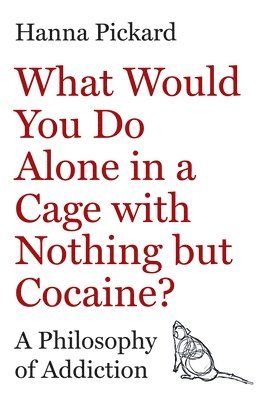
What Would You Do Alone in a Cage with Nothing but Cocaine?
A Philosophy of Addiction
Inbunden, 2026
269 kr
Lägg i varukorg
A revolutionary new paradigm for understanding addictionWhy do people with addiction use drugs self-destructively? Why don’t they quit out of self-concern? Why does the rat in the experiment, alone in a cage, press the lever again and again for cocaine—to the point of death? In this pathbreaking …
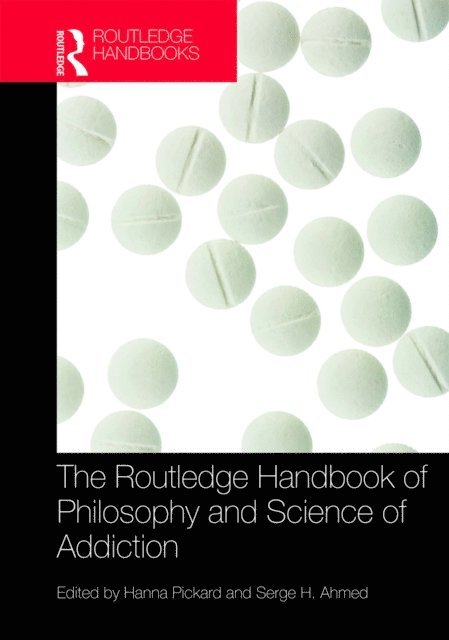
Routledge Handbook of Philosophy and Science of Addiction
Häftad, 2020
806 kr
Lägg i varukorg
The problem of addiction is one of the major challenges and controversies confronting medicine and society. It also poses important and complex philosophical and scientific problems. What is addiction? Why does it occur? And how should we respond to it, as individuals and as a society?The Routledge …
What Would You Do Alone in a Cage with Nothing but Cocaine?
A Philosophy of Addiction
E-bok, 2026
368 kr
Lägg i varukorg
A revolutionary new paradigm for understanding addiction Why do people with addiction use drugs self-destructively? Why don’t they quit out of self-concern? Why does the rat in the experiment, alone in a cage, press the lever again and again for cocaine—to the point of death? In this pathbreaking …
Routledge Handbook of Philosophy and Science of Addiction
Inbunden, 2018
3785 kr
Lägg i varukorg
The problem of addiction is one of the major challenges and controversies confronting medicine and society. It also poses important and complex philosophical and scientific problems. What is addiction? Why does it occur? And how should we respond to it, as individuals and as a society?The Routledge …
Routledge Handbook of Philosophy and Science of Addiction
E-bok, 2018
849 kr
Lägg i varukorg
The problem of addiction is one of the major challenges and controversies confronting medicine and society. It also poses important and complex philosophical and scientific problems. What is addiction? Why does it occur? And how should we respond to it, as individuals and as a society? The …
Routledge Handbook of Philosophy and Science of Addiction
E-bok, 2018
849 kr
Lägg i varukorg
The problem of addiction is one of the major challenges and controversies confronting medicine and society. It also poses important and complex philosophical and scientific problems. What is addiction? Why does it occur? And how should we respond to it, as individuals and as a society? The …