Hannah Hughes – författare
Visar alla böcker från författaren Hannah Hughes. Handla med fri frakt och snabb leverans.
2 produkter
2 produkter
1 447 kr
Skickas inom 7-10 vardagar
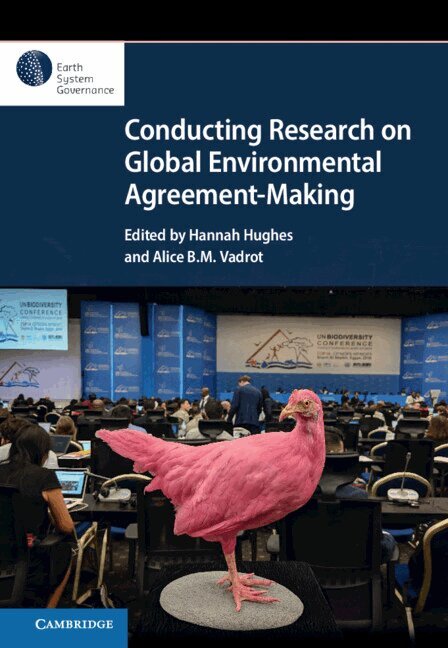
Global environmental negotiations have become central sites for studying the interaction between politics, power, and environmental degradation. This book challenges what constitutes the sites, actors, and processes of negotiations beyond conventional approaches and provides a critical, multidisciplinary, and applied perspective reflecting recent developments, such as the increase of actor diversity and the digitalisation of global environmental meetings. It provides a step-by-step guide to the study of global environmental negotiations using accessible language and illustrative examples from different negotiation settings, including climate change, biodiversity, and ocean protection. It introduces the concept of 'agreement-making' to broaden understanding of what is studied as a 'site' of negotiation, illustrating how diverse methods can be applied to research the actors, processes, and order-making. It provides practical guidance and methodological tools for students, researchers and practitioners participating in global environmental agreement-making. One of a series of publications associated with the Earth System Governance Project: www.cambridge.org/earth-system-governance.
1 271 kr
Skickas inom 7-10 vardagar
The Intergovernmental Panel on Climate Change (IPCC) is one of the most significant global assessment bodies established, and it provides the most authoritative and influential assessments of climate change knowledge. This book examines the history and politics of the organisation, and how this shapes its assessment practice and the climate knowledge it produces. Developing a new methodology, this book focuses on the actors, activities, and forms of authority affecting the IPCC's constructions of climate change. It describes how social, economic, and political dynamics influence all aspects of the organisation and its work. The book contributes to understanding the place of science in politics and politics in science, and offers important insights for designing new knowledge bodies for global environmental agreement-making. It is indispensable for students and researchers in environmental studies, international relations, and political science, as well as policymakers and anyone interested in the IPCC.