Hanno Rauterberg - Böcker
Visar alla böcker från författaren Hanno Rauterberg. Handla med fri frakt och snabb leverans.
7 produkter
7 produkter
287 kr
Skickas inom 11-20 vardagar
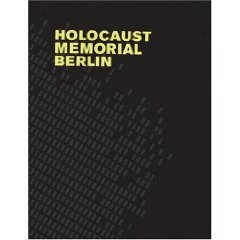
Inescapably controversial, its very existence challenged by German intellectuals like Günter Grass, the Holocaust Memorial Berlin (or, as it's formally known, the Memorial to the Murdered Jews of Europe) is now finished, some 16 years after it was first proposed. Architect Peter Eisenman's design, which filled a four-football-field-size parcel of land in the middle of Berlin with more than 2,700 concrete slabs, or stelae, was itself hotly debated, with some complaining that its abstractness, Eisenman's trademark, made it a monument that evoked no memories. As the debates give way to accounts of the experience of the space, the readers of this book, produced with Eisenman's cooperation, will be able to compare how successfully the architect's conception matches the reality. The intent is that the visitor, who finds himself winding his way through the concrete forest of varying heights, will be struck by how distant the busy city center seems, and how quiet and reflective--but not graveyard-like--the atmosphere is. Since the monument does not have a specific entrance or exit, visitors will be able to choose their own way in and out of the complex. Passing through the rows of slabs that lean almost imperceptibly and stand on seemingly unstable ground, visitors may experience a sensation of insecurity, and while that is mitigated in much of the site where the whole area is in view, at the center the surrounding slabs are 15 feet high. In this, one can sense the work of Richard Serra, who initally collaborated on the project but left when changes were called for. This volume offers a full picture of the process from conceptual and architectural drawings and digital plans to photographs of construction. It holds the narrative of a difficult task, turning "the place of no meaning," as Eisenman once referred to the site in the hopes of dispelling fears that he was trying to symbolize the deaths that took place during the Holocaust, into a confrontation with the past. The enormity and scale of the horror of the Holocaust is such that any attempt to represent it by traditional means is inevitably inadequate . . . Our memorial attempts to present a new idea of memory as distinct from nostalgia . . . We can only know the past today through a manifestation in the present. 65 illustrations
168 kr
Skickas inom 3-6 vardagar
180 kr
Skickas inom 3-6 vardagar
181 kr
Skickas inom 3-6 vardagar
196 kr
Skickas inom 3-6 vardagar
240 kr
Skickas inom 3-6 vardagar
220 kr
Skickas
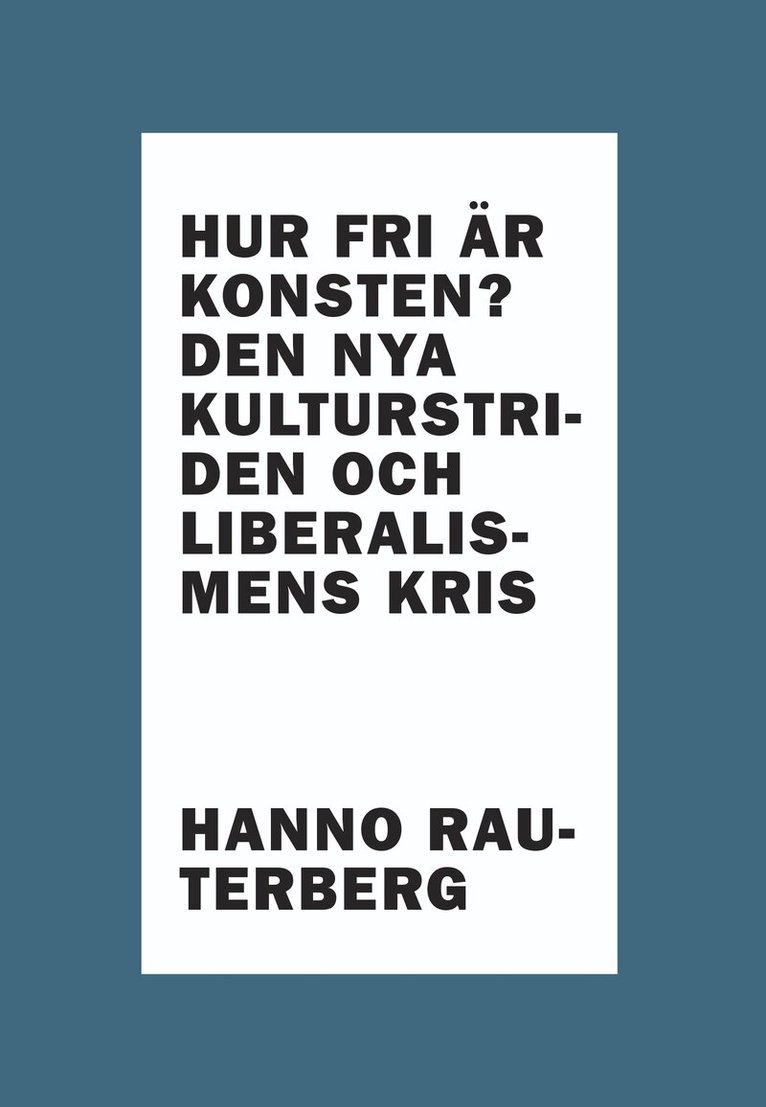
Konstnären Dana Schutzs målning ”Open Casket” – baserad på ett fotografi av den 1955 lynchade svarte fjortonåringen Emmett Till – väckte häftig debatt när den ställdes ut på The Whitney Museum i New York 2016. Var målningen (ännu) ett exempel på den förhärskande (vita) kulturens exploatering av den svarta amerikanska befolkningens historia och erfarenheter? Hade en vit konstnär som Schutz över huvud taget rätt att avbilda en svart person? Borde ”Open Casket” alls ha visats? Detta är ett av de konkreta exempel som journalisten och konstkritikern Hanno Rauterberg utgår ifrån i sin essä om konstens frihet och liberalismens kris. Konstens frihet har förstås aldrig varit total, konst har alltid existerat i ett bestämt institutionellt, ekonomiskt och politiskt sammanhang, men oavsett detta ter friheten sig under ”den digitala moderniteten” alltmer problematisk och villkorad. I en föregivet gränslös virtuell och visuell verklighet tycks behovet av moraliska gränsdragningar ha ökat explosivt. Vem får tala genom konsten? Och tala om vem och för vem? Och hur ska museer och andra offentliga institutioner förhålla sig till denna förändrade syn på konsten och konstnären? Men Rauterberg höjer sig också över de konkreta exemplen för att belysa den stora samhälleliga förskjutning han menar har betydelse i sammanhanget. Den konstnärliga frihetens kris går nämligen, enligt honom, inte att skilja från det liberala samhällsbyggets. HANNO RAUTERBERG är konstvetare och journalist. Han är verksam som kulturredaktör för ”Die Zeit”.