Herbert J. Meiselman – författare
Visar alla böcker från författaren Herbert J. Meiselman. Handla med fri frakt och snabb leverans.
6 produkter
6 produkter
Häftad, Engelska, 2019
1 062 kr
Skickas inom 10-15 vardagar
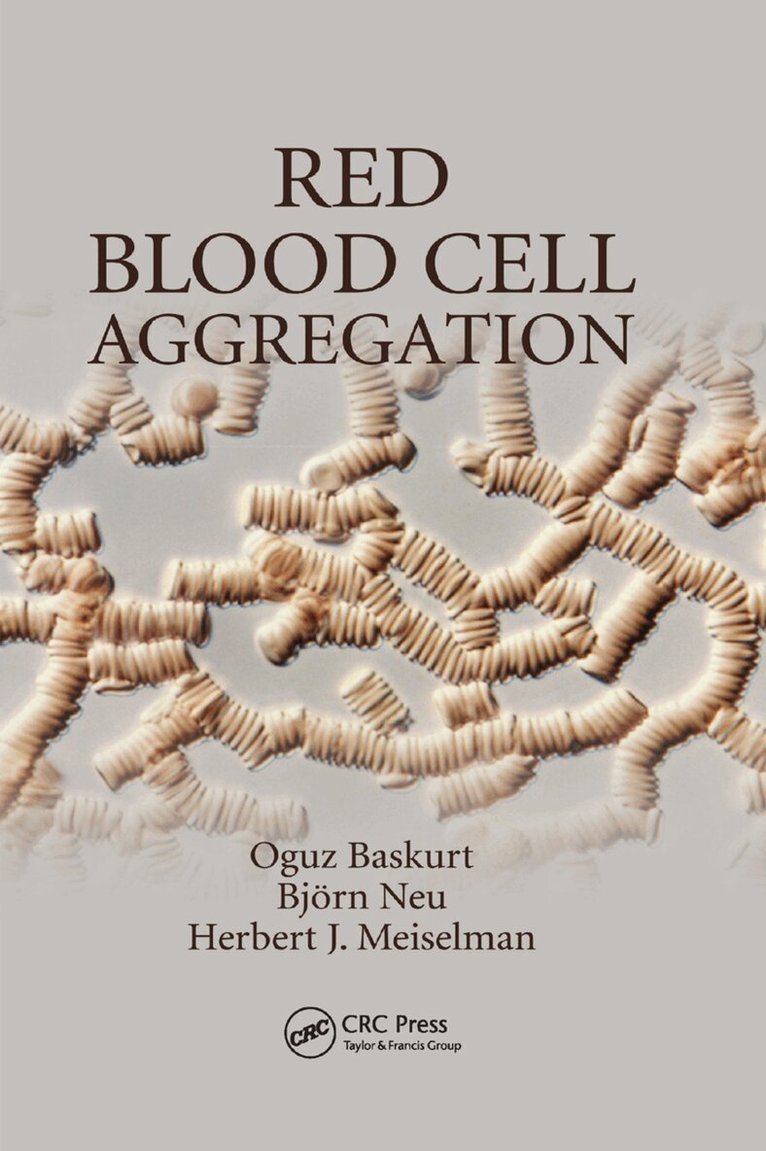
Red blood cells in humans—and most other mammals—have a tendency to form aggregates with a characteristic face-to-face morphology, similar to a stack of coins. Known as rouleaux, these aggregates are a normally occurring phenomenon and have a major impact on blood rheology. What is the underlying mechanism that produces this pattern? Does this really happen in blood circulation? And do these rouleaux formations have a useful function? The first book to offer a comprehensive review of the subject, Red Blood Cell Aggregation tackles these and other questions related to red blood cell (RBC) aggregates. The book covers basic, clinical, and physiological aspects of this important biophysical phenomenon and integrates these areas with concepts in bioengineering. It brings together state-of-the-art research on the determinants, mechanisms, and measurement and effects of RBC aggregation as well as on variations and comparative aspects. After an introductory overview, the book outlines factors and conditions that affect RBC aggregation. It presents the two hypotheses—the bridging model and the depletion model—that provide potential mechanisms for the adhesive forces that lead to the regular packing of the cells in rouleaux formations. The book also reviews the methods used to quantify RBC aggregation in vitro, focusing on their importance in clinical practice. Chapters discuss the effect of RBC aggregation on the in vitro rheology of blood as well as on tube flow. The book also looks at what happens in the circulation when red blood cells aggregate and examines variations due to physiological and pathophysiological challenges. The concluding chapter explores the formation of red blood cell aggregates in other mammals. Written by leading researchers in the field, this is an invaluable resource for basic science, medical, and clinical researchers; graduate stu
E-bok
Engelska, 20111 264 kr
Läs direkt efter köp
Red blood cells in humans-and most other mammals-have a tendency to form aggregates with a characteristic face-to-face morphology, similar to a stack of coins. Known as rouleaux, these aggregates are a normally occurring phenomenon and have a major impact on blood rheology. What is the underlying mechanism that produces this pattern? Does this real
Inbunden, Engelska, 2011
2 723 kr
Skickas inom 10-15 vardagar
Red blood cells in humans—and most other mammals—have a tendency to form aggregates with a characteristic face-to-face morphology, similar to a stack of coins. Known as rouleaux, these aggregates are a normally occurring phenomenon and have a major impact on blood rheology. What is the underlying mechanism that produces this pattern? Does this really happen in blood circulation? And do these rouleaux formations have a useful function? The first book to offer a comprehensive review of the subject, Red Blood Cell Aggregation tackles these and other questions related to red blood cell (RBC) aggregates. The book covers basic, clinical, and physiological aspects of this important biophysical phenomenon and integrates these areas with concepts in bioengineering. It brings together state-of-the-art research on the determinants, mechanisms, and measurement and effects of RBC aggregation as well as on variations and comparative aspects. After an introductory overview, the book outlines factors and conditions that affect RBC aggregation. It presents the two hypotheses—the bridging model and the depletion model—that provide potential mechanisms for the adhesive forces that lead to the regular packing of the cells in rouleaux formations. The book also reviews the methods used to quantify RBC aggregation in vitro, focusing on their importance in clinical practice. Chapters discuss the effect of RBC aggregation on the in vitro rheology of blood as well as on tube flow. The book also looks at what happens in the circulation when red blood cells aggregate and examines variations due to physiological and pathophysiological challenges. The concluding chapter explores the formation of red blood cell aggregates in other mammals. Written by leading researchers in the field, this is an invaluable resource for basic science, medical, and clinical researchers; graduate stu
E-bok
PDF, Engelska, 20111 264 kr
Läs direkt efter köp
Red blood cells in humans-and most other mammals-have a tendency to form aggregates with a characteristic face-to-face morphology, similar to a stack of coins. Known as rouleaux, these aggregates are a normally occurring phenomenon and have a major impact on blood rheology. What is the underlying mechanism that produces this pattern? Does this real
Inbunden, Engelska, 2007
3 895 kr
Skickas inom 3-6 vardagar
This publication primarily focuses on the macro- and micro-rheological behavior of blood and its formed elements, on interactions between the formed elements and blood vessel walls, and on the microvascular aspects of hemodynamics. Since many aspects of hemorheology and hemodynamics are affected by disease or clinical states, these effects are discussed as are hyperviscosity syndromes, therapy for disturbed blood rheology, and methods in hemorheology and hemodynamics. Sections of the Handbook include History of Hemorheology; Hemorheology, covering basic aspects, blood composition, blood rheology, cell mechanics, pathophysiology, methods and comparative studies; Hemodynamics, covering basic principles, microcirculation, in vivo effects, endothelium and methods; and Clinical Aspects of Hemorheology, covering hyperviscosity, clinical significance and treatment. The goal is to foster greater interchange between workers in the fields so as to promote collaborative efforts and, hopefully, improved health. In selecting topics for this handbook the editors have attempted to provide a general overview of both basic science and clinical hemorheology and hemodynamics. Hemorheology and hemodynamics are closely related, the former dealing with all aspects of the flow and interactions of the individual blood cells mostly studied in vitro, the latter with the in vivo relationships among vessel architecture, driving pressure, flow rate and shear stress. The linkage between the in vitro and in vivo research described in the book will be of interest to both basic science and clinical investigators. The editors of the handbook have each been active in the fields of bio- and hemorheology for many years, and have published extensively. They have successfully achieved their objective to publish a well-written and well-edited handbook that will be valuable for researchers and students in the field.
2 344 kr
Skickas
This publication primarily focuses on the macro- and micro-rheological behavior of blood and its formed elements, on interactions between the formed elements and blood vessel walls, and on the microvascular aspects of hemodynamics. Since many aspects of hemorheology and hemodynamics are affected by disease or clinical states, these effects are discussed as are hyperviscosity syndromes, therapy for disturbed blood rheology, and methods in hemorheology and hemodynamics. Sections of the Handbook include History of Hemorheology; Hemorheology, covering basic aspects, blood composition, blood rheology, cell mechanics, pathophysiology, methods and comparative studies; Hemodynamics, covering basic principles, microcirculation, in vivo effects, endothelium and methods; and Clinical Aspects of Hemorheology, covering hyperviscosity, clinical significance and treatment. The goal is to foster greater interchange between workers in the fields so as to promote collaborative efforts and, hopefully, improved health. In selecting topics for this handbook the editors have attempted to provide a general overview of both basic science and clinical hemorheology and hemodynamics. Hemorheology and hemodynamics are closely related, the former dealing with all aspects of the flow and interactions of the individual blood cells mostly studied in vitro, the latter with the in vivo relationships among vessel architecture, driving pressure, flow rate and shear stress. The linkage between the in vitro and in vivo research described in the book will be of interest to both basic science and clinical investigators. The editors of the handbook have each been active in the fields of bio- and hemorheology for many years, and have published extensively. They have successfully achieved their objective to publish a well-written and well-edited handbook that will be valuable for researchers and students in the field.