Hessam S. Sarjoughian - Böcker
Visar alla böcker från författaren Hessam S. Sarjoughian. Handla med fri frakt och snabb leverans.
5 produkter
5 produkter
Discrete Event Modeling and Simulation Technologies
A Tapestry of Systems and AI-Based Theories and Methodologies
Inbunden, Engelska, 2001
550 kr
Skickas inom 10-15 vardagar
The initial ideas behind this edited volume started in spring of 1998 - some two years before the sixtieth birthday of Bernard P. Zeigler. The idea was to bring together distinguished researchers, colleagues, and former students of Professor Zeigler to present their latest findings at the AIS' 2000 conference. During the spring of 1999, the initial ideas evolved into creating a volume of articles surrounding seminal concepts pertaining to modeling and simulation as proposed, developed, and advocated by Professor Zeigler throughout his scientific career. Also included would be articles describing progress covering related aspects of software engineering and artificial intelligence. As this volume is emphasizing concepts and ideas spawned by the work of Bernard P. Zeigler, it is most appropriate to offer a biographical sketch of his scientific life, thus putting into a historical perspective the contributions presented in this volume as well as new research directions that may lie ahead! Bernard P. Zeigler was born March 5, 1940, in Montreal, Quebec, Canada, where he obtained his bachelor's degree in engineering physics in 1962 from McGill University. Two years later, having completed his MS degree in electrical engineering at the Massachusetts Institute of Technology, he spent a year at the National Research Council in Ottawa. Returning to academia, he became a Ph. D. student in computer and communication sciences at the University of Michigan, Ann Arbor.
Discrete Event Modeling and Simulation Technologies
A Tapestry of Systems and AI-Based Theories and Methodologies
Häftad, Engelska, 2010
550 kr
Skickas inom 10-15 vardagar
The initial ideas behind this edited volume started in spring of 1998 - some two years before the sixtieth birthday of Bernard P. Zeigler. The idea was to bring together distinguished researchers, colleagues, and former students of Professor Zeigler to present their latest findings at the AIS' 2000 conference. During the spring of 1999, the initial ideas evolved into creating a volume of articles surrounding seminal concepts pertaining to modeling and simulation as proposed, developed, and advocated by Professor Zeigler throughout his scientific career. Also included would be articles describing progress covering related aspects of software engineering and artificial intelligence. As this volume is emphasizing concepts and ideas spawned by the work of Bernard P. Zeigler, it is most appropriate to offer a biographical sketch of his scientific life, thus putting into a historical perspective the contributions presented in this volume as well as new research directions that may lie ahead! Bernard P. Zeigler was born March 5, 1940, in Montreal, Quebec, Canada, where he obtained his bachelor's degree in engineering physics in 1962 from McGill University. Two years later, having completed his MS degree in electrical engineering at the Massachusetts Institute of Technology, he spent a year at the National Research Council in Ottawa. Returning to academia, he became a Ph. D. student in computer and communication sciences at the University of Michigan, Ann Arbor.
658 kr
Skickas inom 10-15 vardagar
This guide demonstrates how virtual build and test can be supported by the Discrete Event Systems Specification (DEVS) simulation modeling formalism, and the System Entity Structure (SES) simulation model ontology. The book examines a wide variety of Systems of Systems (SoS) problems, ranging from cloud computing systems to biological systems in agricultural food crops. Features: includes numerous exercises, examples and case studies throughout the text; presents a step-by-step introduction to DEVS concepts, encouraging hands-on practice to building sophisticated SoS models; illustrates virtual build and test for a variety of SoS applications using both commercial and open source DEVS simulation environments; introduces an approach based on activity concepts intrinsic to DEVS-based system design, that integrates both energy and information processing requirements; describes co-design modeling concepts and methods to capture separate and integrated software and hardware systems.
875 kr
Skickas inom 10-15 vardagar
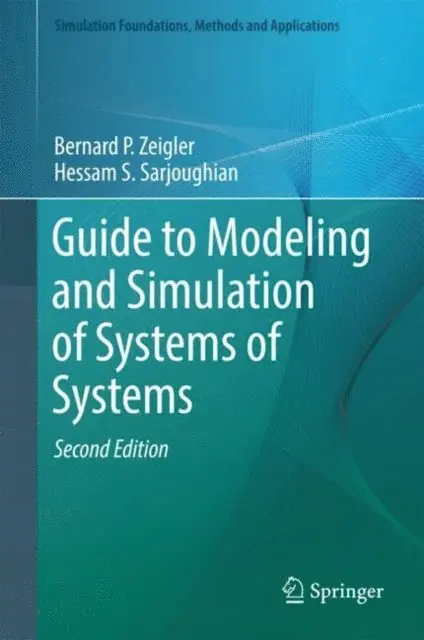
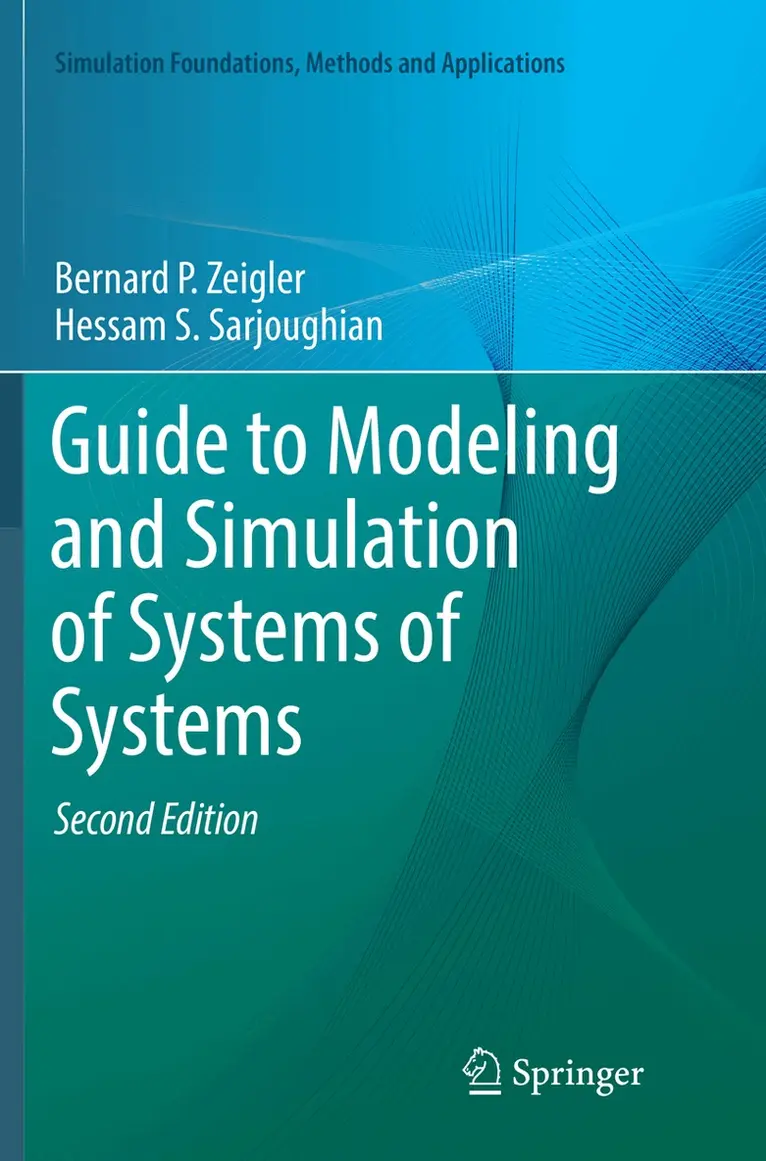
This easy-to-follow textbook provides an exercise-driven guide to the use of the Discrete Event Systems Specification (DEVS) simulation modeling formalism and the System Entity Structure (SES) simulation model ontology supported with the latest advances in software architecture and design principles, methods, and tools for building and testing virtual Systems of Systems (SoS). The book examines a wide variety of SoS problems, ranging from cloud computing systems to biological systems in agricultural food crops. This enhanced and expanded second edition also features a new chapter on DEVS support for Markov modeling and simulation.Topics and features: provides an extensive set of exercises throughout the text to reinforce the concepts and encourage use of the tools, supported by introduction and summary sections; discusses how the SoS concept and supporting virtual build and test environments can overcome the limitations of current approaches; offers a step-by-step introduction to the DEVS concepts and modeling environment features required to build sophisticated SoS models; describes the capabilities and use of the tools CoSMoS/DEVS-Suite, Virtual Laboratory Environment, and MS4 Me™; reviews a range of diverse applications, from the development of new satellite design and launch technologies, to surveillance and control in animal epidemiology; examines software/hardware co-design for SoS, and activity concepts that bridge information-level requirements and energy consumption in the implementation; demonstrates how the DEVS formalism supports Markov modeling within an advanced modeling and simulation environment (NEW).This accessible and hands-on textbook/reference provides invaluable practical guidance for graduate students interested in simulation software development and cyber-systems engineering design, as well as for practitioners in these, and related areas.
875 kr
Skickas inom 10-15 vardagar
This easy-to-follow textbook provides an exercise-driven guide to the use of the Discrete Event Systems Specification (DEVS) simulation modeling formalism and the System Entity Structure (SES) simulation model ontology supported with the latest advances in software architecture and design principles, methods, and tools for building and testing virtual Systems of Systems (SoS). The book examines a wide variety of SoS problems, ranging from cloud computing systems to biological systems in agricultural food crops. This enhanced and expanded second edition also features a new chapter on DEVS support for Markov modeling and simulation.Topics and features: provides an extensive set of exercises throughout the text to reinforce the concepts and encourage use of the tools, supported by introduction and summary sections; discusses how the SoS concept and supporting virtual build and test environments can overcome the limitations of current approaches; offers a step-by-step introduction to the DEVS concepts and modeling environment features required to build sophisticated SoS models; describes the capabilities and use of the tools CoSMoS/DEVS-Suite, Virtual Laboratory Environment, and MS4 Me™; reviews a range of diverse applications, from the development of new satellite design and launch technologies, to surveillance and control in animal epidemiology; examines software/hardware co-design for SoS, and activity concepts that bridge information-level requirements and energy consumption in the implementation; demonstrates how the DEVS formalism supports Markov modeling within an advanced modeling and simulation environment (NEW).This accessible and hands-on textbook/reference provides invaluable practical guidance for graduate students interested in simulation software development and cyber-systems engineering design, as well as for practitioners in these, and related areas.