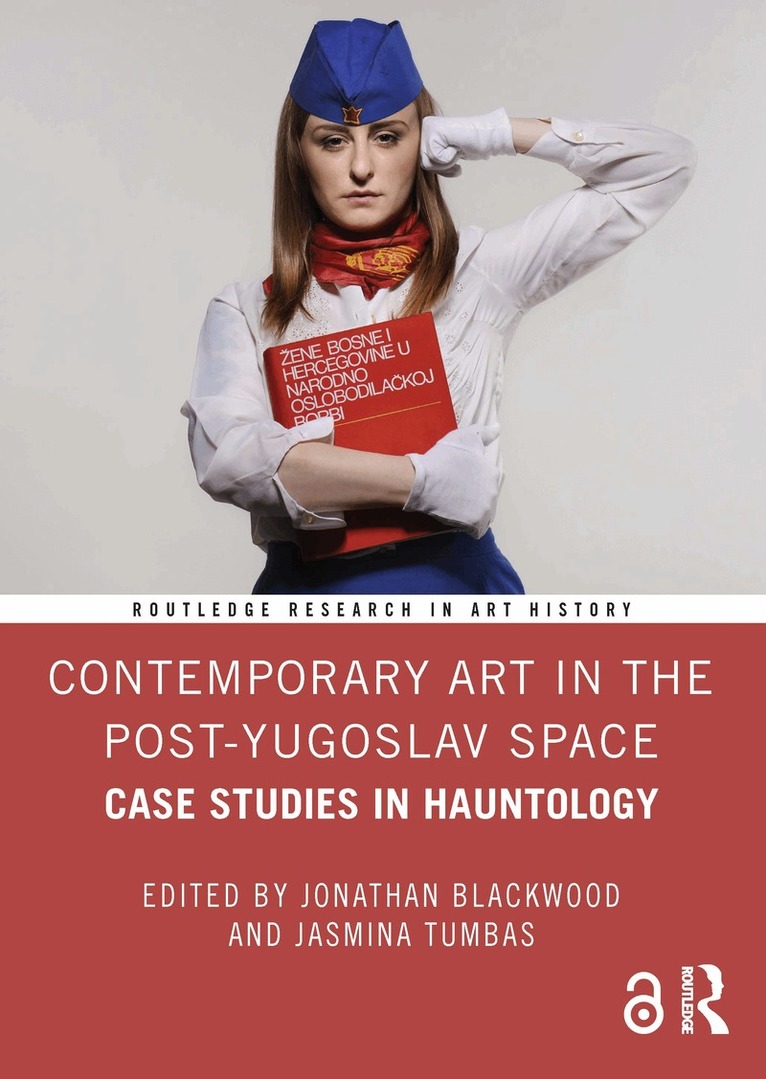
This edited volume is centered on the production, discussion, and consumption of contemporary art in the post-Yugoslav space now. Authors in this volume demonstrate how and why contemporary art discourses have continued to overcome chronic difficulties in local cultural economies since the dissolution of the common federal space of socialist Yugoslavia.This book focuses on socialist Yugoslavia’s prevailing cultural legacies of anti-fascism, non-alignment, queer and feminist movements, and socially engaged art, which inform and shape contemporary critiques of neoliberal capitalist conditions in the arts. Chapters are rooted in ongoing global challenges in contemporary art: a universal exhaustion through over-work (on the part of the artist/art worker) and over-stimulation (the audience); the structural weakness of contemporary art as a set of institutional activities; and the instrumentalization of art.The book will be of interest to scholars working in art history, contemporary art, gender studies, Slavic studies, politics, and post-conflict studies.Chapters 1, 10, and 17 of this book are freely available as a downloadable Open Access PDF at http://www.taylorfrancis.com under a Creative Commons Attribution-Non Commercial-No Derivatives (CC BY-NC-ND) 4.0 license
This edited volume is centered on the production, discussion, and consumption of contemporary art in the post-Yugoslav space now. Authors in this volume demonstrate how and why contemporary art discourses have continued to overcome chronic difficulties in local cultural economies since the dissolution of the common federal space of socialist Yugoslavia.This book focuses on socialist Yugoslavia's prevailing cultural legacies of anti-fascism, non-alignment, queer and feminist movements, and socially engaged art, which inform and shape contemporary critiques of neoliberal capitalist conditions in the arts. Chapters are rooted in ongoing global challenges in contemporary art: a universal exhaustion through over-work (on the part of the artist/art worker) and over-stimulation (the audience); the structural weakness of contemporary art as a set of institutional activities; and the instrumentalization of art.The book will be of interest to scholars working in art history, contemporary art, gender studies, Slavic studies, politics, and post-conflict studies.Chapters 1, 10, and 17 of this book are freely available as a downloadable Open Access PDF at http://www.taylorfrancis.com under a Creative Commons Attribution-Non Commercial-No Derivatives (CC BY-NC-ND) 4.0 license
Winner of the Barbara Jelavich Book Prize 2023“I am Jugoslovenka” argues that queer-feminist artistic and political resistance were paradoxically enabled by socialist Yugoslavia’s unique history of patriarchy and women’s emancipation. Spanning performance and conceptual art, video works, film and pop music, lesbian activism and press photos of female snipers in the Yugoslav wars, the book analyses feminist resistance in a range of performative actions that manifest the radical embodiment of Yugoslavia’s anti-fascist, transnational and feminist legacies. It covers celebrated and lesser-known artists from the 1970s to today, including Marina Abramovic, Sanja Ivekovic, Vlasta Delimar, Tanja Ostojic, Selma Selman and Helena Janecic, along with music legends Lepa Brena and Esma Redžepova. “I am Jugoslovenka” tells a unique story of women’s resistance through the intersection of feminism, socialism and nationalism in East European visual culture."