Jean-Maurice Vergnaud – författare
Visar alla böcker från författaren . Handla med fri frakt och snabb leverans.
13 produkter
13 produkter
Inbunden, Engelska, 1993
6 542 kr
Skickas inom 3-6 vardagar
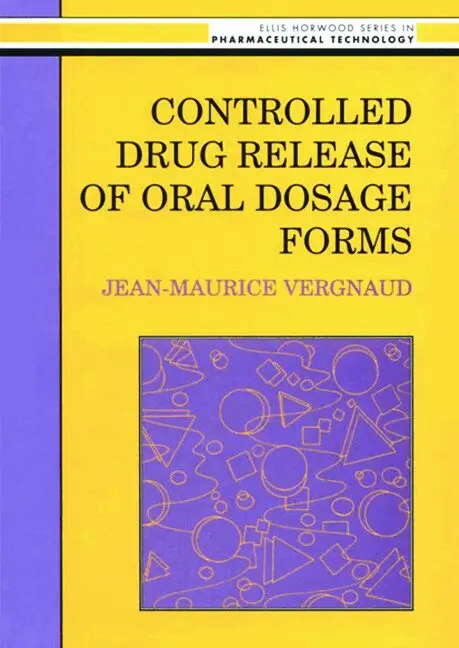
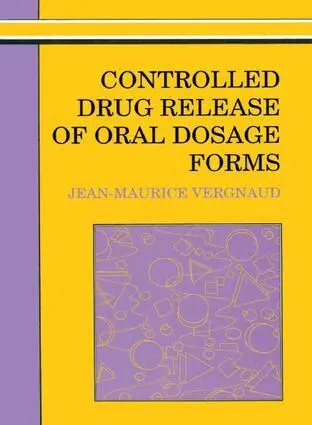
Numerical analysis of matter transfer is an area that pharmacists find difficult, but which is a technique frequently used in preparing controlled drug release and oral dosage forms. This book provides clear and straightforward information enabling the reader to carry out numerical analysis of matter transfer - a vital processs when looking at the formulation of oral dosage forms with controlled drug release. The drug is dispersed in a polymeric matrix either biodegradable or not, the basis of which is the transfer of the liquid and the drug through dosage form. Information on this diffusion is found either through mathematical treatment when the problem is simple, or through numerical analysis for more complex problems. Professor Vergnaud demonstrates and clarifies these, modelling the process of drug delivery by using numerical analysis and computerization. A simulation of the process is provided, together with a determination of the effects of all parameters, and the author uses both mathematical and numerical models to predict the preparation of new dosage forms able to fulfil specific conditions.
Inbunden, Engelska, 2005
4 076 kr
Skickas inom 3-6 vardagar
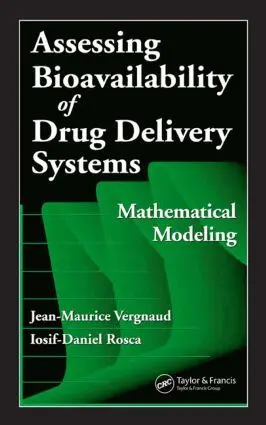
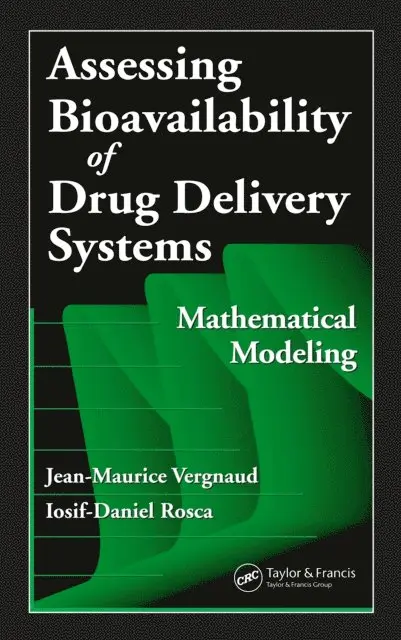
Exploring how to apply in vitro/in vivo correlations for controlled release dosage forms, Bioavailability of Drug Delivery Systems: Mathematical Modeling clearly elucidates this complex phenomena and provides a guide for the respective mathematical modeling. The book introduces mathematical modeling methods for calculating the profiles of plasma levels obtained with controlled release dosage forms and provides examples and case studies to illustrate the techniques employed.The author has considerable experience in investigating mathematical fundamentals that are related to pharmaco- and toxicokinetics, modified-release drug products, physiologic pharmacokinetics and statistical treatment in clinical situations. The mathematical models he has developed are particularly powerful because they account for such major parameters as the kinetics of drug release controlled by diffusion or by erosion, and the kinetics of absorption into and elimination out of the plasma. They are also able to solve the problem of determining the drug level in plasma as a result of patient non-compliance, incorrect dosage, and incorrect frequency and to determine the best dosage forms necessary for therapy.Using master curves, the book highlights the inter-variability of the patients often expressed by different responses towards a drug. Thus, after evaluating a patient's pharmacokinetic parameters, the dose can be adapted to the patient, with the expectation of decreasing the side effects for each patient. Using dimensionless numbers in repeated doses, either for the time or for the plasma drug concentration, makes the master curves useful for every drug, providing that its pharmacokinetics was linear. These master curves address clear information either to the patients or to the therapists in a didactic and easy way. The patients can see from first look the effects of non-compliance and therapists can see the dramatic effects of inter-variability of patients towards a drug.Drug discovery and dosage forms have become an increasingly time-consuming and expensive process. The development of a single drug can leave behind more than 10 to 15 years of work. Discussing time and cost-effective methods as alternatives to conventional in vivo methods, the book helps you analyze and integrate in vitro/in vivo correlations and apply them to patient care and drug consultation situations.
E-bok
Engelska, 19936 472 kr
Läs direkt efter köp
Numerical analysis of matter transfer is an area that pharmacists find difficult, but which is a technique frequently used in preparing controlled drug release and oral dosage forms. A practical guide which explains how to carry out the numerical analysis of matter transfer - a vital process when examining the formulation of oral dosage forms with controlled drug release. The author models the process of drug delivery using numerical analysis and computerization.
E-bok
Engelska, 20054 242 kr
Läs direkt efter köp
Exploring how to apply in vitro/in vivo correlations for controlled release dosage forms, Bioavailability of Drug Delivery Systems: Mathematical Modeling clearly elucidates this complex phenomena and provides a guide for the respective mathematical modeling. The book introduces mathematical modeling methods for calculating the profiles of plasma le
E-bok
Engelska, 20163 194 kr
Läs direkt efter köp
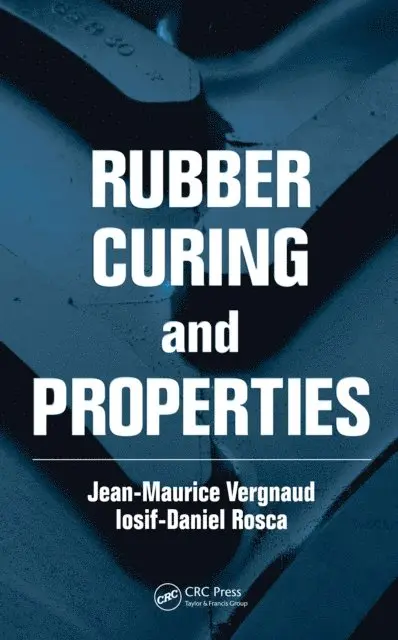
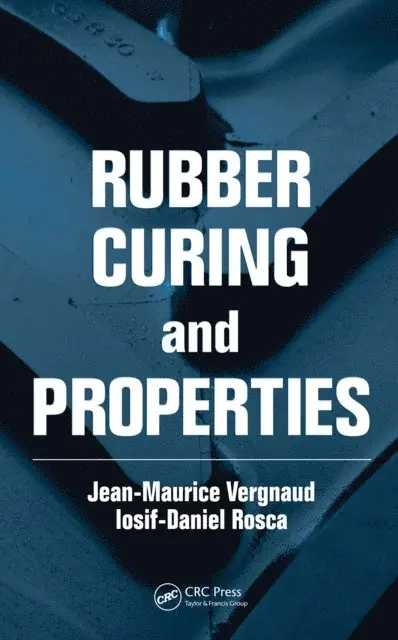
Featuring the work one of the world''s foremost authorities on rubber curing, this uniquely comprehensive resource provides valuable data that will allow researchers and engineers to find solutions to their own curing problems. It delves into a variety of current evaluation practices for unvulcanized and vulcanized rubber and curing methods, i
E-bok
PDF, Engelska, 20054 242 kr
Läs direkt efter köp
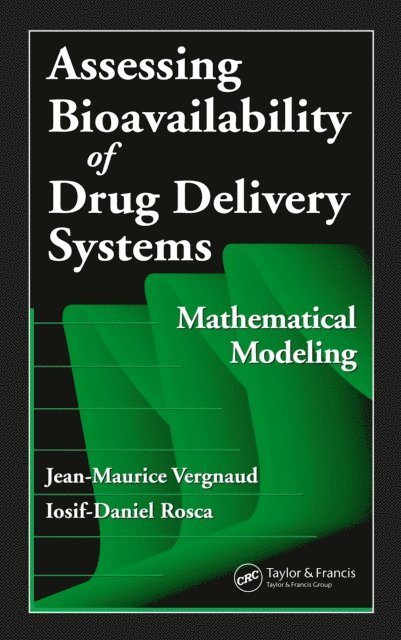
Exploring how to apply in vitro/in vivo correlations for controlled release dosage forms, Bioavailability of Drug Delivery Systems: Mathematical Modeling clearly elucidates this complex phenomena and provides a guide for the respective mathematical modeling. The book introduces mathematical modeling methods for calculating the profiles of plasma le
Inbunden, Engelska, 2008
2 824 kr
Skickas inom 10-15 vardagar
Featuring the work one of the world’s foremost authorities on rubber curing, this uniquely comprehensive resource provides valuable data that will allow researchers and engineers to find solutions to their own curing problems. It delves into a variety of current evaluation practices for unvulcanized and vulcanized rubber and curing methods, including the use of molds and injection molding. It also explores a number of solutions to on-going challenges with recycling scrap rubber. In all cases, theoretical treatments are offered in a didactic manner, so that readers not fully familiar with the terms can, nevertheless, easily understand the developments in this field.
E-bok
PDF, Engelska, 20163 194 kr
Läs direkt efter köp
Featuring the work one of the world''s foremost authorities on rubber curing, this uniquely comprehensive resource provides valuable data that will allow researchers and engineers to find solutions to their own curing problems. It delves into a variety of current evaluation practices for unvulcanized and vulcanized rubber and curing methods, i
E-bok
PDF, Engelska, 20121 416 kr
Läs direkt efter köp
The process of cure of thermosets is rather complex, and good knowledge of the various steps and different problems is necessary for the user. For instance, the following basic facts characterise the cure of thermosets: 1. In the same way as rubbers, thermosets are generally polymerised and processed in a simple operation which involves the irreversible transformation of a low molecular weight resin in viscous liquid state into a solid network polymer. The process of cure is thus much more important for thermosets or rubbers than for thermo plastics, because if something goes wrong during the cure process of thermosets, the final products may have undersirable properties and will be of no use or value, while the thermoplastic material can be melted again to make a new material. 2. In contrast with rubbers, a high exothermic cure reaction is the aspect of fundamental importance in the cure process for thermo sets. This high enthalpy of cure associated with a rather low thermal conductivity can give rise to an excessively high tem perature which may cause discoloration and degradation of the material, and also to substantial temperature gradients. The mat erial is thus heterogeneous during the process of cure, and these temperature-time histories in the resin may have some effects on the properties of the final material. 3. Moreover, the increase in production following the reduction in time of the cure cycle necessitates the use of a higher mould temperature.
Häftad, Engelska, 2011
1 082 kr
Skickas inom 10-15 vardagar
The process of cure of thermosets is rather complex, and good knowledge of the various steps and different problems is necessary for the user. For instance, the following basic facts characterise the cure of thermosets: 1. In the same way as rubbers, thermosets are generally polymerised and processed in a simple operation which involves the irreversible transformation of a low molecular weight resin in viscous liquid state into a solid network polymer. The process of cure is thus much more important for thermosets or rubbers than for thermo plastics, because if something goes wrong during the cure process of thermosets, the final products may have undersirable properties and will be of no use or value, while the thermoplastic material can be melted again to make a new material. 2. In contrast with rubbers, a high exothermic cure reaction is the aspect of fundamental importance in the cure process for thermo sets. This high enthalpy of cure associated with a rather low thermal conductivity can give rise to an excessively high tem perature which may cause discoloration and degradation of the material, and also to substantial temperature gradients. The mat erial is thus heterogeneous during the process of cure, and these temperature-time histories in the resin may have some effects on the properties of the final material. 3. Moreover, the increase in production following the reduction in time of the cure cycle necessitates the use of a higher mould temperature.
E-bok
PDF, Engelska, 2012712 kr
Läs direkt efter köp
Drying of Polymeric and Solid Materials shows for the first time how the process of drying can be enhanced by combining mathematical and numerical models with experiments. The main advantages of this method are a significant saving of time and money. Numerical modelling can predict the kinetics of drying and the profiles of liquid concentration through the solid. This helps in the selection of optimal operational conditions. The simulation of the process is also crucial in the assessment of diffusity and the rate of evaporation.
Häftad, Engelska, 2011
544 kr
Skickas inom 10-15 vardagar
Drying of Polymeric and Solid Materials shows for the first time how the process of drying can be enhanced by combining mathematical and numerical models with experiments. The main advantages of this method are a significant saving of time and money. Numerical modelling can predict the kinetics of drying and the profiles of liquid concentration through the solid. This helps in the selection of optimal operational conditions. The simulation of the process is also crucial in the assessment of diffusity and the rate of evaporation.
E-bok
PDF, Engelska, 19936 472 kr
Läs direkt efter köp
Numerical analysis of matter transfer is an area that pharmacists find difficult, but which is a technique frequently used in preparing controlled drug release and oral dosage forms. A practical guide which explains how to carry out the numerical analysis of matter transfer - a vital process when examining the formulation of oral dosage forms with controlled drug release. The author models the process of drug delivery using numerical analysis and computerization.