Jeff Richardson – författare
Visar alla böcker från författaren Jeff Richardson. Handla med fri frakt och snabb leverans.
6 produkter
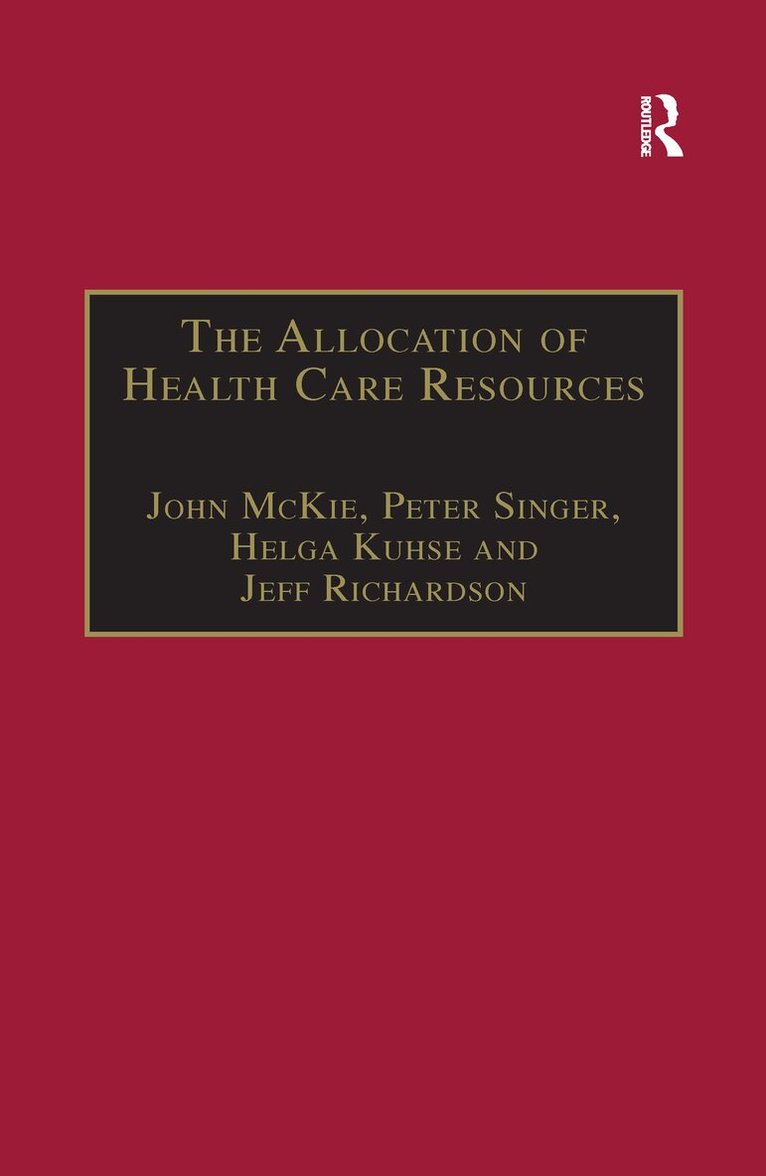
Allocation of Health Care Resources
An Ethical Evaluation of the 'QALY' Approach
Av John McKie, Peter Singer m. fl.
Häftad, 2020
635 kr
Lägg i varukorg
The competition for limited health care resources is intensifying. We urgently need an acceptable method for deciding how they should be allocated. But the goods that health care produces are of very different kinds. Health care can extend the lives of children and of older people. It can make it …
Allocation of Health Care Resources
An Ethical Evaluation of the ''QALY'' Approach
Av Jeff Richardson, Peter Singer m. fl.
E-bok, 2016
838 kr
Lägg i varukorg
The competition for limited health care resources is intensifying. We urgently need an acceptable method for deciding how they should be allocated. But the goods that health care produces are of very different kinds. Health care can extend the lives of children and of older people. It can make it …
Allocation of Health Care Resources
An Ethical Evaluation of the ''QALY'' Approach
Av Jeff Richardson, Peter Singer m. fl.
E-bok, 2016
838 kr
Lägg i varukorg
The competition for limited health care resources is intensifying. We urgently need an acceptable method for deciding how they should be allocated. But the goods that health care produces are of very different kinds. Health care can extend the lives of children and of older people. It can make it …
Allocation of Health Care Resources
An Ethical Evaluation of the 'QALY' Approach
Av John McKie, Peter Singer m. fl.
Inbunden, 1998
2309 kr
Lägg i varukorg
The competition for limited health care resources is intensifying. We urgently need an acceptable method for deciding how they should be allocated. But the goods that health care produces are of very different kinds. Health care can extend the lives of children and of older people. It can make it …