Jeffrey Karl Ochsner – författare
Visar alla böcker från författaren Jeffrey Karl Ochsner. Handla med fri frakt och snabb leverans.
5 produkter
5 produkter
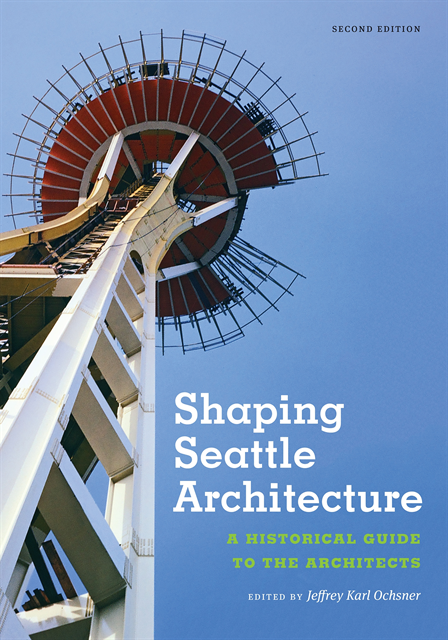
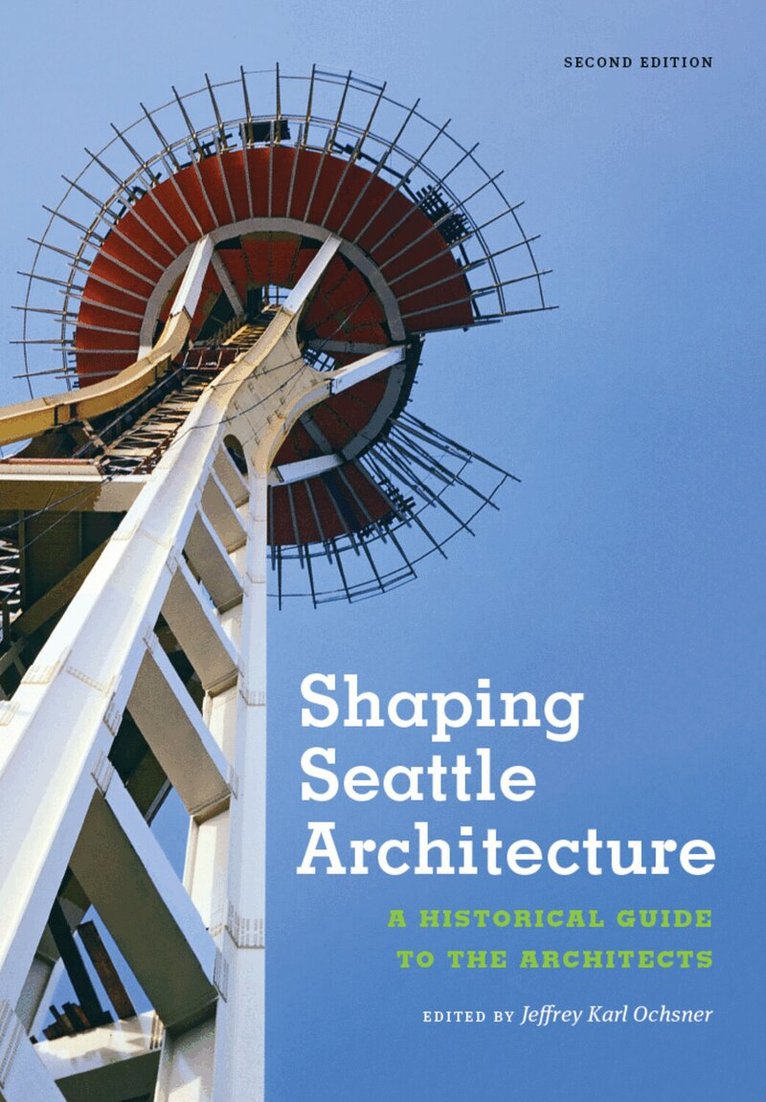
Shaping Seattle Architecture
A Historical Guide to the Architects, Second Edition
Häftad, Engelska, 2019
595 kr
Skickas inom 7-10 vardagar
The first edition of Shaping Seattle Architecture, published in 1994, introduced readers to Seattle’s architects by showcasing the work of those who were instrumental in creating the region’s built environment. Twenty years later, the second edition updates and expands the original with new information and illustrations that provide an even richer exploration of Seattle architecture.The book begins with a revised introduction that brings the story of Seattle architecture into the twenty-first century and situates developments in Seattle building design within local and global contexts. The book’s fifty-four essays present richly illustrated profiles that describe the architects' careers, provide an overview of their major works, and explore their significance.Shaping Seattle Architecture celebrates a wide range of people who helped form the region's built environment. It provides updated information about many of the architects and firms profiled in the first edition. Four individuals newly included in this second edition are Edwin J. Ivey, a leading residential designer; Fred Bassetti, an important contributor to Northwest regional modernism; L. Jane Hastings, one of the region’s foremost women in architecture; and Richard Haag, founder of the landscape architecture program at the University of Washington and designer of Gas Works Park and the Bloedel Reserve.The book also includes essays on the buildings of the Coast Salish people, who inhabited Puget Sound prior to Euro-American settlement; the role that architects played in speculative housing developments before and after World War II; and the vernacular architecture built by nonprofessionals that makes up a portion of the fabric of the city.Shaping Seattle Architecture concludes with a substantial reference section, updated to reflect the last twenty years of research and publications. A locations appendix offers a geographic guide to surviving works. The research section directs interested readers to further resources, and the appendix “Additional Significant Seattle Architects” provides thumbnail sketches of nearly 250 important figures not included in the main text.
941 kr
Skickas inom 3-6 vardagar
On the afternoon of 6 June 1889, a fire in a cabinet shop in downtown Seattle spread to destroy more than thirty downtown blocks covering 116 acres. Disaster soon became opportunity as Seattle’s citizens turned their full energies to rebuilding: widening and regrading streets, laying new water pipes and sewer lines, promulgating a new building ordinance requiring construction in the commercial core, and creating a new professional fire department. A remarkable number of buildings, most located in Seattle’s present-day Pioneer Square Historic District, were permitted within a few months and constructed within a few years of the Great Seattle Fire. As a result, the post-fire rebuilding of Seattle offers an extraordinarily focused case study of late-nineteenth-century American urban architecture.Seattle’s architects, seeking design solutions that would meet the new requirements, most often found them in the Romanesque Revival mode of the country’s most famous architect, Henry Hobson Richardson. In October 1889, Elmer Fisher, Seattle's most prolific post-fire architect, specifically cited the example of H. H. Richardson in describing the city's new buildings. In contrast to Victorian Gothic, Second Empire, and other mid-nineteenth-century architectural styles, Richardson’s Romanesque Revival vocabulary of relatively unadorned stone and brick with round-arched openings conveyed strength and stability without elaborate decorative treatment. For Seattle’s fire-conscious architects it offered a clear architectural system that could be applied to a variety of building types - including office blocks, warehouses, and hotels - and ensure a safer, progressive, and more visually coherent metropolitan center.Distant Corner examines the brief but powerful influence of H. H. Richardson on the building of America’s cities, and his specific influence on the architects charged with rebuilding the post-fire city of Seattle. Chapters on the pre-fire city and its architecture, the technologies and tools available to designers and builders, and the rise of Richardson and his role in defining a new American architecture provide a context for examining the work of the city’s architects. Seattle's leading pre- and post-fire architects - William Boone, Elmer Fisher, John Parkinson, Charles Saunders and Edwin Houghton, Willis Ritchie, Emil DeNeuf, Warren Skillings, and Arthur Chamberlin - are profiled. Distant Corner describes the new post-fire commercial core and the emerging network of schools, firehouses, and other public institutions that helped define Seattle’s neighborhoods. It closes with the sudden collapse of Seattle’s economy in the Panic of 1893 and the ensuing depression that halted the city’s building boom, saw the closing of a number of architects’ offices, and forever ended the dominance of Romanesque Revival in American architecture.With more than 200 illustrations, detailed endnotes, and an appendix listing the major works of the city's leading architects, Distant Corner offers an analysis of both local and national influences that shaped the architecture of the city in the 1880s and 1890s. It has much to offer those interested in Seattle’s early history, the building of the city, and the preservation of its architecture. Because this period of American architecture has received only limited study, it is also of importance for those interested in the influence of Boston-based H. H. Richardson and his contemporaries on American architecture at the end of the nineteenth century.
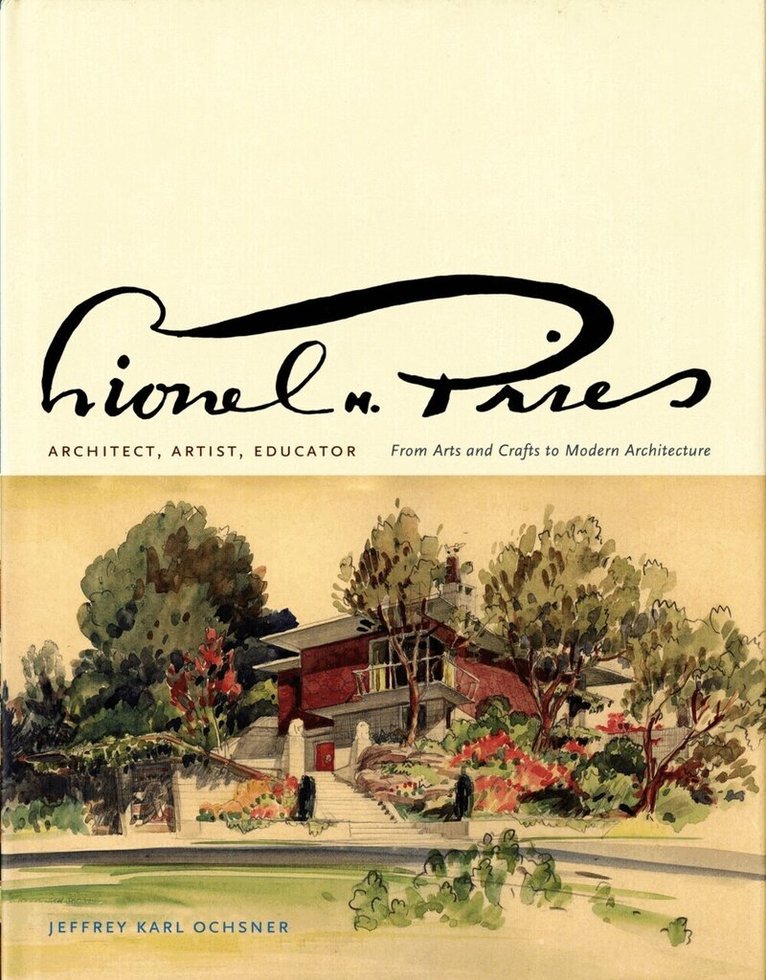
Lionel H. Pries, Architect, Artist, Educator
From Arts and Crafts to Modern Architecture
Inbunden, Engelska, 2007
1 029 kr
Skickas inom 7-10 vardagar
On the evening of May 16, 1958, architecture alumni of the University of Washington converged on Seattle from all over the country. The event was a banquet to celebrate the founding of their alma mater's new College of Architecture and Urban Planning. One by one, the dean introduced the college's faculty members. At the name of Lionel “Spike” Pries, one alumnus recalled, “there was a special charge in the air. . . . Everyone rose and cheered and clapped; it appeared to go on forever.” But within six months, Lionel Pries was abruptly and mysteriously gone from the university. After thirty years of service, he lost his job, his major source of income, and, just four years short of retirement, his pension. The official explanation was illness; friends “sensed a large injustice,” in what they believed was a dismissal based on Pries's sexual orientation.With Lionel H. Pries, Architect, Artist, Educator: From Arts and Crafts to Modern Architecture, Jeffrey Karl Ochsner redresses that injustice. Pries (1897-1968) was one of the most influential teachers of architecture and design at the University of Washington. Minoru Yamasaki, A. Q. Jones, Fred Bassetti, Wendell Lovett, Victor Steinbrueck, and many other prominent twentieth-century architects were trained by Pries, whose highly artistic style of design helped shape the development of American Modernism in architecture.Ochsner offers an erudite celebration of Pries's professional legacy, tracing his evolution as a designer, architect, teacher, and artist. He shows how Pries absorbed and synthesized disparate influences and movements in design--the California Arts and Crafts and Mission Revival movements, the Ecole des Beaux-Arts tradition, Art Nouveau and Art Deco, Mexican and Japanese motifs, and the International Style and other permutations of the Modern movement.Ochsner paints a vivid portrait of Pries as a teacher and mentor: an unapologetic elitist, one who challenged weak students by openly fostering stronger ones; a classroom autocrat who would fling one student's radio out a second-story window but offer rent-free lodging to another in need. This is a nuanced character study that offers a clear but sympathetic view of a major talent who sometimes clashed with his colleagues and was often in conflict with himself. For some readers, it will be an introduction to Lionel Pries. For others, it will be an occasion to remember him with warmth and gratitude.This comprehensive, lavishly illustrated work will appeal not only to architects and architectural historians, but also to those interested in American studies, the decorative arts, and Northwest history and culture. Its depth of research broadens our understanding of twentieth-century Modernism and of the history of architectural education.
830 kr
Skickas inom 7-10 vardagar
Furniture Studio explores the origins, methods, results, and influence of the unique and highly successful furniture design and fabrication studios offered by the University of Washington Department of Architecture. The furniture program, initiated by Andris Vanags, is an immersion into the role of materials, design, and making in architectural education. Students directly engage the physical properties of materials, and the knowledge gained through this engagement enriches the design and fabrication process. The experiences of its graduates reveal that the studio fosters creative thinking that truly integrates design and making.Ochsner presents historical background to shop-based courses, including furniture studio; traces the careers of four representative graduates of the program; and suggests implications from this program for architectural education and individual achievement beyond the University of Washington. Eleven students and the projects they created in the winter 2009 studio are profiled, and the book contains a fully illustrated catalogue of exemplary student projects from 1989 to the present. Illustrations and descriptions throughout the book showcase the heirloom-quality projects created by the students, many of which won awards in competitions.
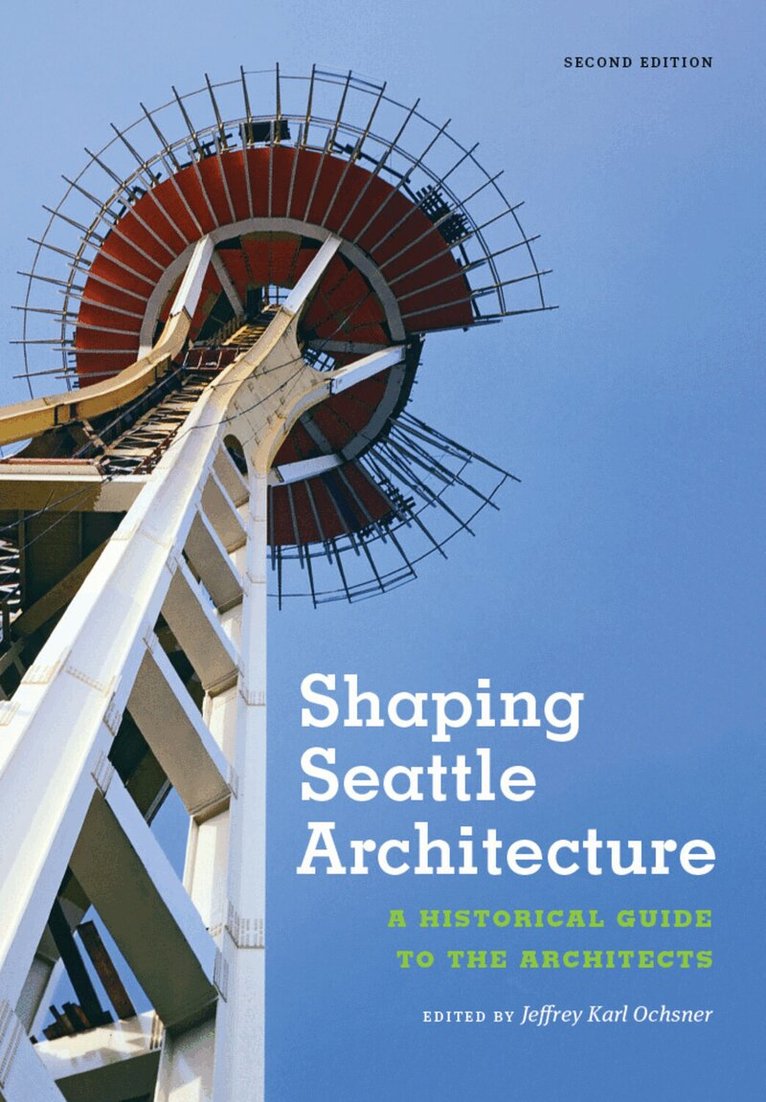
Shaping Seattle Architecture
A Historical Guide to the Architects, Second Edition
Inbunden, Engelska, 2014
914 kr
Skickas inom 7-10 vardagar
The first edition of Shaping Seattle Architecture, published in 1994, introduced readers to Seattle’s architects by showcasing the work of those who were instrumental in creating the region’s built environment. Twenty years later, the second edition updates and expands the original with new information and illustrations that provide an even richer exploration of Seattle architecture.The book begins with a revised introduction that brings the story of Seattle architecture into the twenty-first century and situates developments in Seattle building design within local and global contexts. The book’s fifty-four essays present richly illustrated profiles that describe the architects' careers, provide an overview of their major works, and explore their significance.Shaping Seattle Architecture celebrates a wide range of people who helped form the region's built environment. It provides updated information about many of the architects and firms profiled in the first edition. Four individuals newly included in this second edition are Edwin J. Ivey, a leading residential designer; Fred Bassetti, an important contributor to Northwest regional modernism; L. Jane Hastings, one of the region’s foremost women in architecture; and Richard Haag, founder of the landscape architecture program at the University of Washington and designer of Gas Works Park and the Bloedel Reserve.The book also includes essays on the buildings of the Coast Salish people, who inhabited Puget Sound prior to Euro-American settlement; the role that architects played in speculative housing developments before and after World War II; and the vernacular architecture built by nonprofessionals that makes up a portion of the fabric of the city.Shaping Seattle Architecture concludes with a substantial reference section, updated to reflect the last twenty years of research and publications. A locations appendix offers a geographic guide to surviving works. The research section directs interested readers to further resources, and the appendix “Additional Significant Seattle Architects” provides thumbnail sketches of nearly 250 important figures not included in the main text.