Joaquim Silvestre - Böcker
Visar alla böcker från författaren Joaquim Silvestre. Handla med fri frakt och snabb leverans.
3 produkter
3 produkter
499 kr
Skickas inom 10-15 vardagar
Human-generated greenhouse gas emissions imperil a global resource: a biosphere capable of supporting life as we know it. What is the fair way to share this scarce resource across present and future generations, and across regions of the world? This study offers a new perspective based on the guiding ethics of sustainability and egalitarianism.Sustainability is understood as a pattern of economic activity over time that sustains a given rate of growth of human welfare indefinitely. To achieve this, the atmospheric concentration of carbon must be capped at some level not much higher than exists today, and investments in education and research should be higher than they currently are. International cooperation between developing and developed nations is also vital, because economic growth and the climate problem are intertwined.The authors propose that the guiding principle of bargaining should be that the dates at which developing countries’ living standards catch up with those of developed countries should not be altered by the agreement. They conclude that developed economies would have to agree not to exceed 1 percent growth in per capita GDP annually, while developing nations should grow at a faster rate, but still lower than current projections, until they converge. The authors acknowledge that achieving such a dramatic slowdown would carry political and economic challenges.
1 880 kr
Skickas inom 7-10 vardagar
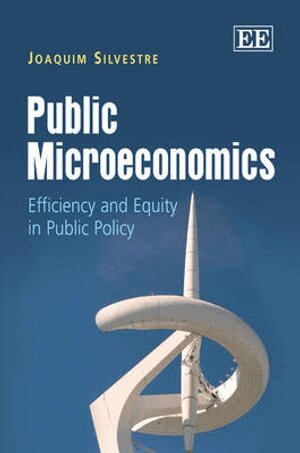
This book contains a concise, simple, yet precise discussion of externalities, public goods and insurance. Rooted in the first fundamental theorem of welfare economics and in noncooperative equilibrium, it employs elementary calculus. The book presents established theory in novel ways, and offers the tools for the application of the social welfare criteria of efficiency and equity to environmental economics, networks, bargaining, political economy, and the pricing of public goods and public utilities.This innovative, user-friendly textbook will be of use over a broad range of disciplines. The applications found here include international global-warming issues (North vs. South model), and bargaining over externalities (Coase's theorem). This text also introduces the Wicksell-Lindahl model in its original form, which depicts the parliamentary negotiation between representative parties and provides an effective introduction to political economy. Later, these ideas are applied to the pricing of an excludable public good, revealing the theoretical connection between public utility pricing and the pricing of excludable public goods.The text integrates three forms of discourse: verbal, graphical, and formal. Elementary calculus is frequently used, allowing for clarity and precision; qualities that are often missing in conventional textbooks. The main text considers a finite number of consumers and appendices cover the continuum mathematical model, which is implicit in the references to the 'marginal consumer' found in traditional texts.The analysis found in Public Microeconomics is simple and operational, conducive to computationally easy examples and exercises. This textbook is ideally suited to graduate and upper-level undergraduate courses ineconomics, political science, policy and philosophy.Contents: Preface Foreword to Students 1. Introduction 2. Private Goods Without Externalities 3. Externalities 4. Public Goods 5. Public Utilities 6. Uncertainty and Asymmetrical Information Index
514 kr
Skickas inom 7-10 vardagar
This book contains a concise, simple, yet precise discussion of externalities, public goods and insurance. Rooted in the first fundamental theorem of welfare economics and in noncooperative equilibrium, it employs elementary calculus. The book presents established theory in novel ways, and offers the tools for the application of the social welfare criteria of efficiency and equity to environmental economics, networks, bargaining, political economy, and the pricing of public goods and public utilities.This innovative, user-friendly textbook will be of use over a broad range of disciplines. The applications found here include international global-warming issues (North vs. South model), and bargaining over externalities (Coase's theorem). This text also introduces the Wicksell-Lindahl model in its original form, which depicts the parliamentary negotiation between representative parties and provides an effective introduction to political economy. Later, these ideas are applied to the pricing of an excludable public good, revealing the theoretical connection between public utility pricing and the pricing of excludable public goods.The text integrates three forms of discourse: verbal, graphical, and formal. Elementary calculus is frequently used, allowing for clarity and precision; qualities that are often missing in conventional textbooks. The main text considers a finite number of consumers and appendices cover the continuum mathematical model, which is implicit in the references to the 'marginal consumer' found in traditional texts.The analysis found in Public Microeconomics is simple and operational, conducive to computationally easy examples and exercises. This textbook is ideally suited to graduate and upper-level undergraduate courses ineconomics, political science, policy and philosophy.Contents: Preface Foreword to Students 1. Introduction 2. Private Goods Without Externalities 3. Externalities 4. Public Goods 5. Public Utilities 6. Uncertainty and Asymmetrical Information Index