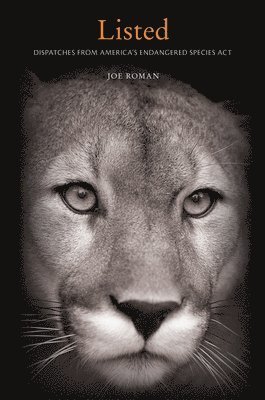
The first listed species to make headlines after the Endangered Species Act was passed in 1973 was the snail darter, a three-inch fish that stood in the way of a massive dam on the Little Tennessee River. When the Supreme Court sided with the darter, Congress changed the rules. The dam was built, the river stopped flowing, and the snail darter went extinct on the Little Tennessee, though it survived in other waterways. A young Al Gore voted for the dam; freshman congressman Newt Gingrich voted for the fish.A lot has changed since the 1970s, and Joe Roman helps us understand why we should all be happy that this sweeping law is alive and well today. More than a general history of endangered species protection, Listed is a tale of threatened species in the wild—from the whooping crane and North Atlantic right whale to the purple bankclimber, a freshwater mussel tangled up in a water war with Atlanta—and the people working to save them.Employing methods from the new field of ecological economics, Roman challenges the widely held belief that protecting biodiversity is too costly. And with engaging directness, he explains how preserving biodiversity can help economies and communities thrive. Above all, he shows why the extinction of species matters to us personally—to our health and safety, our prosperity, and our joy in nature.
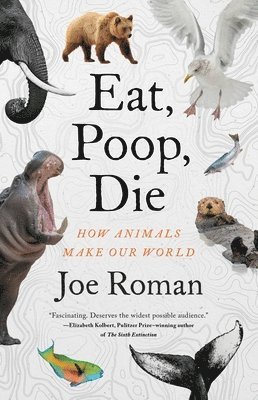
A Scientific American Top Ten Book of 2023If forests are the lungs of the planet, then animals migrating across oceans, streams, and mountains-eating, pooping, and dying along the way-are its heart and arteries, pumping nitrogen and phosphorus from deep-sea gorges up to mountain peaks, from the Arctic to the Caribbean. Without this conveyor belt of crucial, life-sustaining nutrients, the world would look very different. The dynamics that shape our physical world-atmospheric chemistry, geothermal forces, plate tectonics, and erosion through wind and rain-have been explored for decades. But the effects on local ecosystems of less glamorous forces-rotting carcasses and deposited feces-as well as their impact on the global climate cycle, have been largely overlooked. The simple truth is that pooping and peeing are daily rituals for almost all animals, the ellipses of ecology that flow through life. We eat, we poop, and we die.From the volcanoes of Iceland to the tropical waters of Hawaii, the great plains of the American heartland, and beyond, Eat, Poop, Die takes readers on an exhilarating and enlightening global adventure, revealing the remarkable ways in which the most basic biological activities of animals make and remake the world-and how a deeper understanding of these cycles provides us with opportunities to undo the environmental damage humanity has wrought on the planet we call home.
A Scientific American Top Ten Book of 2023If forests are the lungs of the planet, then animals migrating across oceans, streams, and mountains-eating, pooping, and dying along the way-are its heart and arteries, pumping nitrogen and phosphorus from deep-sea gorges up to mountain peaks, from the Arctic to the Caribbean. Without this conveyor belt of crucial, life-sustaining nutrients, the world would look very different. The dynamics that shape our physical world-atmospheric chemistry, geothermal forces, plate tectonics, and erosion through wind and rain-have been explored for decades. But the effects on local ecosystems of less glamorous forces-rotting carcasses and deposited feces-as well as their impact on the global climate cycle, have been largely overlooked. The simple truth is that pooping and peeing are daily rituals for almost all animals, the ellipses of ecology that flow through life. We eat, we poop, and we die. From the volcanoes of Iceland to the tropical waters of Hawaii, the great plains of the American heartland, and beyond, Eat, Poop, Die takes readers on an exhilarating and enlightening global adventure, revealing the remarkable ways in which the most basic biological activities of animals make and remake the world-and how a deeper understanding of these cycles provides us with opportunities to undo the environmental damage humanity has wrought on the planet we call home.
Whales are the largest animals ever to have lived on the earth: the longest recorded was over 33 metres long, the heaviest more than 171,000 kgs; a large Blue Whale's tongue alone can weigh more than an elephant. Whales can stay underwater for more than an hour, some speculate that they can live for up to 200 years, and they are among the most intelligent animals known to humanity.Whale recounts the evolutionary and ecological background, as well as the cultural history, of these extraordinary mammals, long persecuted and now celebrated throughout the world. From the tales of Jonah and Brendan the Navigator to Moby Dick and recent discoveries of cetacean songs and culture, Joe Roman looks at the role of the whale in human history, mythology, art, literature, commerce and science. Illustrated with Stone Age carvings, medieval broadsheets and colour underwater photographs, Whale shows how our perception of these animals has changed over the centuries: a hundred years ago, a stranded whale was usually greeted with flensing knives; now people bring boats and harnesses to return a wayward creature to the sea.Written by an author with vast experience of the subject, Whale will appeal to all those interested in whales and the conservation of the oceans, as well as anyone studying cultural history and the natural sciences.