Johannes Houwink ten Cate – författare
Visar alla böcker från författaren Johannes Houwink ten Cate. Handla med fri frakt och snabb leverans.
3 produkter
3 produkter
Inbunden, Engelska, 2019
679 kr
Skickas inom 5-8 vardagar
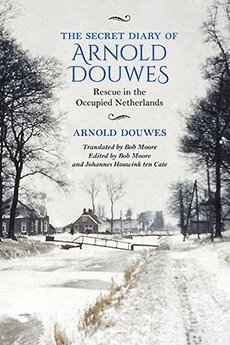
In the Netherlands, the myth that resistance to Nazi occupation was high among all sectors of the population has retained a strong hold, and yet many Dutch Jews fell victim to deportation and annihilation in the camps of Eastern Europe. How could a country that prided itself on its tolerance, adherence to legal norms, and democratic government have been the site of such an enormous tragedy? Even while Nazi arrests of Jews were taking place, Arnold Douwes, a gardener and restless adventurer, headed a clandestine network of resistance and rescue. Douwes had spent time in the United States and France and was arrested several times by the police after his return to the Netherlands in 1940. Keenly aware that he was doing something important, he started a diary in the summer of 1943. He hid some 35 small notebooks in jam jars at safe houses in the vicinity of his base in Nieuwlande (Drenthe). After the war, he dug the notebooks up and transcribed them, adding several postwar sections with scrupulous notations. Bob Moore has translated Douwes's diary into English for the first time, and he and co-editor Johannes Houwink ten Cate have added a historical and contextual introduction, annotations, and a glossary for readers who may not be familiar with Dutch technical terms or places. Organized chronologically, and remaining largely as Douwes originally wrote it, the diary sheds light on the successes—and failures—of this important Dutch rescue network.
Inbunden, Engelska, 2012
2 484 kr
Skickas inom 5-8 vardagar
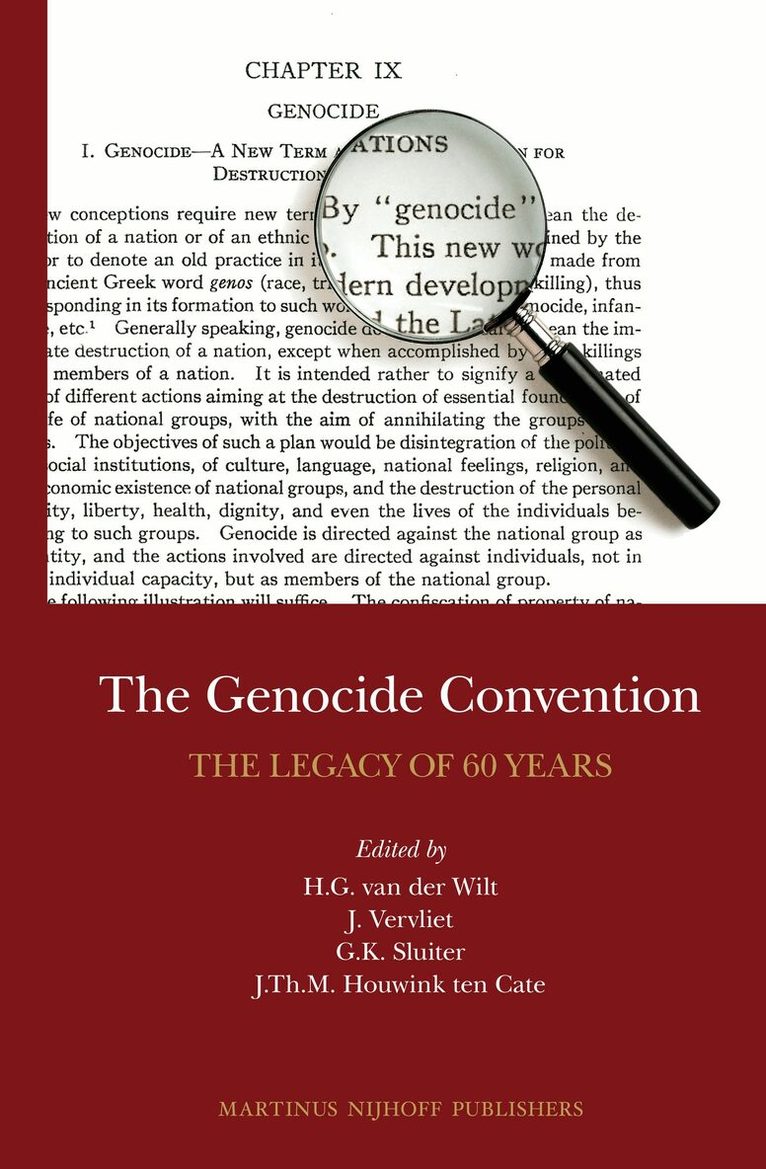
Genocide is widely acknowledged as ‘the crime of crimes’. Such universal condemnation understandably triggers both loose talk (calling each and every massacre ‘genocide’) and utter reluctance in political circles to use the ‘G-word’. The social construction of genocide reflects the deeper question whether the rigid legal concept of genocide – as it emerges in the Genocide Convention and has been maintained ever since – still corresponds with the historical and social perception of the phenomenon. This book is the product of an intellectual encounter between scholars of historical and legal disciplines which have joined forces to address this question. The authors are strongly inspired by the idea that the multi-disciplinary research of and education on genocide may contribute to a more appropriate reaction and prevention of genocide.
E-bok
PDF, Engelska, 20122 669 kr
Läs direkt efter köp
Genocide is widely acknowledged as 'the crime of crimes'. Such universal condemnation understandably triggers both loose talk (calling each and every massacre 'genocide') and utter reluctance in political circles to use the 'G-word'. The social construction of genocide reflects the deeper question whether the rigid legal concept of genocide - as it emerges in the Genocide Convention and has been maintained ever since - still corresponds with the historical and social perception of the phenomenon. This book is the product of an intellectual encounter between scholars of historical and legal disciplines which have joined forces to address this question. The authors are strongly inspired by the idea that the multi-disciplinary research of and education on genocide may contribute to a more appropriate reaction and prevention of genocide.