Joseph Ward – författare
Visar alla böcker från författaren . Handla med fri frakt och snabb leverans.
9 produkter
9 produkter
Häftad, Engelska, 2015
126 kr
Skickas inom 5-8 vardagar
E-bok
Engelska, 2017844 kr
Läs direkt efter köp
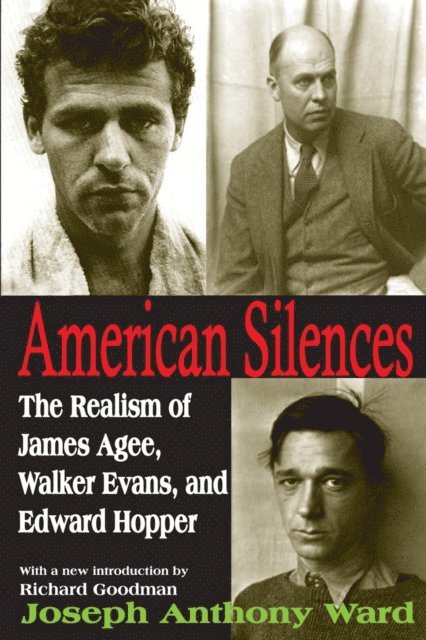
In ""American Silences"", Joseph Anthony Ward offers a unique analysis of the use and effects of silence in modern American realistic art. Beginning with the nineteenth-century literature that laid the foundation for silence in art, he moves to a brief analysis of Sherwood Anderson''s ""Winesburg"", Ohio and Ernest Hemingway''s ""In Our Time"", showing how they, along with several other crucial works of twentieth-century American realism, incorporate the power of the silent into their expression without sacrificing the subjects and techniques of traditional realism. Examining ""Let Us Now Praise Famous Men"", James Agee''s commentary on the life of tenant farmers, documented with photographs by Walker Evans, Ward traces the book''s pattern of ''silence, then silence disturbed by sound, and ultimately silence restored''. Ward further supports his theory with a study of Agee''s ""A Death in the Family"" and Evans'' ""American Photographs"". Ward sees Agee''s admiration of photography as a connection between the silence of the scenes he writes about and the silence of Evans'' photographs. The use of silence is perhaps even more obvious in the paintings of Edward Hopper. Although throughout the book Ward suggests both the positive and negative qualities of silence in art, Hopper''s paintings provide little in the way of postiveness. For Ward, the art of silence is an art of extreme concentration that seeks essences rather than superficiality that nearly transcends realism itself. The theme of silence in American realism is a significant new one, but Ward''s interpretation of the prose and his analysis of the photographs and paintings, many of which are reproduced in this book, establish validity for art as the voice of silence.
E-bok
PDF, Engelska, 2017874 kr
Läs direkt efter köp
In ""American Silences"", Joseph Anthony Ward offers a unique analysis of the use and effects of silence in modern American realistic art. Beginning with the nineteenth-century literature that laid the foundation for silence in art, he moves to a brief analysis of Sherwood Anderson''s ""Winesburg"", Ohio and Ernest Hemingway''s ""In Our Time"", showing how they, along with several other crucial works of twentieth-century American realism, incorporate the power of the silent into their expression without sacrificing the subjects and techniques of traditional realism. Examining ""Let Us Now Praise Famous Men"", James Agee''s commentary on the life of tenant farmers, documented with photographs by Walker Evans, Ward traces the book''s pattern of ''silence, then silence disturbed by sound, and ultimately silence restored''. Ward further supports his theory with a study of Agee''s ""A Death in the Family"" and Evans'' ""American Photographs"". Ward sees Agee''s admiration of photography as a connection between the silence of the scenes he writes about and the silence of Evans'' photographs. The use of silence is perhaps even more obvious in the paintings of Edward Hopper. Although throughout the book Ward suggests both the positive and negative qualities of silence in art, Hopper''s paintings provide little in the way of postiveness. For Ward, the art of silence is an art of extreme concentration that seeks essences rather than superficiality that nearly transcends realism itself. The theme of silence in American realism is a significant new one, but Ward''s interpretation of the prose and his analysis of the photographs and paintings, many of which are reproduced in this book, establish validity for art as the voice of silence.
Häftad, Engelska, 2010
850 kr
Skickas inom 10-15 vardagar
In "American Silences", Joseph Anthony Ward offers a unique analysis of the use and effects of silence in modern American realistic art. Beginning with the nineteenth-century literature that laid the foundation for silence in art, he moves to a brief analysis of Sherwood Anderson's "Winesburg", Ohio and Ernest Hemingway's "In Our Time", showing how they, along with several other crucial works of twentieth-century American realism, incorporate the power of the silent into their expression without sacrificing the subjects and techniques of traditional realism. Examining "Let Us Now Praise Famous Men", James Agee's commentary on the life of tenant farmers, documented with photographs by Walker Evans, Ward traces the book's pattern of 'silence, then silence disturbed by sound, and ultimately silence restored'. Ward further supports his theory with a study of Agee's "A Death in the Family" and Evans' "American Photographs". Ward sees Agee's admiration of photography as a connection between the silence of the scenes he writes about and the silence of Evans' photographs. The use of silence is perhaps even more obvious in the paintings of Edward Hopper. Although throughout the book Ward suggests both the positive and negative qualities of silence in art, Hopper's paintings provide little in the way of postiveness. For Ward, the art of silence is an art of extreme concentration that seeks essences rather than superficiality that nearly transcends realism itself. The theme of silence in American realism is a significant new one, but Ward's interpretation of the prose and his analysis of the photographs and paintings, many of which are reproduced in this book, establish validity for art as the voice of silence.
Häftad, Engelska, 2014
167 kr
Skickas inom 5-8 vardagar
E-bok
Engelska, 201438 kr
Läs direkt efter köp
Joseph Ward has worked in ministry for over 40 years, listening and counseling. His interests are History, Education and Human Behaviour and he is a student of story-telling and myth. He has written many articles and letters responding to people and this is his first book on the subject.
Häftad, Engelska, 2022
236 kr
Skickas inom 5-8 vardagar
Häftad, Engelska, 2017
346 kr
Skickas inom 5-8 vardagar
Häftad, 2016
185 kr
Tillfälligt slut