Jr. Ronald J. Krotoszynski – författare
Visar alla böcker från författaren Jr. Ronald J. Krotoszynski. Handla med fri frakt och snabb leverans.
6 produkter
6 produkter
E-bok
PDF, Engelska, 2024935 kr
Läs direkt efter köp
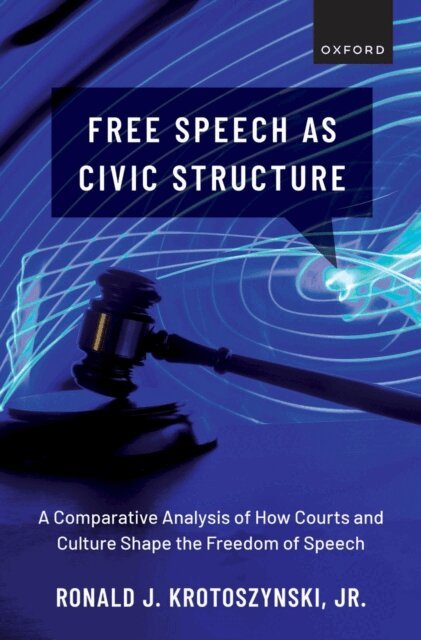
Free Speech as Civic Structure: A Comparative Analysis of How Courts and Culture Shape the Freedom of Speech examines and explains the limited relevance of constitutional text to the scope and vibrancy of free speech rights within a particular national legal system. Across jurisdictions, text or its absence will serve merely as a starting point for judicial efforts to protect speech activity. These judicial efforts, involving an ongoing and dynamic process of common law constitutionalism, will set the precise metes and bounds of expressive freedom within a particular polity. In the United States, the contemporary Supreme Court largely ignores the actual text of the First Amendment in "e;First Amendment"e; cases. Moreover, this pattern repeats elsewhere - including Australia, Israel, South Africa, and the United Kingdom. Judges in systems with relevant constitutional text (the United States and South Africa), as well as relevant statutory text (the United Kingdom), will often disregard the precise articulation of the right in favor of deploying a dynamic common law approach to protect speech from self-interested politicians who seek to distort the process of democratic deliberation. Judges also take the laboring oar in countries that lack a written free speech guarantee (Australia) or even a formal constitution as such (Israel). The strength or weakness of free speech protections depends critically on the willingness and ability of judges to police government efforts to censor speech - in conjunction with the salience of speech as a socio-legal value within the body politic. Thus, a legal system featuring independent courts, ideally vested with a power of judicial review, but that lacks a written free speech guarantee will likely feature broader protection of the freedom of expression than a legal system with a written guarantee that lacks independent courts. Across jurisdictions, text or its absence invariably serves as, at best, as a starting point for judicial efforts to protect speech. Judges, engaged in a common law enterprise, matter far more than text and common law constitutionalism constitutes the global rule rather than the exception.
E-bok
Engelska, 2024935 kr
Läs direkt efter köp
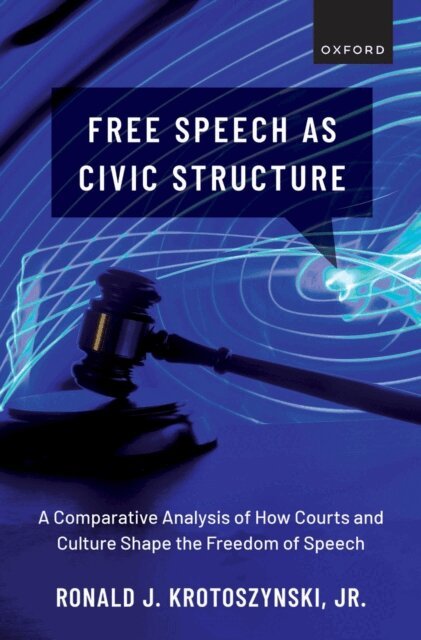
Free Speech as Civic Structure: A Comparative Analysis of How Courts and Culture Shape the Freedom of Speech examines and explains the limited relevance of constitutional text to the scope and vibrancy of free speech rights within a particular national legal system. Across jurisdictions, text or its absence will serve merely as a starting point for judicial efforts to protect speech activity. These judicial efforts, involving an ongoing and dynamic process of common law constitutionalism, will set the precise metes and bounds of expressive freedom within a particular polity. In the United States, the contemporary Supreme Court largely ignores the actual text of the First Amendment in "e;First Amendment"e; cases. Moreover, this pattern repeats elsewhere - including Australia, Israel, South Africa, and the United Kingdom. Judges in systems with relevant constitutional text (the United States and South Africa), as well as relevant statutory text (the United Kingdom), will often disregard the precise articulation of the right in favor of deploying a dynamic common law approach to protect speech from self-interested politicians who seek to distort the process of democratic deliberation. Judges also take the laboring oar in countries that lack a written free speech guarantee (Australia) or even a formal constitution as such (Israel). The strength or weakness of free speech protections depends critically on the willingness and ability of judges to police government efforts to censor speech - in conjunction with the salience of speech as a socio-legal value within the body politic. Thus, a legal system featuring independent courts, ideally vested with a power of judicial review, but that lacks a written free speech guarantee will likely feature broader protection of the freedom of expression than a legal system with a written guarantee that lacks independent courts. Across jurisdictions, text or its absence invariably serves as, at best, as a starting point for judicial efforts to protect speech. Judges, engaged in a common law enterprise, matter far more than text and common law constitutionalism constitutes the global rule rather than the exception.
E-bok
Engelska, 20251 545 kr
Läs direkt efter köp
E-bok
PDF, Engelska, 20251 545 kr
Läs direkt efter köp
E-bok
Engelska, 2019478 kr
Läs direkt efter köp
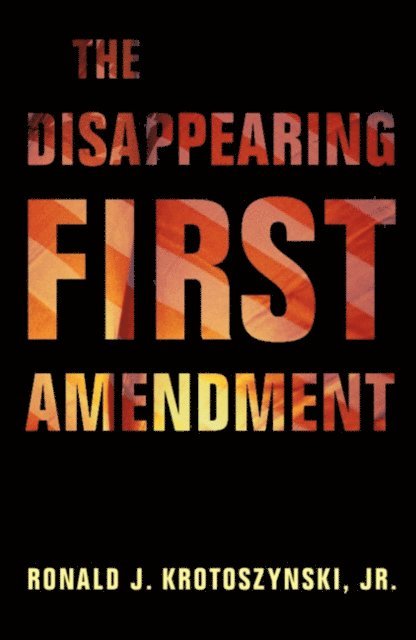
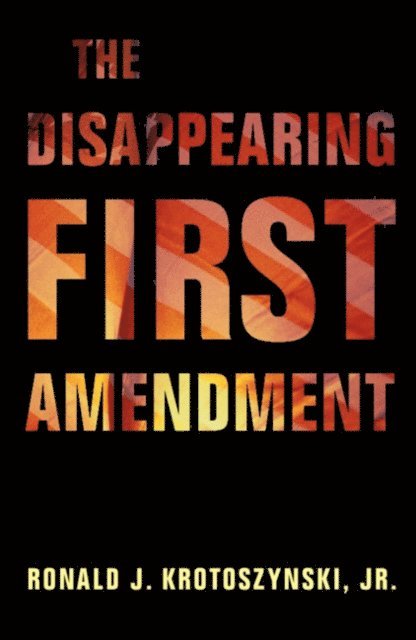
The standard account of the First Amendment presupposes that the Supreme Court has consistently expanded the scope of free speech rights over time. This account holds true in some areas, but not in others. In this illuminating work, Ronald J. Krotoszynski, Jr acknowledges that the contemporary Supreme Court rigorously enforces the rules against content and viewpoint discrimination for those who possess the wherewithal to speak but when citizens need the government''s assistance to speak - for example, access to public property for protest - free speech rights have declined. Instead of using open-ended balancing tests, the Roberts and Rehnquist Courts have opted for bright line, categorical rules that minimize judicial discretion. Opportunities for democratic engagement could be enhanced, however, if the federal courts returned to the Warren Court''s balancing approach and vested federal judges with discretionary authority to require government to assist would-be speakers. This book should be read by anyone concerned with free speech and its place in democratic self-government.
E-bok
PDF, Engelska, 2019478 kr
Läs direkt efter köp
The standard account of the First Amendment presupposes that the Supreme Court has consistently expanded the scope of free speech rights over time. This account holds true in some areas, but not in others. In this illuminating work, Ronald J. Krotoszynski, Jr acknowledges that the contemporary Supreme Court rigorously enforces the rules against content and viewpoint discrimination for those who possess the wherewithal to speak but when citizens need the government''s assistance to speak - for example, access to public property for protest - free speech rights have declined. Instead of using open-ended balancing tests, the Roberts and Rehnquist Courts have opted for bright line, categorical rules that minimize judicial discretion. Opportunities for democratic engagement could be enhanced, however, if the federal courts returned to the Warren Court''s balancing approach and vested federal judges with discretionary authority to require government to assist would-be speakers. This book should be read by anyone concerned with free speech and its place in democratic self-government.