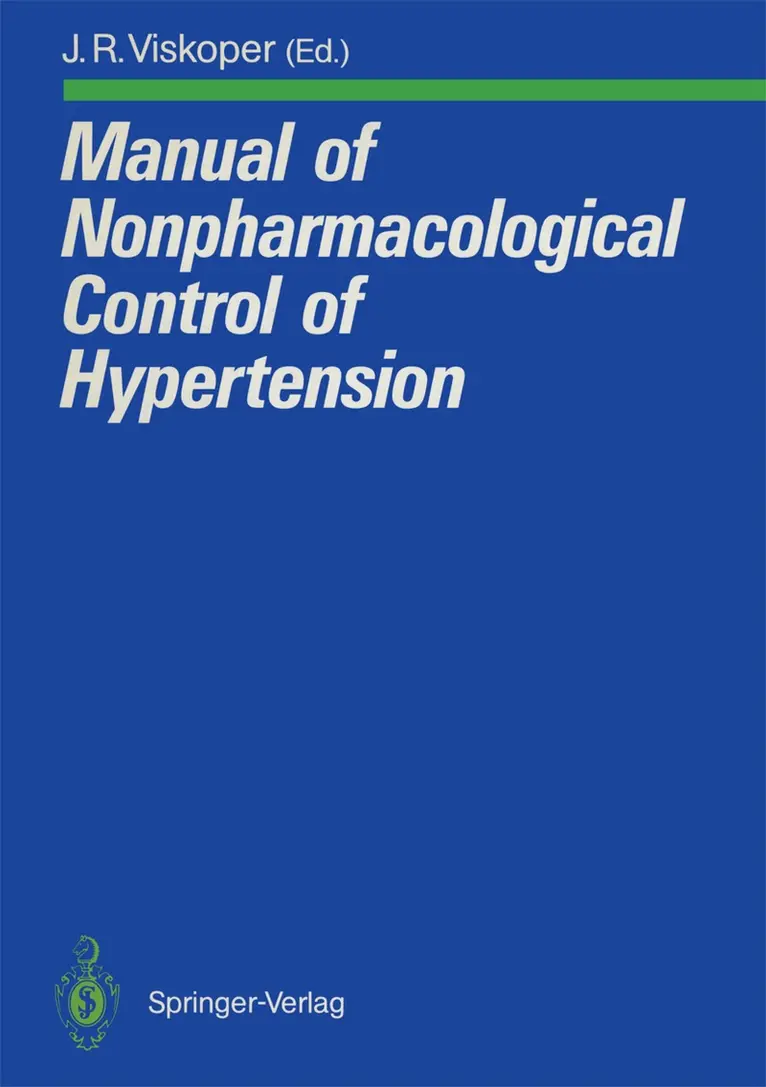
J.R. Viskoper – författare
Visar alla böcker från författaren J.R. Viskoper. Handla med fri frakt och snabb leverans.
2 produkter
2 produkter
Häftad, Engelska, 1990
1 114 kr
Skickas inom 10-15 vardagar
Various non-pharmacologic behaviour interventions for the control of cardiovascular diseases (CVD) are integrated into a multifactorial programme in this book. The practical approach emphasizes enhanced communication among medical specialists and patients to achieve changes of daily lifestyle; it includes the assessment of nutritional intake, enhanced physical activity and patient education. This approach, which has been applied to subjects with mild to moderate hypertension, is equally valid for those at risk of developing CVD without hypertension.
E-bok
PDF, Engelska, 20121 459 kr
Läs direkt efter köp
The prevention and correction of high blood pressure obviously is not an end in itself but a means of preventing cardiovascular complications. It is tempting to res ort to antihypertensive drugs, for the simple reason that current preparations are easy to dose and to take. There is a variety of reasons, however, to take advantage of the antihypertensive potential of nonpharmaco logical approaches first. For one thing, the use of tablets tends to accentuate the negative effects oflabelling a subject as hypertensive. The act oftaking tablets per se may elicit a spectrum of subjective adverse effects, as we have learned from placebo-controlled therapeutic trials. Even more importantly, the benefits of antihypertensive drug treatment are largely confined to the reduction of stroke and disease of the large vessels. With regard to incidence of cardiac events, some modest beneficial effects have been registered, such as a decrease in congestive heart failure and in the fatality rate of myocardial infarction. The effects on the incidence of coronary heart disease are only marginal at best. This disappointing finding has been ascribed to various factors: unwanted metabolie effects of anti hypertensive drugs, inadvertent drops in diastolic pressure interfering with coro nary perfusion, and, last but not least, failure to eliminate risk factors other than high blood pressure (smoking, alcohol abuse, lipid and glucose disturbanees, obesity, and the hemodynamic disadvantages of a sedentary life). Most of these additional noxious factors are refractory to drug treatment and call for modifica tion of life-style.