Justin Smith-Ruiu – författare
Visar alla böcker från författaren Justin Smith-Ruiu. Handla med fri frakt och snabb leverans.
15 produkter
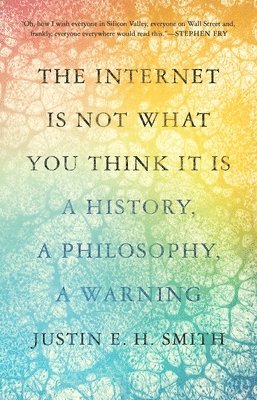
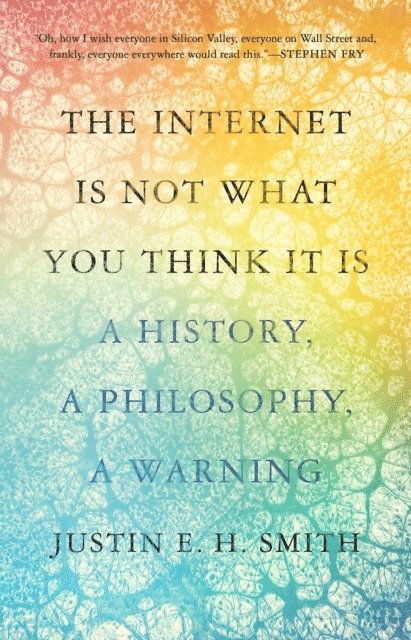
Internet Is Not What You Think It Is
A History, a Philosophy, a Warning
Häftad, 2023
160 kr
Lägg i varukorg
An original deep history of the internet that tells the story of the centuries-old utopian dreams behind it—and explains why they have died todayMany think of the internet as an unprecedented and overwhelmingly positive achievement of modern human technology. But is it? In The Internet Is Not What …
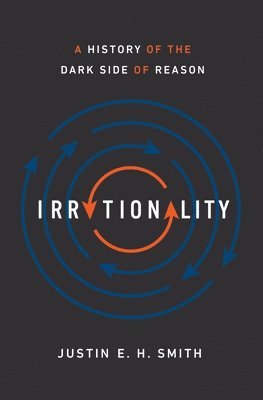
Irrationality
A History of the Dark Side of Reason
Inbunden, 2019
262 kr
Lägg i varukorg
A fascinating history that reveals the ways in which the pursuit of rationality often leads to an explosion of irrationalityIt’s a story we can’t stop telling ourselves. Once, humans were benighted by superstition and irrationality, but then the Greeks invented reason. Later, the Enlightenment …
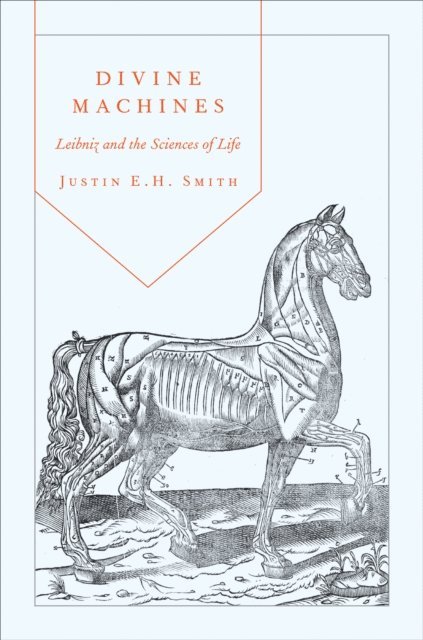
Divine Machines
Leibniz and the Sciences of Life
Inbunden, 2011
661 kr
Lägg i varukorg
Though it did not yet exist as a discrete field of scientific inquiry, biology was at the heart of many of the most important debates in seventeenth-century philosophy. Nowhere is this more apparent than in the work of G. W. Leibniz. In Divine Machines, Justin Smith offers the first in-depth …
Philosopher
A History in Six Types
Inbunden, 2016
389 kr
Lägg i varukorg
What would the global history of philosophy look like if it were told not as a story of ideas but as a series of job descriptions--ones that might have been used to fill the position of philosopher at different times and places over the past 2,500 years? The Philosopher does just that, providing a …
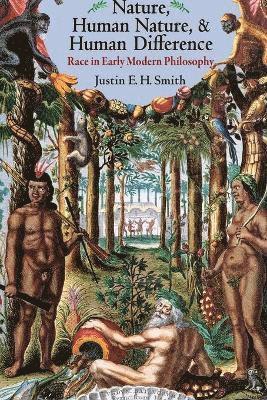
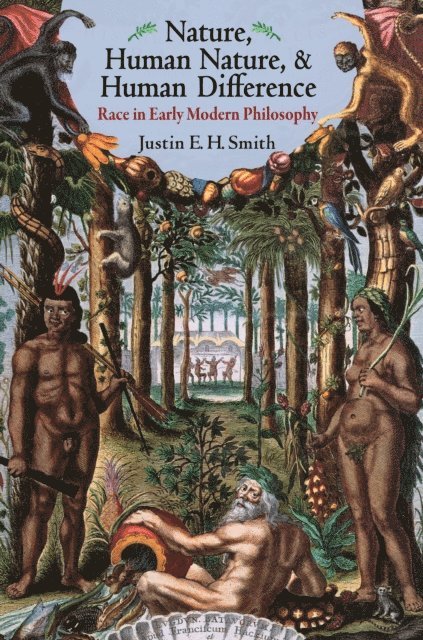
Nature, Human Nature, and Human Difference
Race in Early Modern Philosophy
Häftad, 2017
287 kr
Lägg i varukorg
People have always been xenophobic, but an explicit philosophical and scientific view of human racial difference only began to emerge during the modern period. Why and how did this happen? Surveying a range of philosophical and natural-scientific texts, dating from the Spanish Renaissance to the …
Philosopher
A History in Six Types
Häftad, 2017
211 kr
Lägg i varukorg
What would the global history of philosophy look like if it were told not as a story of ideas but as a series of job descriptions--ones that might have been used to fill the position of philosopher at different times and places over the past 2,500 years? The Philosopher does just that, providing a …
Irrationality
A History of the Dark Side of Reason
Häftad, 2020
177 kr
Lägg i varukorg
From sex and music to religion and politics, a history of irrationality and the ways in which it has always been with us—and always will beIn this sweeping account of irrationality from antiquity to the rise of Twitter mobs and the election of Donald Trump, Justin Smith argues that irrationality …
Irrationality
A History of the Dark Side of Reason
E-bok, 2020
243 kr
Lägg i varukorg
From sex and music to religion and politics, a history of irrationality and the ways in which it has always been with us—and always will be In this sweeping account of irrationality from antiquity to the rise of Twitter mobs and the election of Donald Trump, Justin Smith argues that irrationality …
Internet Is Not What You Think It Is
A History, a Philosophy, a Warning
Inbunden, 2022
347 kr
Lägg i varukorg
An original deep history of the internet that tells the story of the centuries-old utopian dreams behind it—and explains why they have died todayMany think of the internet as an unprecedented and overwhelmingly positive achievement of modern human technology. But is it? In The Internet Is Not What …
Internet Is Not What You Think It Is
A History, a Philosophy, a Warning
E-bok, 2022
214 kr
Lägg i varukorg
An original deep history of the internet that tells the story of the centuries-old utopian dreams behind it—and explains why they have died today Many think of the internet as an unprecedented and overwhelmingly positive achievement of modern human technology. But is it? In The Internet Is Not What …
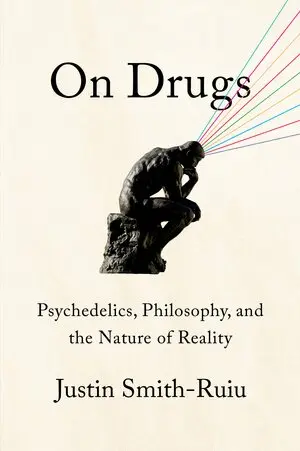
On Drugs
Psychedelics, Philosophy, and the Nature of Reality
Inbunden, 2025
306 kr
Lägg i varukorg
In the wake of a personal loss and the upheaval of the pandemic, Justin Smith-Ruiu found himself at a California cannabis dispensary, pondering a profound question: Who am I and how did I get here?On Drugs blends memoir, investigative reporting and philosophical inquiry as Smith-Ruiu explores the …
On Drugs
Psychedelics, Philosophy, and the Nature of Reality
Häftad, 2027
219 kr
Kommande
In the late, post-lockdown days of the pandemic, grappling with personal loss and existential uncertainty, Justin Smith-Ruiu found himself standing in a California cannabis dispensary, pondering a question his tribe of fellow philosophers have often dismissed as too simple: How did I get here? That …
Divine Machines
Leibniz and the Sciences of Life
E-bok, 2011
927 kr
Lägg i varukorg
Though it did not yet exist as a discrete field of scientific inquiry, biology was at the heart of many of the most important debates in seventeenth-century philosophy. Nowhere is this more apparent than in the work of G. W. Leibniz. In Divine Machines , Justin Smith offers the first in-depth …
Nature, Human Nature, and Human Difference
Race in Early Modern Philosophy
E-bok, 2015
412 kr
Lägg i varukorg
People have always been xenophobic, but an explicit philosophical and scientific view of human racial difference only began to emerge during the modern period. Why and how did this happen? Surveying a range of philosophical and natural-scientific texts, dating from the Spanish Renaissance to the …
Philosopher
A History in Six Types
E-bok, 2016
286 kr
Lägg i varukorg
How the role of the philosopher has changed over time and across cultures—and what it reveals about philosophy today What would the global history of philosophy look like if it were told not as a story of ideas but as a series of job descriptions—ones that might have been used to fill the position …