Keith Archer – författare
Visar alla böcker från författaren Keith Archer. Handla med fri frakt och snabb leverans.
3 produkter
3 produkter
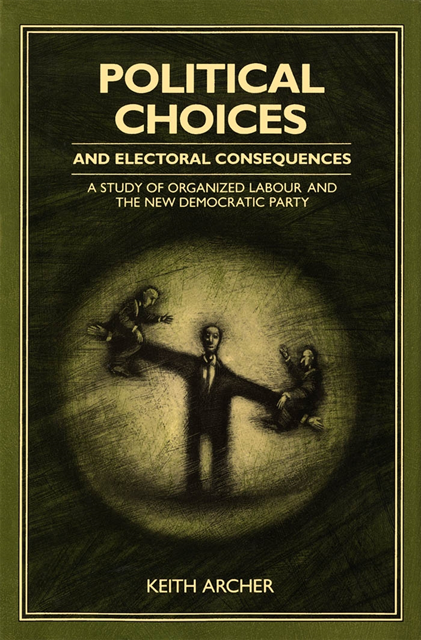
Political Choices and Electoral Consequences
A Study of Organized Labour and the New Democratic Party
E-bok
PDF, Engelska, 19901 011 kr
Läs direkt efter köp
The most important link between labour and the NDP is the direct party affiliation of union locals. While this sort of affiliation had existed with the CCF, the Canadian Labour Congress showed a greater commitment to encouraging union locals to affiliate with the NDP. Although, as Archer discusses in both theoretical and empirical terms, individuals who belong to union locals formally linked to the NDP are more likely to vote for that party than are other people with similar socio-demographic characteristics, this has had little positive effect on the NDP''s fortunes. Archer reveals that although, in principle, each union local may favour high rates of affiliation, it is often not in a local''s self-interest to affiliate. Archer suggests that the main reason for such a disappointing record of affiliation is structural rather than ideological or cultural. He compares the Canadian situation to that in Britain, where the Labour Party rules governing affiliation have supported high rates of affiliation. The rules of the NDP, Archer goes on to show, are not significantly different from those that were developed between labour and the CCF. However, the CCF was not a labour party as such but rather an amalgam of farmers, labourers, and members of constituency associations. Labour''s role has consequently remained that of a junior partner with the constituency groups. Under these circumstances, Archer argues, one would expect rates of affiliation to remain low.
Inbunden, Engelska, 2000
1 191 kr
Skickas inom 5-8 vardagar
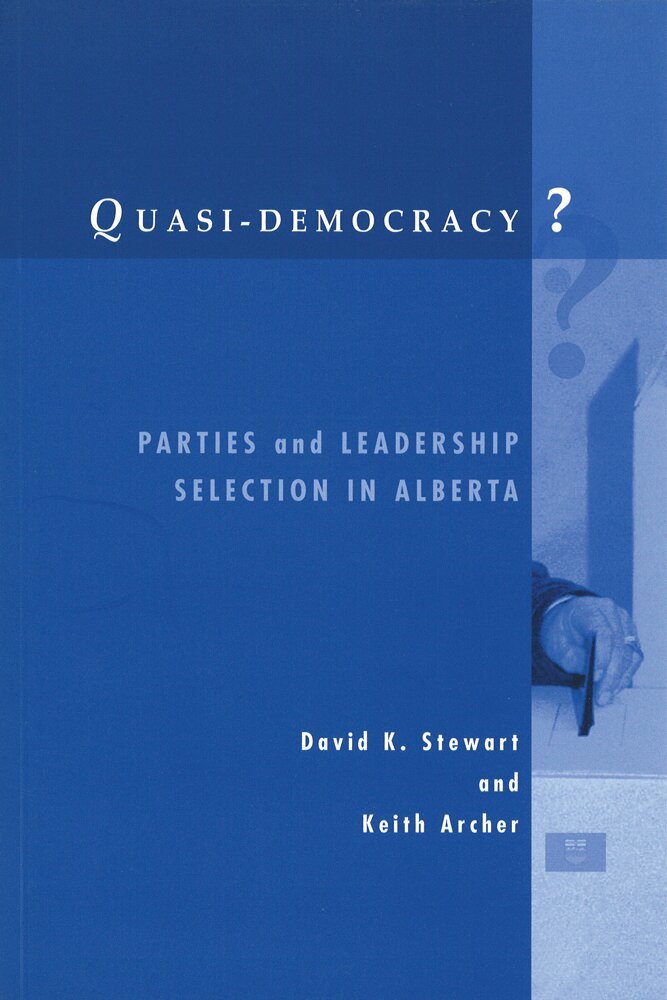
Many Canadian parties are shifting their process for selectingleaders from delegate conventions to methods that -- at least in theory-- allow all members to vote for the leader. In the leadershipselections of the 1990s, Alberta's governing Conservatives used aprimary balloting system, the opposition Liberal Party allowed membersto vote by phone, and the NDP held a traditional leadershipconvention.In Quasi-Democracy? David Stewart and Keith Archer examinepolitical parties and leadership selection in Alberta using mail-backsurveys administered to voters who participated in the Conservative,Liberal, and NDP leadership conventions elections of the 1990s.Leadership selection events, they contend, provide rare opportunitiesfor observing the internal workings of the parties and people who"stand between the politicians and the electorate." Usingparticipant accounts and material from the press media, the authorsanalyze the factors that influence leadership selection in each party,develop attitudinal profiles of the supporters of the parties, andexamine the party activists with respect to their backgrounds inprovincial and federal politics. Quasi-Democracy? will beinvaluable reading for students and scholars of party democracy andrepresentation, and for those interested in the intricate machinationsof the political process in Alberta.
Häftad, Engelska, 2001
380 kr
Skickas inom 11-20 vardagar
Many Canadian parties are shifting their process for selectingleaders from delegate conventions to methods that -- at least in theory-- allow all members to vote for the leader. In the leadershipselections of the 1990s, Alberta's governing Conservatives used aprimary balloting system, the opposition Liberal Party allowed membersto vote by phone, and the NDP held a traditional leadershipconvention.In Quasi-Democracy? David Stewart and Keith Archer examinepolitical parties and leadership selection in Alberta using mail-backsurveys administered to voters who participated in the Conservative,Liberal, and NDP leadership conventions elections of the 1990s.Leadership selection events, they contend, provide rare opportunitiesfor observing the internal workings of the parties and people who"stand between the politicians and the electorate." Usingparticipant accounts and material from the press media, the authorsanalyze the factors that influence leadership selection in each party,develop attitudinal profiles of the supporters of the parties, andexamine the party activists with respect to their backgrounds inprovincial and federal politics. Quasi-Democracy? will beinvaluable reading for students and scholars of party democracy andrepresentation, and for those interested in the intricate machinationsof the political process in Alberta.