Kragh Kirsten Jeppesen Kragh – författare
Visar alla böcker från författaren Kragh Kirsten Jeppesen Kragh. Handla med fri frakt och snabb leverans.
2 produkter
2 produkter
E-bok
Engelska, 20191 305 kr
Läs direkt efter köp
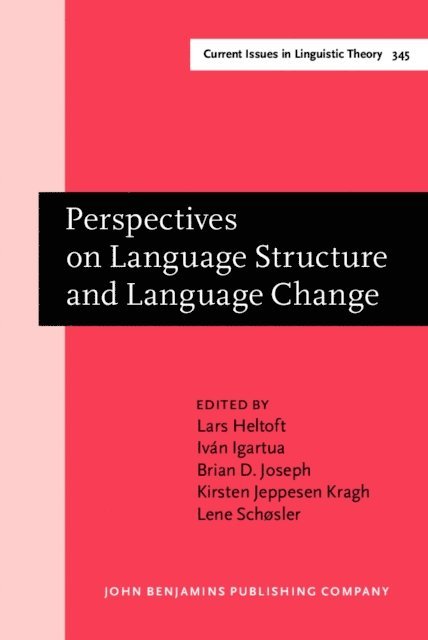
This volume centers on three important theoretical concepts for the study of language change and the ways in which language structure emerges and turns into new structure: reanalysis, actualization, and indexicality. Reanalysis is a part of ongoing everyday language use, a process through which language is reproduced and changed. Actualization refers to the processes through which a reanalyzed structure spreads throughout single communities and society. Indexicality covers the way in which parts of a linguistic system can point to other parts of the system, both syntagmatically and paradigmatically. The inclusion of indexicality leads to fine-grained analysis in morphology, word order, and constructional syntax.
E-bok
PDF, Engelska, 20131 305 kr
Läs direkt efter köp
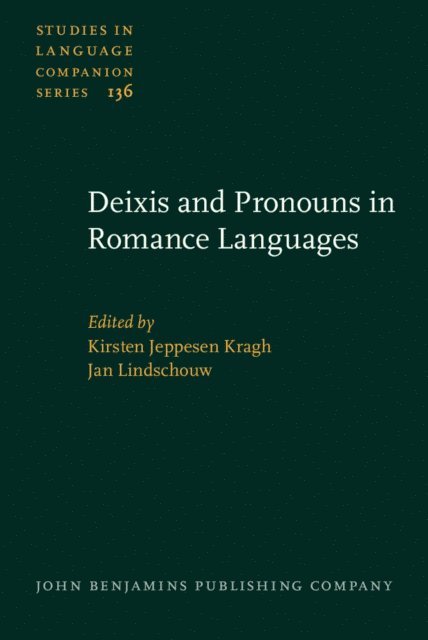
This volume proposes a new way to address the classical question concerning the relation between language, cognition, and culture from the perspective of two basic systems: deixis and the pronominal system. It investigates the linguistic structuring of basic concepts of person, place and time in Romance languages, disclosing structural differences that may be related to mental parameters and other extra-linguistic circumstances and thus possibly linked to a light revision of the Sapir-Whorf hypothesis.The methodological and theoretical focus is based on the discursive and pragmatic functional approach to deixis. The articles concern linguistic variation and language change, and most of the studies adopt cross linguistic perspectives, primarily among Romance languages, but also with a classical perspective from Ancient Greek discussing the existence of universal categorical patterns. The studies reveal similarities and differences between Romance languages mutually, and set the stage for comparisons between Romance and non-Romance languages. These similarities and differences are subject to change in connection with cultural developments in society and offer in this volume a coordinated effort in exploring the linguistic expressions of these extra-linguistic concepts.