L. Jackson Newell - Böcker
Visar alla böcker från författaren L. Jackson Newell. Handla med fri frakt och snabb leverans.
3 produkter
3 produkter
215 kr
Skickas inom 11-20 vardagar
Hope, Heart, and the HumanitiesHow a Free College Course is Changing Lives Edited by Jean Cheney and L. Jackson Newell with Hikmet Sidney Loe, Jeff Metcalf, and Bridget M. NewellHope, Heart, and the Humanities tells how Venture, a free, interdisciplinary college humanities course inspired by the national Clemente Course, has helped open doors for hundreds of students who, for various reasons, faced barriers to attending college. This course has given them the knowledge, confidence, and power to re-chart their lives.Readers will go inside Venture classrooms to see what occurs when adults enter serious discussions of literature, critical writing, art history, American history, and philosophy. Also apparent are the difficulties nontraditional students often encounter and the hard choices they and their teachers make. But what readers may remember most are the stories and voices of people whose views of the world have broadened and whose directions in life have change.
Conscience and Community
Sterling M. McMurrin, Obert C. Tanner, and Lowell L. Bennion
Häftad, Engelska, 2018
246 kr
Skickas inom 11-20 vardagar
Lowell Bennion, Sterling McMurrin, and Obert Tanner were colleagues whose lives often intertwined. All professors at the University of Utah, these three scholars addressed issues and events of their time; each influenced the thought and culture of Mormonism, helping to institute a period of intellectual life and social activism. In Conscience and Community multiple scholars, family members, and others look at the private and public aspects of three lives and examine the roles they played in shaping their communities inside and out of their university and church. Lowell Bennion was founding director of the LDS Institute of Religion and professor of sociology at the University of Utah. He established multiple community service entities. Sterling McMurrin was distinguished professor of philosophy and history, dean of the graduate school, and former commissioner of education under JFK. He dismissed dogma and doctrine as barriers to a search for moral and spiritual understanding. Obert Tanner, also of the university’s Philosophy Department, excelled in teaching and business and became especially well known for philanthropy. The lives and work of these three men reveal the tensions between faith and reason, conscience and obedience. Their stories speak to us today because their concerns remain our concerns: racial justice, women’s equality, gay rights, and the meaning of integrity and conscience.
412 kr
Skickas inom 7-10 vardagar
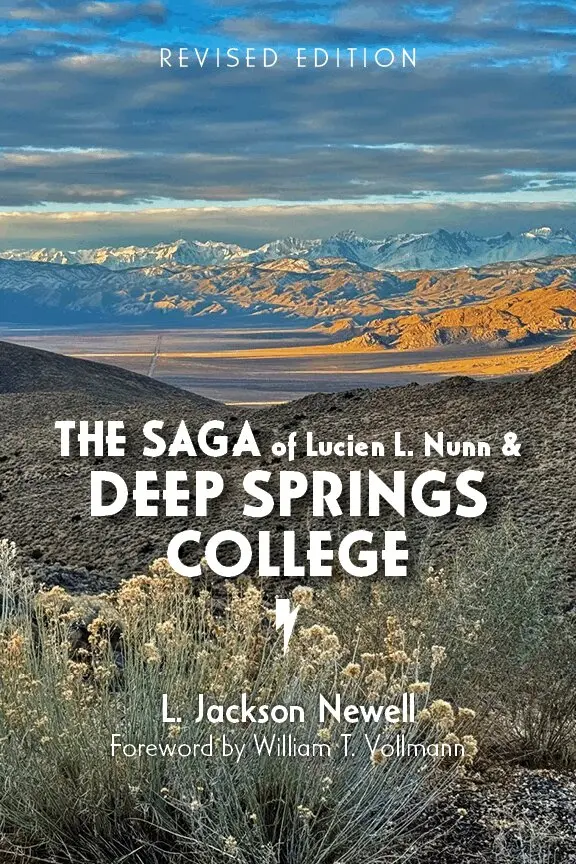
Here is a look at the life and legacy of an irrepressible innovator. Pushing against both social convention and technological boundaries, L.L. Nunn left enduring marks on economic and social history, labor development, and, educational reform. The Saga of Lucien L. Nunn and Deep Springs College is a bold portrayal of this progressive-era hydroelectric power magnate who, driven by a dynamic conscience, also became a force for social change and educational experimentation. In 1891, Nunn, working with Tesla and Westinghouse, pioneered the world’s first commercial production of high-tension alternating current (AC) for long-distance transmission—something Thomas Edison deemed dangerous and irresponsible. After creating the Telluride Power Company, Nunn constructed the state-of-the-art Olmsted Power Plant in Provo Canyon and the Ontario Power Works at Niagara Falls. To support this new technology, he developed an imaginative model of industrial training that became so compelling that he ultimately abandoned his entrepreneurial career to devote his wealth and talents to experimenting with a new model of liberal education. In 1917, Nunn founded Deep Springs College in eastern California. The school remains one of the most daring, progressive, and selective institutions of higher learning in America. Newell examines how Nunn’s radical educational ideas have survived internal and external challenges for nearly a century and explores their relevance today.