Laureen P. Cantwell-Jurkovic – författare
Visar alla böcker från författaren Laureen P. Cantwell-Jurkovic. Handla med fri frakt och snabb leverans.
3 produkter
3 produkter
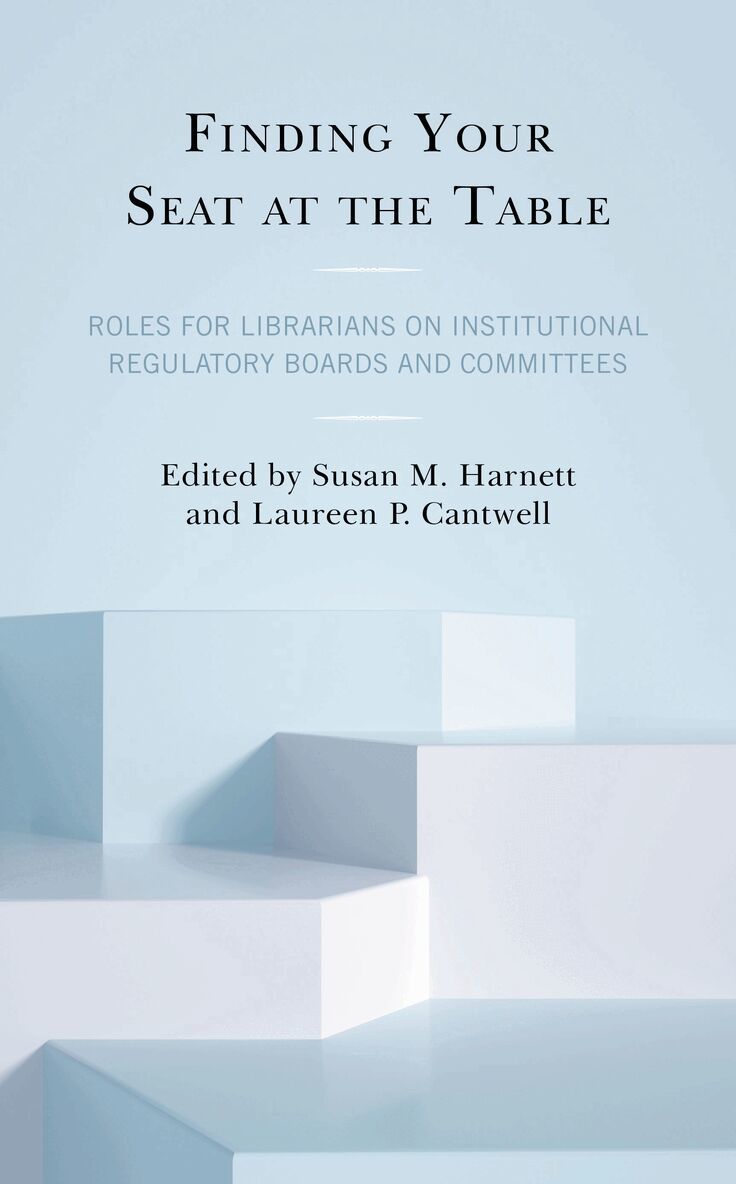
Finding Your Seat at the Table
Roles for Librarians on Institutional Regulatory Boards and Committees
Inbunden, Engelska, 2022
948 kr
Skickas inom 10-15 vardagar
Service on Institutional Review Boards (IRB) and Institutional Animal Care and Use Committees (IACUC) is an uncommon activity for librarians. Even librarians who participate in institutional research activities in a supportive capacity or conduct their own original research as scholars themselves and are familiar with the IRB/IACUC research approval process, they may hesitate to participate more fully with these boards. There may be a perception that the work of the IRB and IACUC is too scientifically complex for librarians without an appropriate background. Library administrators may not advocate for librarian inclusion on the board for fear of additional burdens on the librarian’s time; and university administrators might need some convincing of the librarian’s suitability to perform this work. This book provides librarians with foundational knowledge of the IRB and IACUC, describes the work of these important committees, and expands librarians’ conceptualization and knowledge of opportunities to create services and partnerships through participation.The book provides a progressively more comprehensive understanding of the work of these committees. Parts I and II discuss IRB and IACUC, respectively; their history, functions and membership. Part III highlights expanding roles for librarians on IRB and IACUC; and in institutional research activities. A special feature of this section describes the experiences of librarians, in their own words, who work with IRB or IACUC; what they have learned, how they have used their experiences to create partnerships and market library services; and what role they see for libraries and librarians in institutional research.
802 kr
Skickas inom 10-15 vardagar
Healthcare professionals and health science librarians need to know more than research practices and clinical knowledge to become transformational individuals and leaders in their field. Empathy and compassion; appreciation for the various social and cultural contexts of health, care, and illness; and utilizing the contributions the arts, humanities, and humanistic social sciences can add depth and dimension to their work. While librarians are not usually the healthcare professionals themselves, they serve an important role in the development of healthcare professionals through their work in educational and/or healthcare settings, helping train others in the goals of the curriculum and in lifelong learning-related habits of mind. This book offers librarians an opportunity to learn about and develop approaches to the health humanities, for their benefit and the benefit of their constituents and stakeholders, as well as for impacting the future health care professionals of our global community. In addition to foundational contents on the history of the health humanities, this book approaches the health humanities from a wealth of angles including archives and special collections, collection development, privacy, biases, empathy, skills development through writing and programming engagement, and through consideration of special populations and more. Beyond essential health humanities grounding and topical perspectives, this book shares valuable pedagogical and instructional approaches and outreach strategies for bringing librarians into conversation with campus departments, curricular pathways, instructors’ goals, and learners’ needs. These modifiable, adaptable techniques will allow readers to develop the confidence and tools they need to bring the health humanities to their institutions, and will help the perspectives and skillsets of the health humanities flourish among the next generation of health care professionals.
973 kr
Skickas inom 5-8 vardagar
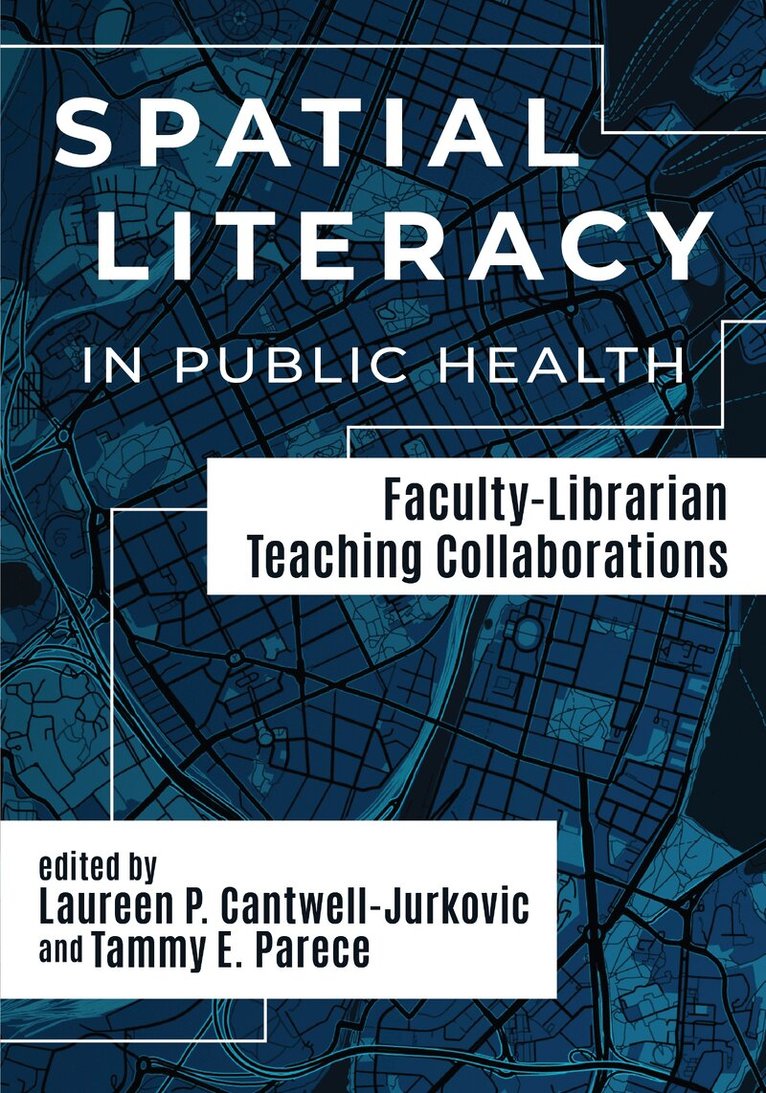
Spatial literacy—the ability to visualize, understand, and use the properties of space to communicate, reason, and problem-solve—is relevant to public health across disciplines. Spatial Literacy in Public Health: Faculty-Librarian Teaching Collaborations offers ideas and plans for collaborative spatial literacy teaching and learning initiatives focusing on Geographic Information Systems (GIS)-based and GIS-related instruction through the lens of public health topics.Chapters include step-by-step learning activities, teaching tips, recommended readings, and four-color maps and other useful illustrations. These offer ideas that will help build skills and fluency in spatial literacy across many disciplines. Such interdisciplinary topics include supply chain management; temporal comparisons; social media campaigns; data visualization; racial disparities and other demographic themes related to immunization patterns, epidemiology, recreation access, and community health and environmental health/environmental science; and interdisciplinary projects related to education (including K-12).Spatial Literacy in Public Health offers specific plans for spatial literacy instruction and activities in public health across disciplines. Learning activities support open source tools, open educational resources (OER), and other institutional cost-saving initiatives, and the ability to adapt from in-person to virtual instruction settings.