Luo Qi Luo – författare
Visar alla böcker från författaren . Handla med fri frakt och snabb leverans.
2 produkter
2 produkter
E-bok
PDF, Engelska, 2000229 kr
Läs direkt efter köp
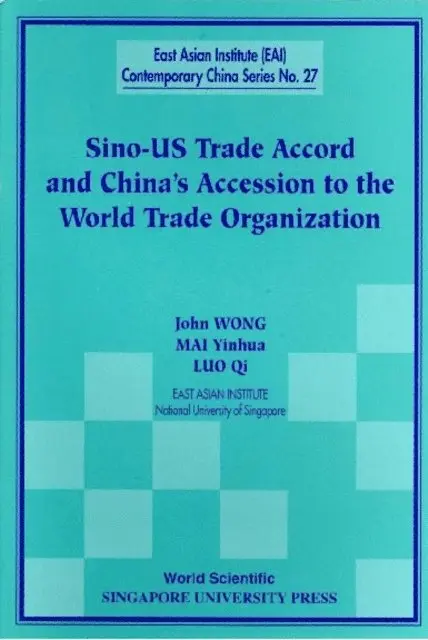
The Sino-US trade accord signed in November 1999 in Beijing set a milestone for China''s protracted journey towards becoming a member of the World Trade Organization (WTO). China hailed it as a win-win deal. The trade accord showed the commitment of the Chinese government to further transform China into a market economy. The liberalisation measures set forth in the accord may bring about the rise of the private enterprises and further expansion of the services markets, from banking to professional services. However, the implementation of the reform represents a challenge to the Chinese government in managing the potential surge in urban and rural unemployment and the stability of the banking sector. This paper analyses the details of the Sino-US trade accord and its implications for the Chinese economy.
E-bok
PDF, Engelska, 1998224 kr
Läs direkt efter köp
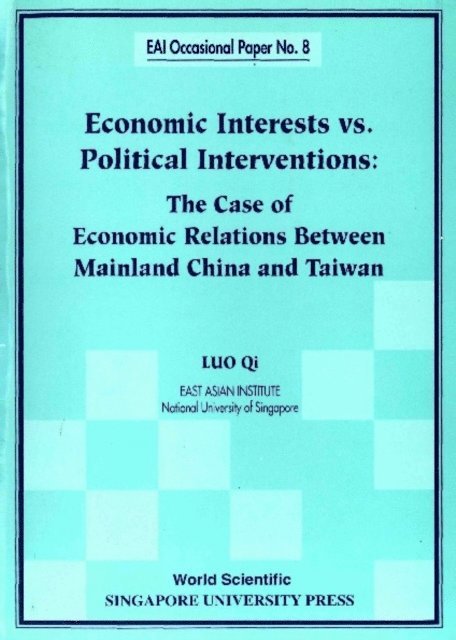
This paper investigates the impact of political interventions made by Beijing and Taipei in recent years on the development of cross-Straits economic relations. The study finds little evidence that either the missile firings carried out by Beijing in 1995 and 1996 or the mainland policy review conducted by Taipei since 1996 has slowed down the growth of trade and investment activities between mainland China and Taiwan. In fact, the trade dependence ratios for the two economies have continued to increase since 1995. Although the level of Taiwans committed investment in the mainland has dropped considerably in recent years, it has moved largely in line with the general trend of total FDI in China. The synchronism between Taiwan investment and other foreign investment suggests that the Taiwan investors, like other foreign investors, responded mainly to macroeconomic conditions and policies in the mainland, rather than to the directives from the Taiwan authorities, when they made their investment decisions. This is due to the fact that the economic logic of pursuing cross-Straits economic activities is so powerful that Taipei''s restrictive policy toward investment in the mainland has often been ignored or diluted by the Taiwanese private business community.