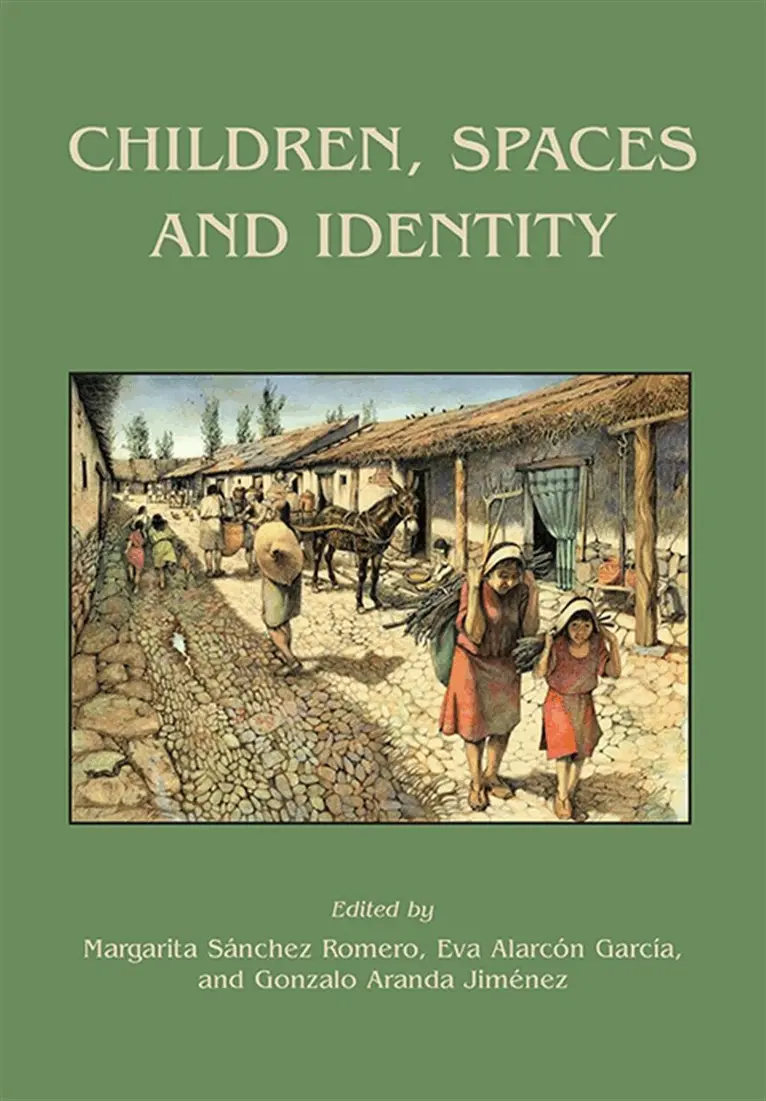
How do children construct, negotiate and organize space? The study of social space in any human group is fraught with limitations, and to these we must add the further limits involved in the study of childhood. Here specialists from archaeology, history, literature, architecture, didactics, museology and anthropology build a body of theoretical and methodological approaches about how space is articulated and organized around children and how this disposition affects the creation and maintenance of social identities. Children are considered as the main actors in historic dynamics of social change, from prehistory to the present day. Notions on space, childhood and the construction of both the individual and the group identity of children are considered as a prelude to papers that focus on analyzing and identifying the spaces which contribute to the construction of children’s identity during their lives: the places they live, learn, socialize and play. A final section deals with these same aspects, but focuses on funerary contexts, in which children may lose their capacity to influence events, as it is adults who establish burial strategies and practices. In each case authors ask questions such as: how do adults construct spaces for children? How do children manage their own spaces? How do people (adults and children) build (invisible and/or physical) boundaries and spaces?
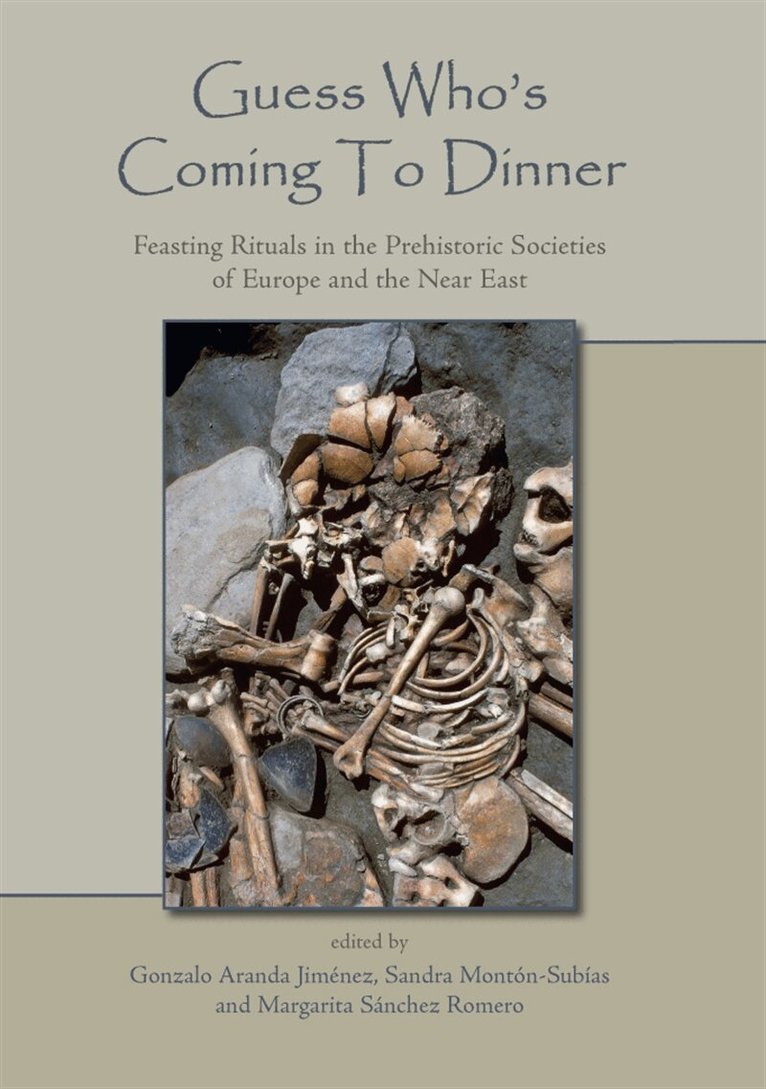
Guess Who's Coming to Dinner examines how specific types of food were prepared and eaten during feasting rituals in prehistoric Europe and the Near East. Such rituals allowed people to build and maintain their power and prestige and to maintain or contest the status quo. At the same time, they also contributed to the inner cohesion and sense of community of a group. When eating and drinking together, people share thoughts and beliefs and perceive the world and human relationships in a certain way. The twelve contributions to this book reflect the main theoretical and methodological issues related to the study of food and feasting in prehistoric Europe and the Near East. The book is introduced by Ferrán Adrià, considered to be the world's greatest chef. Famed for his "molecular gastronomy", he invented the technique of reducing foods to their essence and then changing how they are presented, for example in the form of foam. In 2010,he was named Best Chef of the Decade by the prestigious Restaurant magazine.
Motherhood and childhood are social and cultural constructions that have their origins in prehistoric times and are visible through Greek and Roman discourses in Antiquity. This volume explores various images of maternity and infancy, and the identification of women and womanhood in prehistoric and classic societies. Aspects such as the crucial role of maintenance activities and care, the processes of socialization and learning, the impact of infant death, the figure of the mother queen, the religious discourses about motherhood, the rules on parental rights, the transgressions of traditional motherhood and the emotional aspects of the mother-child relation are analysed. The book covers the ancient Mediterranean area, from Mesopotamia to the Iberian Peninsula and from prehistoric communities to classic societies, with Mesopotamian, Phoenician and Iberian examples. A multidisciplinary approach is adopted, analysing material culture, representations and texts to gain a deeper understanding of the plurality of motherhood, and the diversity of women’s agency through history.