Mari Armstrong-Hough – författare
Visar alla böcker från författaren Mari Armstrong-Hough. Handla med fri frakt och snabb leverans.
5 produkter
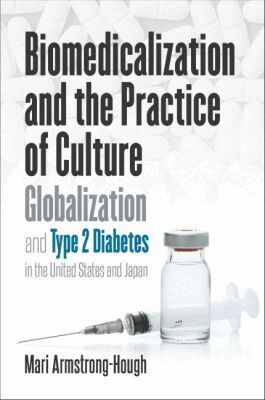
Biomedicalization and the Practice of Culture
Globalization and Type 2 Diabetes in the United States and Japan
Inbunden, 2018
1154 kr
Lägg i varukorg
Over the last twenty years, type 2 diabetes skyrocketed to the forefront of global public health concern. In this book, Mari Armstrong-Hough examines the rise and response to the disease in two societies: the United States and Japan. Both societies have faced rising rates of diabetes, but their …
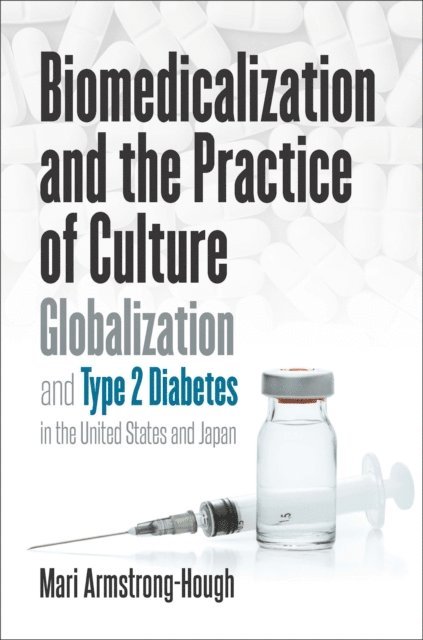
Biomedicalization and the Practice of Culture
Globalization and Type 2 Diabetes in the United States and Japan
Häftad, 2018
370 kr
Lägg i varukorg
Over the last twenty years, type 2 diabetes skyrocketed to the forefront of global public health concern. In this book, Mari Armstrong-Hough examines the rise and response to the disease in two societies: the United States and Japan. Both societies have faced rising rates of diabetes, but their …
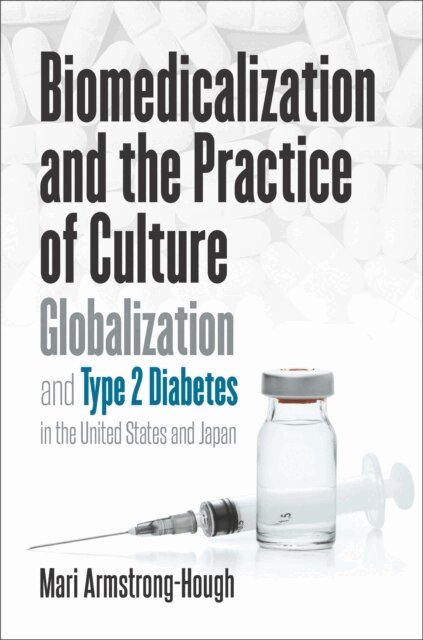
Biomedicalization and the Practice of Culture
Globalization and Type 2 Diabetes in the United States and Japan
E-bok, 2018
2051 kr
Lägg i varukorg
Over the last twenty years, type 2 diabetes skyrocketed to the forefront of global public health concern. In this book, Mari Armstrong-Hough examines the rise in and response to the disease in two societies: the United States and Japan. Both societies have faced rising rates of diabetes, but their …
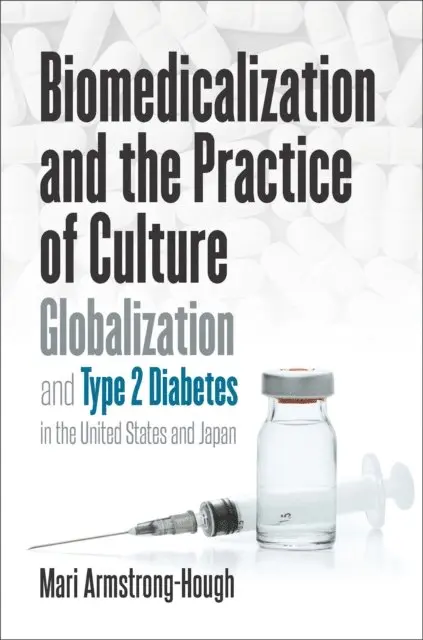
Biomedicalization and the Practice of Culture
Globalization and Type 2 Diabetes in the United States and Japan
E-bok, 2018
286 kr
Lägg i varukorg
Over the last twenty years, type 2 diabetes skyrocketed to the forefront of global public health concern. In this book, Mari Armstrong-Hough examines the rise in and response to the disease in two societies: the United States and Japan. Both societies have faced rising rates of diabetes, but their …
Biomedicalization and the Practice of Culture
Globalization and Type 2 Diabetes in the United States and Japan
E-bok, 2018
2051 kr
Lägg i varukorg
Over the last twenty years, type 2 diabetes skyrocketed to the forefront of global public health concern. In this book, Mari Armstrong-Hough examines the rise in and response to the disease in two societies: the United States and Japan. Both societies have faced rising rates of diabetes, but their …