Maria A. Windell – författare
Visar alla böcker från författaren Maria A. Windell. Handla med fri frakt och snabb leverans.
4 produkter
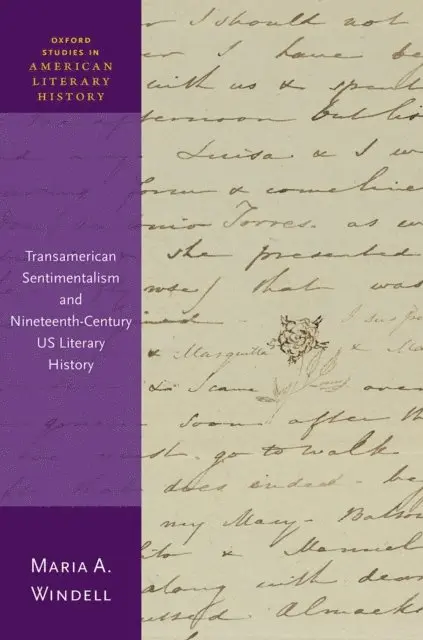
Transamerican Sentimentalism and Nineteenth-Century US Literary History
E-bok, 2020
1349 kr
Lägg i varukorg
Sentimentalism is usually studied through US-British relations after the American Revolution or in connection to national reforms like the abolitionist movement. Transamerican Sentimentalism and Nineteenth-Century US Literary History instead argues that African American, Native American, Latinx, …
Transamerican Sentimentalism and Nineteenth-Century US Literary History
E-bok, 2020
1349 kr
Lägg i varukorg
Sentimentalism is usually studied through US-British relations after the American Revolution or in connection to national reforms like the abolitionist movement. Transamerican Sentimentalism and Nineteenth-Century US Literary History instead argues that African American, Native American, Latinx, …
Transamerican Sentimentalism and Nineteenth-Century US Literary History
Inbunden, 2020
1517 kr
Lägg i varukorg
Sentimentalism is usually studied through US-British relations after the American Revolution or in connection to national reforms like the abolitionist movement. Transamerican Sentimentalism and Nineteenth-Century US Literary History instead argues that African American, Native American, Latinx, …
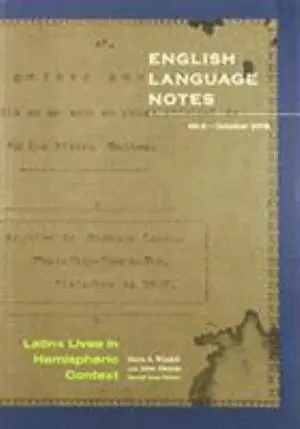
Latinx Lives in Hemsipheric Context
Häftad, 2018
253 kr
Lägg i varukorg
This special issue investigates the intersections among Latinx, Chicanx, ethnic, and hemispheric American Studies, mapping the history of Latinx and Latin American literary and cultural production as it has circulated through the United States and the Americas. The issue comprises original archival …